


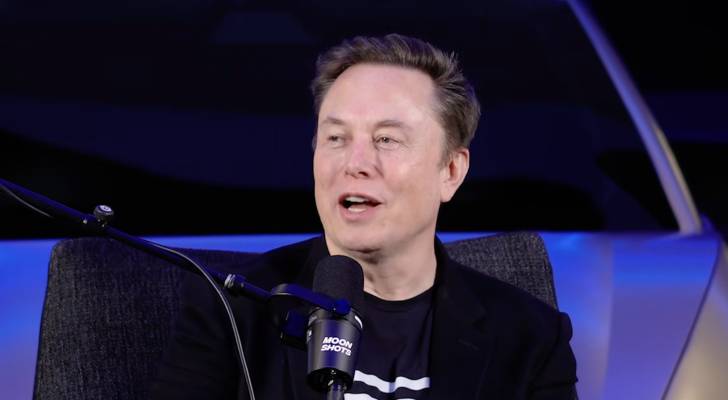
The future of retirement planning in AI economy has become a topic of heated debate after Elon Musk suggested that traditional retirement saving may become unnecessary in a world shaped by advanced artificial intelligence. Speaking on a podcast, Musk argued that future systems powered by AI could provide individuals with access to housing, healthcare, education, and entertainment without the need for long-term personal savings.
His statement challenges one of the most established principles in personal finance: the need to consistently save and invest during working years to support life after employment. While his outlook reflects a vision of technological abundance, it has raised questions about practicality, timing, and economic realism.
Why the future of retirement planning in AI economy matters
The discussion around the future of retirement planning in AI economy is significant because it directly challenges how individuals and households make financial decisions today. Retirement systems across the world are built on assumptions of scarcity, inflation, and limited state support. People save because future income is uncertain.

Musk’s argument introduces a contrasting model where scarcity disappears due to automation and AI-driven productivity. In such a system, goods and services could become widely accessible at minimal cost, potentially reducing the need for traditional retirement funds.
However, financial experts warn that this scenario remains speculative. They argue that even if AI reduces costs, it does not eliminate economic structures such as ownership, taxation, or asset inequality. These realities mean individuals would still need financial buffers.
Financial experts challenge the idea of the future of retirement planning in AI economy
Many advisers reject the idea that the future of retirement planning in AI economy makes saving irrelevant. They emphasize that money has remained a core medium of exchange across centuries, despite technological change.
Financial planners note that even in highly automated systems, scarcity does not disappear completely. Assets like real estate, land, and infrastructure remain limited. In such a context, individuals who accumulate savings and investments may still hold significant advantages.
One adviser explained that even if AI lowers the cost of goods and services, it could increase competition for finite resources such as housing and desirable locations. This means financial planning would still be essential, although investment priorities might shift.
Behavioral and economic limits to the future of retirement planning in AI economy
Critics also question whether the future of retirement planning in AI economy aligns with human behavior. Economic systems are not only shaped by technology but also by motivation, work incentives, and social structures.
Financial experts argue that the idea of a fully passive society where individuals rely entirely on automated systems ignores historical patterns. Humans tend to seek productivity, ownership, and financial independence. Even with technological progress, these behaviors are unlikely to disappear.
Comparisons have been made to earlier technological predictions that failed to fully materialize, such as fully automated transport or entirely paperless economies. While progress has been significant, outcomes have often been partial rather than absolute.
What the future of retirement planning in AI economy means for households
For households, the future of retirement planning in AI economy debate does not change immediate financial realities. Retirement systems, pensions, and investment markets still operate under current economic conditions.
Households still face risks such as inflation, healthcare costs, and employment uncertainty. Financial advisers therefore continue to recommend diversified savings strategies, including retirement accounts, investments, and emergency funds.
Even optimistic interpretations of AI-driven abundance suggest gradual change rather than immediate transformation. This means individuals who delay saving based on future expectations could face financial vulnerability.
Business and investment implications of the future of retirement planning in AI economy
From a business perspective, the future of retirement planning in AI economy raises long-term questions about financial services, insurance models, and wealth management industries.
If AI significantly reduces living costs, demand for traditional retirement products could shift. However, most analysts expect adaptation rather than collapse. Financial institutions may evolve to include AI-based investment tools, automated wealth planning, and personalized retirement systems.
At the same time, investment in physical and finite assets may remain strong, as scarcity continues to exist in areas such as property, energy, and natural resources.
Conclusion: why the debate is far from settled
The future of retirement planning in AI economy remains uncertain and highly debated. Elon Musk’s perspective represents a long-term technological vision, while financial professionals emphasize present-day economic realities.
For now, the dominant view is that retirement planning remains essential. While AI may reshape costs, industries, and employment structures, it has not eliminated the need for financial security planning.
Households and businesses are therefore advised to treat AI-driven abundance as a potential future scenario rather than a replacement for current financial discipline.
Read also: Africa moves to tighten AI and data laws as stablecoin finance surges