

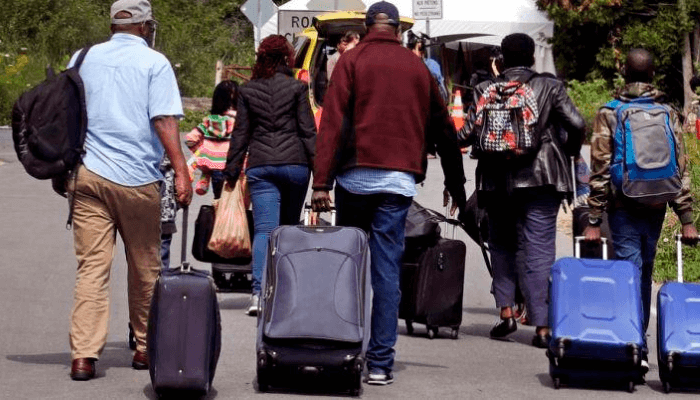
On any given evening in Accra, the conversation eventually arrives at the same place. Someone mentions a cousin who just landed in Canada. Another friend is waiting on a visa. A third is quietly assembling documents, saying nothing official yet, not wanting to jinx it. The word that has migrated from Nigerian English into the broader West African vocabulary, japa, meaning to run, to flee, to leave, has become one of the defining verbs of this generation. It is used with humour and with grief, sometimes in the same sentence.
The question of whether to stay or go is not new. Ghanaians have always moved, for trade, for education, for opportunity, for survival. But the current moment has a particular intensity. The scale of outward migration, the age of those leaving, the professions they are abandoning, and the conditions driving them out have combined to produce something that feels less like a trend and more like a reckoning.
What is actually driving people out
The honest account of why young Ghanaians are leaving cannot be reduced to a single cause, and it cannot be dismissed as ingratitude or weakness. It is a response to a set of real, accumulated conditions.
The unemployment rate in Ghana stood at approximately 14.5% in 2025, with youth unemployment exceeding 30% among individuals aged 15 to 24. These are not abstract figures. They represent hundreds of thousands of young people who did what they were told, stayed in school, completed their degrees, and then discovered that the economy was not waiting for them. The graduate who cannot find work commensurate with their qualification after three years of trying is not being impatient. They are being rational.
Beyond unemployment, everyday costs have been climbing in ways that outpace income growth. Rents in well-located areas of Accra have risen 8% to 14% year-on-year, and market rents at Makola No. 2 have seen proposed increases of nearly 58% over two years alone. The arithmetic of building a life in Ghana, even for those with employment, has become increasingly punishing. Saving enough for a house deposit while paying rent, contributing to family obligations, and managing the cost of transport, food, and utilities leaves many young professionals with a monthly surplus too thin to build on.

Then there is the structural frustration of a meritocracy that does not fully function. Connections, patronage, and political affiliation still determine access to significant portions of employment and contracts in both the public and private sectors. For the young person without the right surname or the right network, the promise that hard work leads to reward can feel like a script that was written for someone else.
Healthcare, infrastructure, and public service delivery add further weight. A young doctor who has trained for six or more years, who watches colleagues practise in institutions with functional equipment and competitive salaries, is making a professional calculation when they apply abroad. So is the engineer, the nurse, the software developer, and the teacher. They are not being disloyal. They are responding to an offer that their own country has not yet matched.
What staying actually costs
The conversation about japa tends to centre on those who leave. Less acknowledged is the cost borne by those who choose to stay, and it is real.
Staying means competing for opportunities in a market where demand often exceeds supply. It means watching peers abroad post about salaries that would represent several years of local earnings. It means absorbing the disappointment of a system that moves slowly, changes reluctantly, and does not always reward the most capable. It means carrying a particular kind of loneliness, the loneliness of being one of the people who believed enough to remain, while not being entirely sure the belief is warranted.
It also means being the one who is available. To help aging parents. To attend the funerals, the outdoorings, the weddings, the family meetings. To know the neighbours. To be known. These are not trivial things. They are the texture of a rooted life, and they carry genuine meaning. The Ghanaian diaspora sends remittances, but remittances cannot attend the hospital bedside. Money can fly; presence cannot.
What leaving actually costs
On the other side of the calculation are the costs of going, which the japa narrative sometimes romanticises away.
Migration, particularly to Europe or North America, involves a systematic deskilling that rarely features in the departure announcement. The Ghanaian lawyer who moves to the United Kingdom often begins their career again from scratch, navigating a new legal system and a new professional culture in which their credentials do not transfer directly. The nurse who emigrates faces licensing processes that can take years. The accountant finds their qualifications require conversion. The celebrated professional becomes, temporarily at least, a newcomer without local reference points.

There is also the social tax. The Ghanaian abroad lives between identities in a way that is rarely captured in the glossy images of new cities and autumn leaves. They are too Ghanaian for full belonging in the adopted country, and sometimes, on return visits, too changed for full belonging at home. The community, the language of the body, the shared references, the food at 3am when only that specific thing will do: these things are not available by remittance.
The economic calculation is also not as straightforward as the salary gap suggests. The cost of living in London, Toronto, or Amsterdam is dramatically higher than Accra. Monthly living costs in Accra for a single professional range from GH¢8,000 to GH¢20,000 (approximately $490 to $1,225). A salary that feels modest in Atlanta or Houston can provide genuine comfort in Accra if deployed with understanding of the local economy. The Ghanaian earning three times as much in Europe but spending four times as much may, after a decade, have built less than the peer who stayed and built deliberately in a cheaper market.
The third option nobody talks about enough
The binary of japa or stay is itself part of the problem. It presents the question as a permanent, irreversible choice when the reality of modern migration is far more fluid. The most strategically useful frame for many young Ghanaians may not be “should I leave?” but rather “how do I build a life that gives me genuine options?”
That might mean acquiring qualifications or experience abroad and returning with them. It might mean building remotely, earning in foreign currency while living in Ghana, a model that the digital economy has made more available than at any previous point in history. It might mean building something in Ghana precisely because the competition is lower and the need is higher, and the person who solves a Ghanaian problem in Ghana does not have to split the reward with an overcrowded market in the Global North.
Ghana’s own government has articulated a version of this thinking through its diaspora engagement agenda and the Beyond the Return campaign, which sought to reverse the brain drain by making Ghana an attractive destination for returnees and the wider African diaspora. The results have been partial, as the structural conditions that drive emigration remain substantially unaddressed. But the concept is right: the goal is not to guilt young Ghanaians into staying by invoking patriotism. It is to build the conditions under which staying is a reasonable choice rather than an act of sacrifice.

The question beneath the question
Ultimately, the japa debate is a proxy for a deeper conversation about the relationship between young Ghanaians and the country they were born into. It is asking whether the social contract is still intact, whether the sacrifice of building a life here is proportionate to what the society offers in return, whether the generation that is currently in its prime will find, when it arrives at the age of the elders, that it chose wisely.
There is no universal answer. Some will leave and flourish. Some will leave and quietly wish they had stayed. Some will stay and build extraordinary things precisely because they remained. Some will stay and spend their most productive years watching opportunity pass them by.
What is owed to every young Ghanaian facing this decision is honesty, about what the country currently offers and what it currently does not, about what migration actually involves and what it often elides, and about the fact that whichever choice is made, the person making it is not a statistic. They are someone trying to build a life with the materials available to them, in the time they have been given, in a country that has not yet become everything it is capable of being, but has not stopped trying either.
New global migration trends after US travel ban stir concern among Ghanaian citizens