

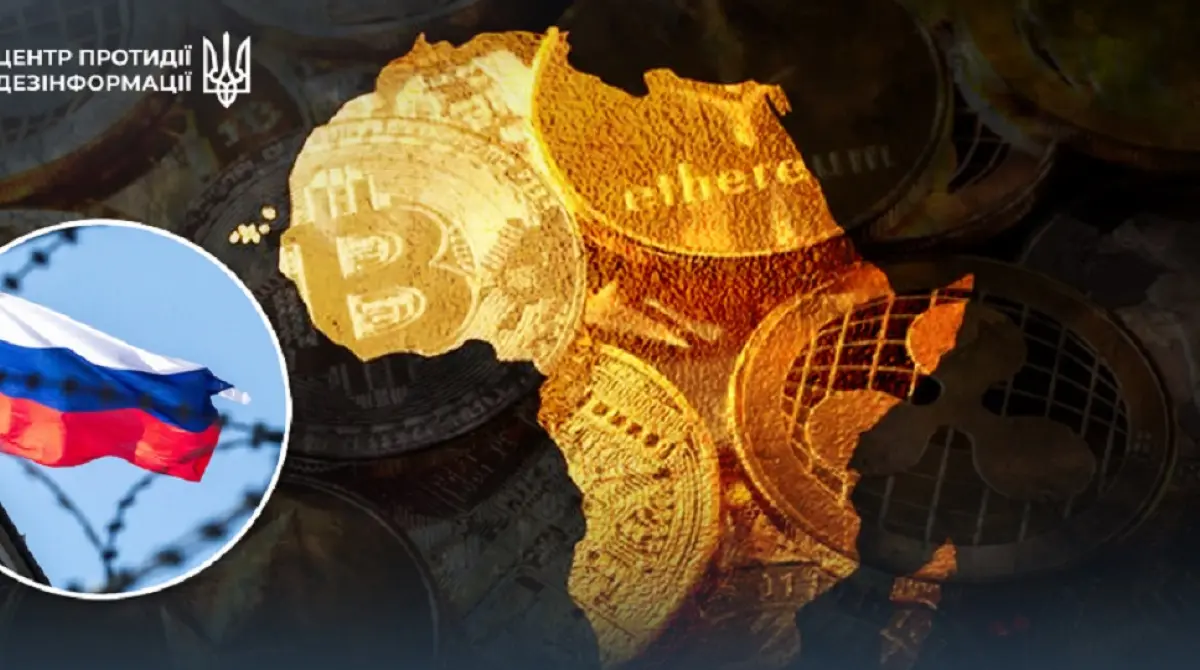
Africa is emerging as a strategic testing ground for Russia’s efforts to construct a parallel financial network, as mounting sanctions from the United States and its allies push Moscow to explore alternative systems for cross border payments and global financial transactions.
At the centre of this shift is the expansion of Russian cryptocurrency firm A7, which is reportedly building a payment infrastructure designed to bypass traditional Western controlled systems such as SWIFT. The move reflects a broader geopolitical and financial recalibration, as Russia seeks to maintain international trade flows despite being increasingly isolated from mainstream global banking channels.
According to findings from the Center for Information Resilience, A7 is actively expanding its footprint across several African countries, including recruitment efforts in Togo and operational signals in Nigeria and Zimbabwe. The company is working toward creating a network that facilitates transactions in rubles and digital assets, potentially offering an alternative settlement system for countries and entities looking to avoid Western financial scrutiny.

This expansion is not happening in isolation. Reports indicate that the initiative has backing from Kremlin linked financial institutions, including PSB Bank, as well as connections to sanctioned business figures. The project is seen as part of Russia’s wider strategy to develop financial infrastructure that can operate independently of Western influence, particularly as sanctions continue to tighten following geopolitical tensions in Eastern Europe and beyond.
Africa’s role in this strategy is deliberate. The continent has rapidly become one of the fastest growing cryptocurrency markets in the world, driven by practical economic needs rather than speculation. High remittance costs, currency instability, and limited access to traditional banking services have made digital assets an increasingly attractive alternative for millions of users.
Recent data shows that Sub Saharan Africa recorded more than $200 billion in on chain cryptocurrency activity between 2024 and 2025, representing a significant year on year increase. More than 50 million Africans now use cryptocurrencies for everyday financial activities, including cross border payments, savings, and business transactions.
Nigeria stands out as a major hub in this ecosystem, with over 25 million crypto users and one of the highest adoption rates globally. In many cases, stablecoins are used as a hedge against inflation and as a practical tool for international trade, allowing individuals and businesses to bypass costly or unreliable banking systems.
Unlike in Western economies, where cryptocurrency usage is often driven by investment and speculation, Africa’s adoption is largely functional. This creates an environment where new financial technologies can be tested at scale in real world conditions, making the continent highly attractive to global players seeking to build alternative systems.
For Russia, this presents both an opportunity and a strategic necessity. Being cut off from SWIFT and facing restrictions on dollar based transactions has forced Moscow to rethink how it engages with global markets. By leveraging blockchain technology and expanding into regions with high crypto adoption, Russia can potentially maintain trade flows and financial connectivity outside the traditional system.
Russian Foreign Minister Sergey Lavrov recently described A7 as Russia’s “first international financial platform,” underscoring its importance in the country’s evolving economic strategy. The platform is expected to play a role not just in payments, but also in reshaping how financial relationships are structured in a sanctions constrained world.

However, the development raises complex questions for African economies. While alternative financial networks could offer benefits such as lower transaction costs and increased financial inclusion, they also come with regulatory and geopolitical risks. Governments may face pressure from Western partners concerned about sanctions evasion, while also needing to manage the stability and security of emerging digital financial systems.
There are also concerns around oversight. The relatively light regulatory environment in some African markets, which has helped drive innovation and adoption, could also expose users and financial systems to risks related to fraud, volatility, and illicit financial flows if not carefully managed.
At the same time, the broader global financial landscape is shifting. As geopolitical tensions reshape trade and finance, countries and institutions are increasingly exploring alternatives to established systems. Africa’s growing digital economy and young, tech savvy population position it at the centre of this transformation.
What is unfolding is more than just a technological shift. It is part of a wider reconfiguration of global finance, where power is gradually decentralising and new networks are emerging alongside traditional institutions.
For Africa, the opportunity is clear but so is the challenge. The continent is not just participating in this transformation. It is becoming one of the arenas where the future of global finance is being tested in real time.