


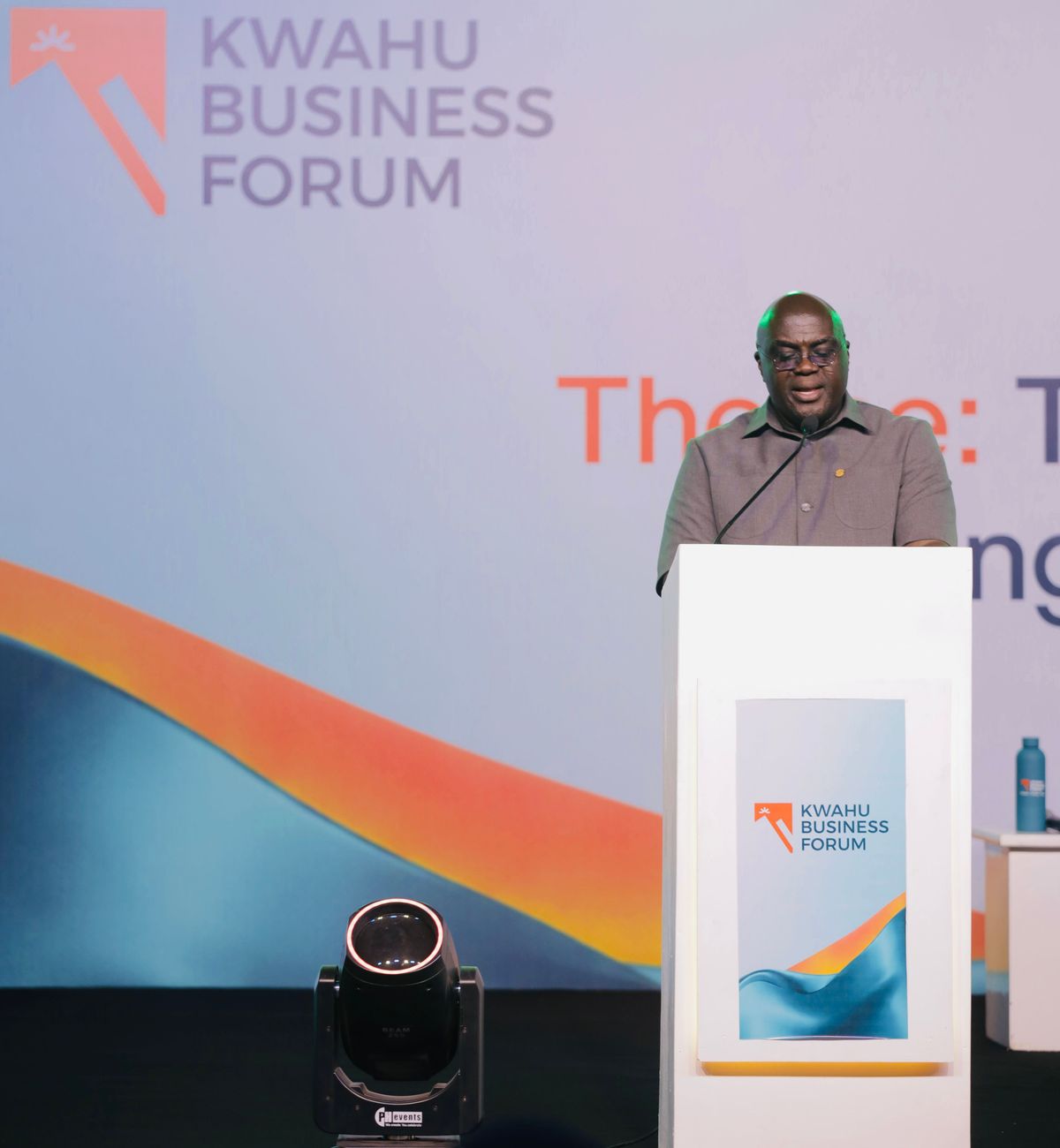
Ghana is intensifying efforts to position itself as a leading manufacturing hub in West Africa, with Chief of Staff Julius Debrah outlining a renewed push to accelerate industrialisation through stronger collaboration between government and the private sector.
Speaking in Accra, the Chief of Staff emphasised that the time had come for Ghana to take deliberate steps toward becoming a centre for manufacturing and export within the sub-region, stressing that industrial growth must move from policy discussions to tangible implementation.
According to him, achieving this ambition will require a coordinated national effort that brings together policymakers, investors, and local businesses to build a competitive industrial base capable of serving both domestic and regional markets. He highlighted that Ghana’s political stability, strategic location, and access to the African Continental Free Trade Area present a strong foundation for industrial expansion.
The push aligns with a broader economic strategy under the administration of John Dramani Mahama, which seeks to transform Ghana’s economy from one heavily reliant on raw exports into a value-driven, industrialised system. Analysts say this shift is critical if the country is to create sustainable jobs, boost exports, and strengthen economic resilience.
Recent policy direction shows that manufacturing is being treated as a central pillar of Ghana’s long-term development agenda. The government has already set ambitious targets to increase the sector’s contribution to Gross Domestic Product from about 10 percent to at least 15 percent by 2030, alongside plans to create up to 500,000 industrial jobs. These targets reflect growing urgency to reposition the economy amid global competition and shifting trade dynamics.

The Chief of Staff also stressed the importance of private sector participation, noting that government alone cannot drive industrial transformation. He called for increased investment in local manufacturing companies, expansion of production capacity, and stronger linkages across value chains to ensure that Ghana captures more value from its raw materials.
This approach builds on ongoing initiatives aimed at revitalising key sectors such as textiles, garments, and agro-processing, which are seen as critical drivers of job creation and export growth. Government officials have indicated that supporting local industries to operate at full capacity, while attracting foreign investment, will be essential to achieving hub status within the region.
Ghana’s ambition to become a manufacturing hub is also closely tied to the opportunities presented by the African Continental Free Trade Area, which provides access to a market of over 1.4 billion people. By strengthening its industrial base, Ghana aims to position itself as a production and distribution centre for goods across West Africa and the broader continent.
However, the path to achieving this vision is not without challenges. Structural issues such as energy reliability, infrastructure gaps, and access to finance continue to affect the competitiveness of local manufacturers. Industry players have repeatedly pointed to high production costs and limited industrial capacity as barriers that must be addressed to attract large-scale investment.
Despite these challenges, momentum appears to be building. The government has been promoting policies such as export incentives, industrial parks, and partnerships with foreign investors to strengthen the manufacturing ecosystem. There is also increasing emphasis on developing human capital, with a focus on skills training and technical education to support industrial growth.

The Chief of Staff’s remarks reinforce a broader narrative emerging across Ghana’s economic policy space: that industrialisation is no longer optional but essential. With global supply chains evolving and countries competing for manufacturing investment, Ghana is positioning itself to take advantage of shifting dynamics by offering a stable and strategically located base for production.
Ultimately, the success of this ambition will depend on execution. While the policy direction is clear, stakeholders say sustained commitment, policy consistency, and effective implementation will determine whether Ghana can truly establish itself as West Africa’s manufacturing hub.
Ghana and Zimbabwe strengthen bilateral ties with new strategic agreements