


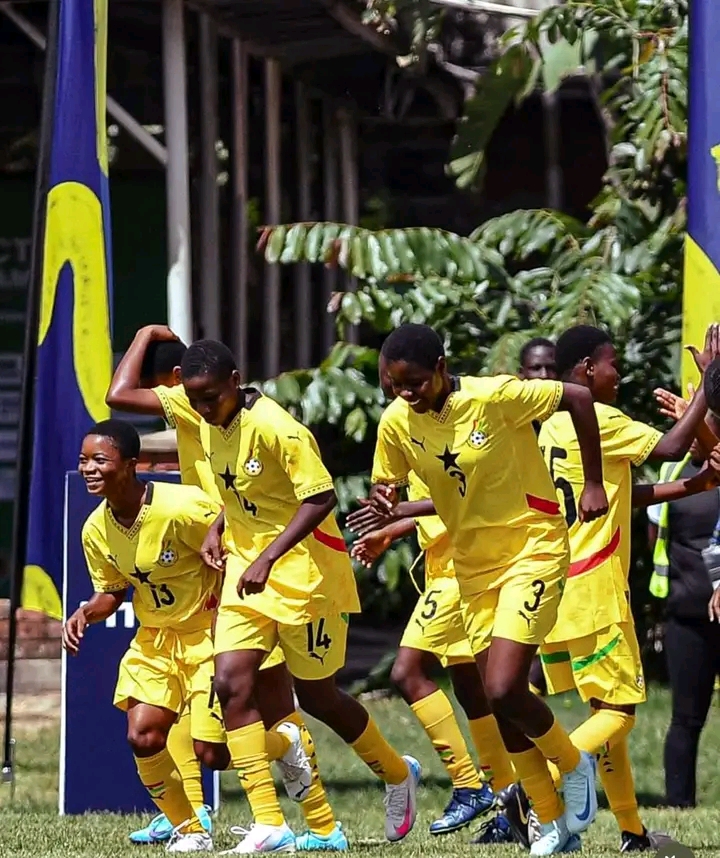
Ghana’s U-15 girls national team, popularly known as the Black Damsels, have successfully defended their title at the CAF African Schools Football Championship after defeating Burkina Faso in a tense final that ended 10-9 on penalties, confirming their status as the dominant force in African schools football.
The victory crowns a remarkable campaign for the young Ghanaian side, who entered the tournament in Zimbabwe as defending champions and lived up to expectations with a blend of discipline, technical quality and mental resilience. The team had already shown strong intent from the start of the competition, opening their campaign with a commanding 6-0 win over Guinea and maintaining momentum through the group stages.
Their path to the final was far from straightforward. After navigating a competitive group that included Tanzania and Burkina Faso, the Black Damsels advanced to the semi-finals, where they edged Zambia 1-0 in a tightly contested encounter. The decisive moment came early in that match, with a well-taken goal that underlined Ghana’s attacking sharpness and tactical discipline.

The final itself delivered high drama. Facing a familiar West African rival in Burkina Faso, Ghana found themselves in a fiercely contested match that ultimately had to be decided by penalties. Both teams demonstrated composure and quality under pressure, but it was Ghana who held their nerve in the shootout, clinching a 10-9 victory to secure back-to-back titles.
This triumph is significant beyond just the trophy. The Confederation of African Football launched the competition in 2022 as part of a broader effort to develop grassroots football across the continent, with a focus on education, youth empowerment and talent identification. The tournament has already engaged millions of students and thousands of schools, making it one of the largest youth football initiatives globally.
For Ghana, the implications are clear. The Black Damsels’ continued success reinforces the country’s growing reputation as a powerhouse in women’s youth football. Their performances highlight the strength of grassroots development systems and the increasing investment in nurturing young female talent. At a time when women’s football is gaining global momentum, achievements like this provide a strong foundation for the future of the senior national teams.
The team’s journey also reflects the competitive rise of African youth football as a whole. Countries like Burkina Faso, Zambia and Morocco have demonstrated significant progress, pushing traditional powerhouses like Ghana to maintain high standards. The narrow margins seen in the final and knockout stages suggest a rapidly closing gap in quality across the continent.

Beyond the pitch, the victory carries symbolic weight. It signals a generation of young athletes who are not only technically gifted but also mentally resilient. Winning a final through penalties requires composure, confidence and collective belief, qualities that bode well for the players’ future careers.
For stakeholders in Ghanaian football, the challenge now is clear. Sustaining this success will require continued investment in school-level competitions, coaching, infrastructure and pathways to professional football. The transition from youth success to senior excellence is not automatic, and maintaining this pipeline will be critical.
As the Black Damsels celebrate their achievement, attention will inevitably turn to what comes next. Can this generation translate early success into long-term dominance at higher levels? And more importantly, will Ghana build the systems needed to ensure that this is not just a golden moment, but the start of a sustained era in women’s football?
Black Damsels secure second straight African Schools final after narrow win over Zambia