

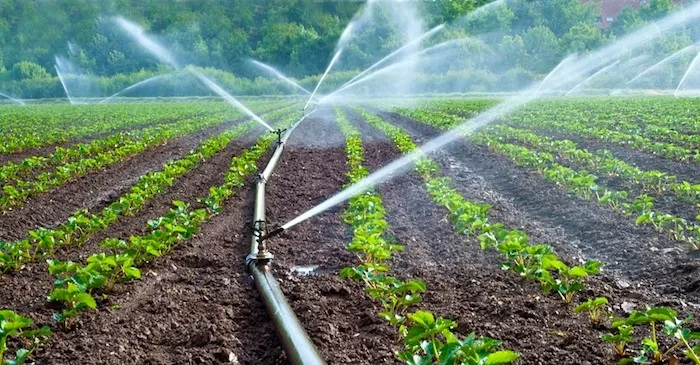
The MP for Offinso North, Dr. Fred Asamoah Kyei, has issued a strong call for Ghana to massively scale up investment in irrigation-driven agriculture to enable year-round farming, reduce dependence on erratic rainfall, and stabilise volatile food prices, especially for staples like tomatoes. Speaking on the floor of Parliament, the legislator emphasised that expanding schemes such as the Asmada Irrigation Project, adopting modern technologies like drip irrigation, and integrating storage and processing facilities are essential to transform Ghana’s agriculture from seasonal to consistent production.
Irrigation-driven agriculture is no longer optional, it is a strategic necessity if Ghana wants to achieve food security, lower import reliance, and create sustainable jobs in the agricultural value chain.
Why Irrigation-Driven Agriculture Matters Now
Ghana’s agriculture remains heavily rain-fed, making it vulnerable to climate variability, prolonged dry spells, and unpredictable weather patterns. This seasonal limitation leads to boom-and-bust cycles: gluts during harvest seasons followed by severe shortages and price spikes off-season. The recent surge in tomato prices, coupled with high post-harvest losses and risks faced by traders crossing borders for supplies, clearly illustrates the cost of inadequate irrigation infrastructure.

Irrigation-driven agriculture addresses these structural weaknesses by allowing multiple cropping cycles per year, extending growing seasons, and ensuring more predictable yields. Dr. Asamoah Kyei highlighted that Offinso North and similar areas possess the potential for continuous tomato production if properly supported. Scaling irrigation would reduce dependence on imports from neighbouring countries, cushion consumers against sharp price fluctuations, and minimise losses that currently waste up to 40% of some perishable produce.
Beyond tomatoes, irrigation-driven agriculture has broad implications for national food security, export competitiveness, and resilience against climate change. With Ghana’s population growing rapidly and urban demand for fresh produce rising, consistent local supply is critical to stabilising markets and reducing the foreign exchange spent on food imports.
Irrigation-Driven Agriculture Impact on Businesses
Businesses across the agricultural value chain stand to gain significantly from expanded irrigation-driven agriculture. Farmers and aggregators would enjoy more reliable harvests, enabling better planning, contract farming arrangements, and access to formal markets. Processors of tomato paste, fruit juices, and other perishables would benefit from steady raw material supply, reducing idle capacity and import costs during off-seasons.
Input suppliers (seeds, fertilisers, irrigation equipment) and service providers (extension services, credit providers) would see increased demand as more farmers adopt modern techniques. Transport and logistics companies would gain from smoother, year-round movement of produce once feeder roads are upgraded, lowering spoilage rates and improving profit margins.
For agribusiness investors, irrigation-driven agriculture lowers risk profiles, making projects more attractive to banks and development finance institutions. The integration of storage and cold-chain facilities, as advocated by the MP, would further unlock opportunities in value addition, packaging, and export-oriented processing, potentially creating thousands of direct and indirect jobs while strengthening Ghana’s position in regional food trade.
How Irrigation-Driven Agriculture Affects Households
Households would experience the most immediate and tangible benefits from scaled irrigation-driven agriculture. Stable year-round production of tomatoes and other vegetables would moderate prices, easing pressure on monthly food budgets that currently spike during lean seasons. Lower and more predictable food costs would improve nutrition, particularly for low-income families who spend a large portion of income on staples.
Rural households engaged in farming would gain from multiple harvests per year, raising incomes and reducing vulnerability to weather shocks. This stability could discourage risky cross-border trading activities that have led to tragic losses. Urban consumers would enjoy fresher, locally sourced produce with fewer import-related quality concerns.
Job creation along the value chain, from farming and irrigation maintenance to processing, transportation, and marketing, would provide employment opportunities for youth and women, boosting household earnings and reducing rural-urban migration pressures. Improved access to affordable credit, inputs, and extension services would empower smallholder farmers, many of whom are household heads, to increase productivity and build resilience.
The Way Forward for Irrigation-Driven Agriculture in Ghana
Dr. Asamoah Kyei’s call aligns with broader national goals of food sovereignty and economic transformation. Realising the potential of irrigation-driven agriculture requires coordinated action: accelerated rehabilitation and expansion of schemes like Asmada, widespread promotion of efficient technologies such as drip irrigation, substantial investment in storage and processing to cut post-harvest losses, and complementary upgrades to feeder roads for efficient market access.
Government, development partners, and the private sector must collaborate to provide affordable financing, quality inputs, and technical training. If implemented effectively, irrigation-driven agriculture can shift Ghana from reactive food imports and price volatility to proactive, self-sufficient production that supports both economic growth and household welfare.
The Offinso North MP’s message is clear: Ghanaians are not seeking handouts but genuine opportunities. Strategic, heavy investment in irrigation-driven agriculture offers exactly that, a pathway to year-round farming, stable food prices, job creation, and long-term food security for the nation.