

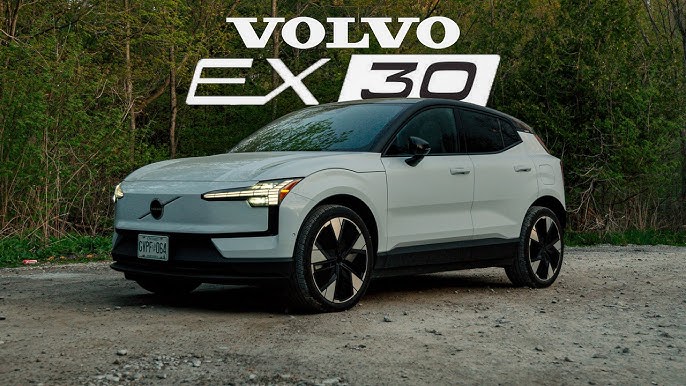
Swedish automaker Volvo Cars has announced it will discontinue the EX30 and EX30 Cross Country electric vehicles in the United States by the end of 2026, marking a major change in its US EV strategy. The announcement comes after years of complications tied to trade policies, tariffs, and a volatile market that have challenged Volvo’s plans to deliver an affordable electric vehicle to American consumers.
First launched in 2023, the EX30 was positioned as a compact EV with a starting price below $35,000, aimed at attracting cost-conscious buyers to the electric vehicle segment. The Cross Country variant, 7with off-road styling, followed the same design ethos but targeted a higher-end market. Both vehicles were initially produced in China for export to the US. However, in 2024, new tariffs imposed by the Biden administration on Chinese-made EVs forced Volvo to shift production destined for the US to its Belgian facility. Earlier tariffs on imported vehicles under previous administrations further increased costs, pushing the EX30’s starting price to about $41,740 and the Cross Country to approximately $50,000, pricing them out of reach for many intended buyers.
Despite the discontinuation in the US, the EX30 will remain available in other North American markets, including Canada and Mexico. Volvo stressed that the move does not affect its overall electrification goals. The company aims to have 90 to 100 percent of global sales come from vehicles with an electrical plug — including fully electric and plug-in hybrid models — by 2030. The automaker is also preparing to introduce a new electric SUV, the EX60, later this year, offering up to 400 miles of range and starting at around $55,000.

The decision reflects broader challenges in the US EV market. According to CarGurus, dealership sales of electric vehicles were down 53.5 percent in January and 45.2 percent in February compared to the same months in 2025. The decline has been linked to the federal government’s cancellation of the $7,500 EV tax credit in September 2025, which removed a major incentive for buyers. Foreign-built EVs have been disproportionately affected, with manufacturers including Volkswagen, Nissan, and Hyundai reducing shipments of models like the ID. Buzz, Ariya, and standard Ioniq 6.
Industry analysts note that while Volvo’s exit of the EX30 may seem like a setback, it is part of a natural reshaping of the US EV market. Seth Goldstein, an analyst at Morningstar, commented that “the decision to discontinue the EX30 was part of a shifting EV landscape. US sales may fall in 2026 but are expected to rise again in 2027 as more affordable models enter the market.” Rising fuel prices, particularly in light of geopolitical tensions affecting the Strait of Hormuz, could also nudge consumers back toward EV adoption, offering some optimism for the sector’s long-term recovery.

Volvo emphasized that its commitment to electrification and customers remains unchanged, despite the decision to remove the EX30 from the US lineup. The company will continue to focus on expanding its EV options with higher-capacity vehicles and additional models designed to meet the evolving needs of the market.
The discontinuation of the EX30 underscores the challenges faced by automakers attempting to balance affordability, production costs, and regulatory complexities in a market that has become increasingly difficult for imported EVs. While the US EV landscape adjusts, companies like Volvo are recalibrating their strategies to ensure that future offerings align with both consumer demand and global sustainability goals.
Electric mobility startup Spiro raises US$50m to accelerate African expansion