


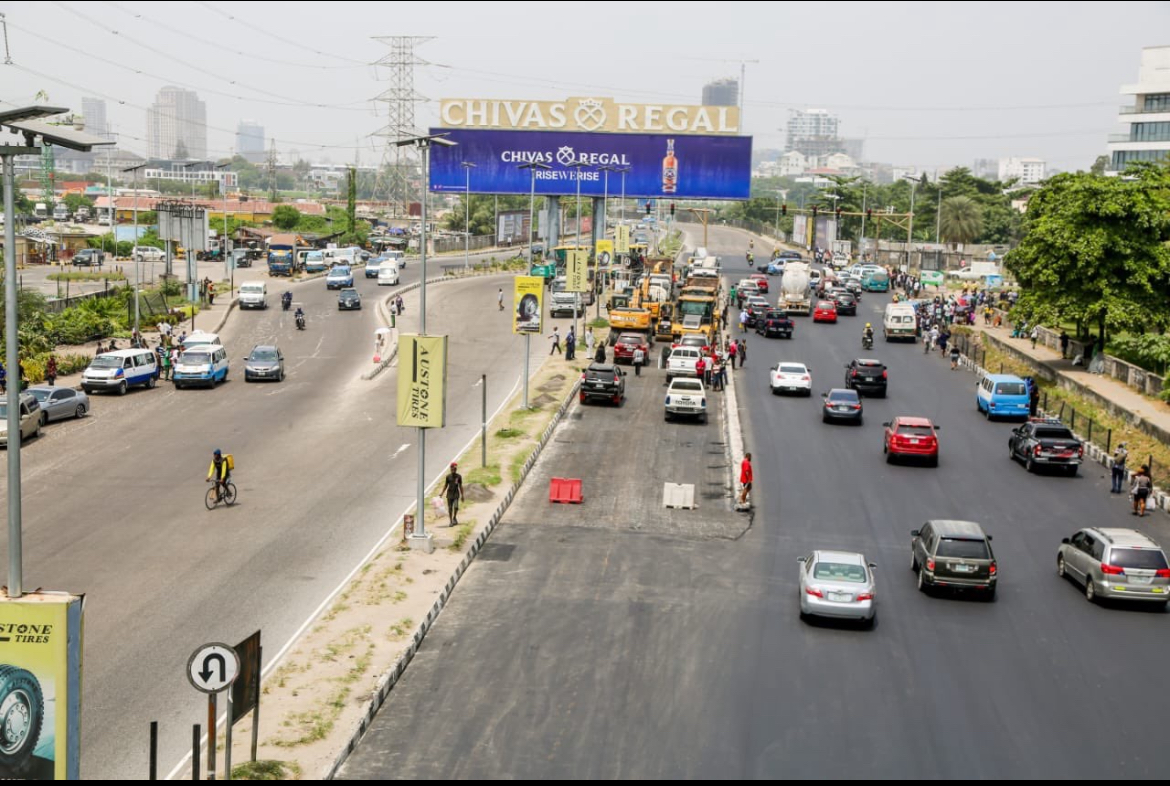
Lekki–Ajah Road rehabilitation has reached a key milestone with the Lagos State Government completing the 9km Lagos-bound stretch from Chevron to Admiralty in only 27 days, well under the original 41-day estimate. This phase forms part of a larger 28km corridor upgrade covering both carriageways from Lekki–Ajah Bridge to Admiralty, executed in carefully sequenced sections to keep one of Lagos’ busiest routes operational.
Lekki–Ajah Road rehabilitation Delivered with Precision
The swift Lekki–Ajah Road rehabilitation success stemmed from a robust Traffic Management Plan that included coordinated personnel, real-time monitoring, and phased execution to minimize widespread disruption. Special Adviser on Infrastructure Engr. Olufemi Daramola confirmed during site inspection that work on the opposing Epe-bound carriageway will begin shortly, maintaining the systematic approach that has already delivered earlier segments such as Chevron–Chisco, Chevron–Igbo-Efon, Igbo-Efon–Jakande, and Jakande–Chisco.
Commissioner for Transportation Oluwaseun Osiyemi highlighted resident cooperation as a critical factor, with ongoing traffic controls set to continue as the remaining sections advance. The project employs durable asphalt resurfacing and drainage improvements, addressing long-standing potholes, flooding risks, and uneven surfaces that plagued the corridor.
Why Lekki–Ajah Road rehabilitation Matters Strategically
Lekki–Ajah Road rehabilitation targets one of Lagos’ most congested and economically vital arteries, linking Victoria Island, high-end Lekki residential zones, commercial hubs, tech estates, and the growing Epe axis. Daily traffic volumes include thousands of private vehicles, corporate shuttles, delivery vans, tankers, and public buses, making the corridor essential for commuter mobility, goods distribution, and service access.

Completing sections ahead of schedule demonstrates improved project management under the current administration, delivering tangible infrastructure wins despite population pressure and funding constraints. The phased strategy balances urgency with practicality, ensuring partial benefits reach users early while avoiding total road closures that could paralyze movement.
Lekki–Ajah Road rehabilitation Boosts Business Efficiency
Businesses along and reliant on the Lekki–Ajah corridor gain immediate advantages from Lekki–Ajah Road rehabilitation. Faster, smoother travel cuts vehicle operating costs, fuel, maintenance, and tyre wear, for logistics firms, ride-hailing operators, and delivery services. Reduced idling in traffic lowers downtime for sales reps, field technicians, and executives commuting between Victoria Island, Lekki, and Admiralty business districts.
Retailers, restaurants, and real-estate developers in the area see improved customer access and footfall as journey times shorten and reliability rises. Construction firms benefit from better material haulage, while e-commerce and last-mile operators experience fewer delays in peak-hour deliveries. Overall, enhanced road quality supports higher productivity, tighter schedules, and stronger competitiveness in Lagos’ fast-growing eastern corridor.
Households feel the Lekki–Ajah Road rehabilitation impact through reduced daily stress and costs. Commuters, many spending hours in gridlock, now face shorter travel times to workplaces, schools, hospitals, and markets, freeing up personal time and lowering transport expenses. Families relying on private cars or danfo minibuses save on fuel and vehicle repairs from smoother surfaces and fewer pothole-related damages.
Improved safety from repaired drainage and resurfacing cuts accident risks, especially during rainy seasons when flooding previously turned sections treacherous. For residents in Lekki Phase 1, Admiralty, Chevron, and surrounding estates, reliable access to essential services becomes more consistent, while parents gain peace of mind with quicker school runs. In the longer run, sustained infrastructure upgrades help stabilize living costs by supporting efficient supply chains that keep goods prices steadier.
The Bigger Picture for Lekki–Ajah Road Rehabilitation
Lekki–Ajah Road rehabilitation is part of Lagos’ broader push to modernize key arteries amid explosive urban growth. The corridor’s economic weight, home to tech clusters, luxury estates, industrial zones, and port-linked activity, makes reliable connectivity indispensable for attracting investment and sustaining growth. Early delivery of this phase builds public confidence in government execution and sets a benchmark for future contracts.
Challenges remain: funding continuity, quality control across all sections, and managing traffic as Epe-bound works begin. Yet the 27-day achievement proves that disciplined planning and community buy-in can accelerate results on high-impact projects.
For Lagosians, Lekki–Ajah Road rehabilitation delivers more than asphalt, it restores predictability to daily movement, strengthens business momentum, and lightens the load on households navigating one of Africa’s most dynamic megacities. As remaining sections progress, the corridor’s full transformation promises lasting gains in mobility, safety, and economic vitality.
Spiro raises US$50 million dollars for Africa’s electric mobility expansion