


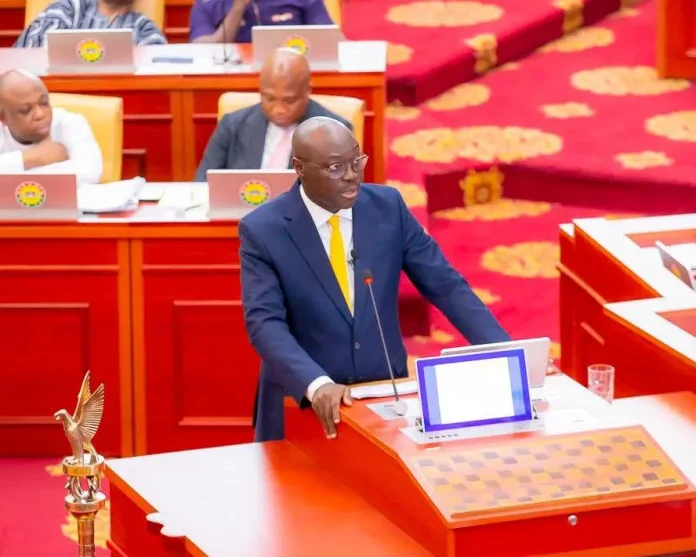
Ghana has taken a major step toward long-term financial security with the unveiling of its first comprehensive Reserve Accumulation Policy. Finance Minister Dr. Cassiel Ato Forson presented the Ghana Accelerated National Reserve Accumulation Policy (GANRAP) 2026–2028 to Parliament, framing it as a decisive break from past reliance on expensive borrowing to build buffers.
Reserve Accumulation Policy Builds on 2025 Turnaround
The Reserve Accumulation Policy arrives amid impressive economic recovery. In 2025, real GDP grew at an average of 6.1% in the first three quarters, inflation plunged from 23.8% in 2024 to 3.8% by January 2026, Treasury bill rates dropped sharply to 6.4%, and public debt fell to 45.3% of GDP. Gross international reserves climbed to US$13.8 billion, providing 5.7 months of import cover, up from 4.0 months the previous year.
Yet the minister warned that three months of cover, the old global benchmark, is inadequate against today’s risks: commodity price swings, funding market turbulence, geopolitical instability, and climate shocks. The Reserve Accumulation Policy aims far higher: 8.6 months by end-2026, 11.8 months by 2027, and a robust 15 months by 2028, creating what Forson calls an “economic war chest.”
Gold Anchors the Reserve Accumulation Policy Strategy
Central to the Reserve Accumulation Policy is a structured gold-backed approach under the Ghana Gold Board Act, 2025. The government targets weekly purchases of about 3.02 tonnes-2.45 tonnes from artisanal small-scale miners and at least 0.57 tonnes from large-scale operations via pre-emption rights. Acquired gold will be refined, stored as physical reserves by the Bank of Ghana, and sold only with Cabinet and Parliamentary approval.
This domestic resource mobilization contrasts sharply with earlier practices. Between 2017 and 2024, Ghana borrowed heavily through Eurobonds, swaps, and commercial loans to accumulate reserves, incurring billions in interest, US$1.16 billion on swaps alone from 2022–2024, plus US$2.5 billion on certain Eurobonds. In 2025, however, the Ghana Gold Board generated roughly US$10 billion in foreign exchange at just US$214 million cost, proving far more efficient.
The Reserve Accumulation Policy extends beyond gold. It promotes higher non-traditional exports, cocoa revitalization, oil palm expansion, new oil developments like Pecan, and foreign exchange savings through gas-to-power initiatives. Sustained fiscal discipline and primary surpluses remain essential to curb outflows and protect gains.
Why the Reserve Accumulation Policy Matters for Businesses and households
For businesses, a stronger Reserve Accumulation Policy means greater stability in forex availability and exchange rates. Reduced volatility helps importers secure inputs predictably, lowers hedging costs, and eases access to trade finance. Exporters benefit from confidence in repatriating earnings without sudden restrictions. Overall, diminished crisis risk attracts investment, supports credit growth, and stabilizes operating costs, critical for manufacturers, traders, and service providers facing global uncertainties.
Households stand to gain through steadier prices and living standards. Robust reserves buffer against imported inflation from currency depreciation or commodity spikes, helping keep food, fuel, and goods affordable. Lower government borrowing costs free resources for social spending, infrastructure, or tax relief. In shocks, like oil price surges or droughts, Ghana can draw on buffers instead of abrupt austerity, protecting jobs and remittances. Long-term, this fosters investor confidence, job creation, and inclusive growth that lifts incomes.
The Path Ahead for Reserve Accumulation Policy Success
The Reserve Accumulation Policy positions Ghana among few African nations with a deliberate, law-backed framework prioritizing domestic assets over debt. If executed well, through transparent gold purchases, export diversification, and fiscal prudence, it could transform vulnerability into resilience.
Success hinges on implementation: enforcing mining targets, curbing smuggling, expanding non-gold inflows, and maintaining discipline. Parliament’s backing will be key.
Ultimately, the Reserve Accumulation Policy isn’t just about numbers, it’s a safeguard for Ghana’s future prosperity, shielding businesses from turbulence, easing household pressures, and building a foundation for sustained development in an unpredictable world.