


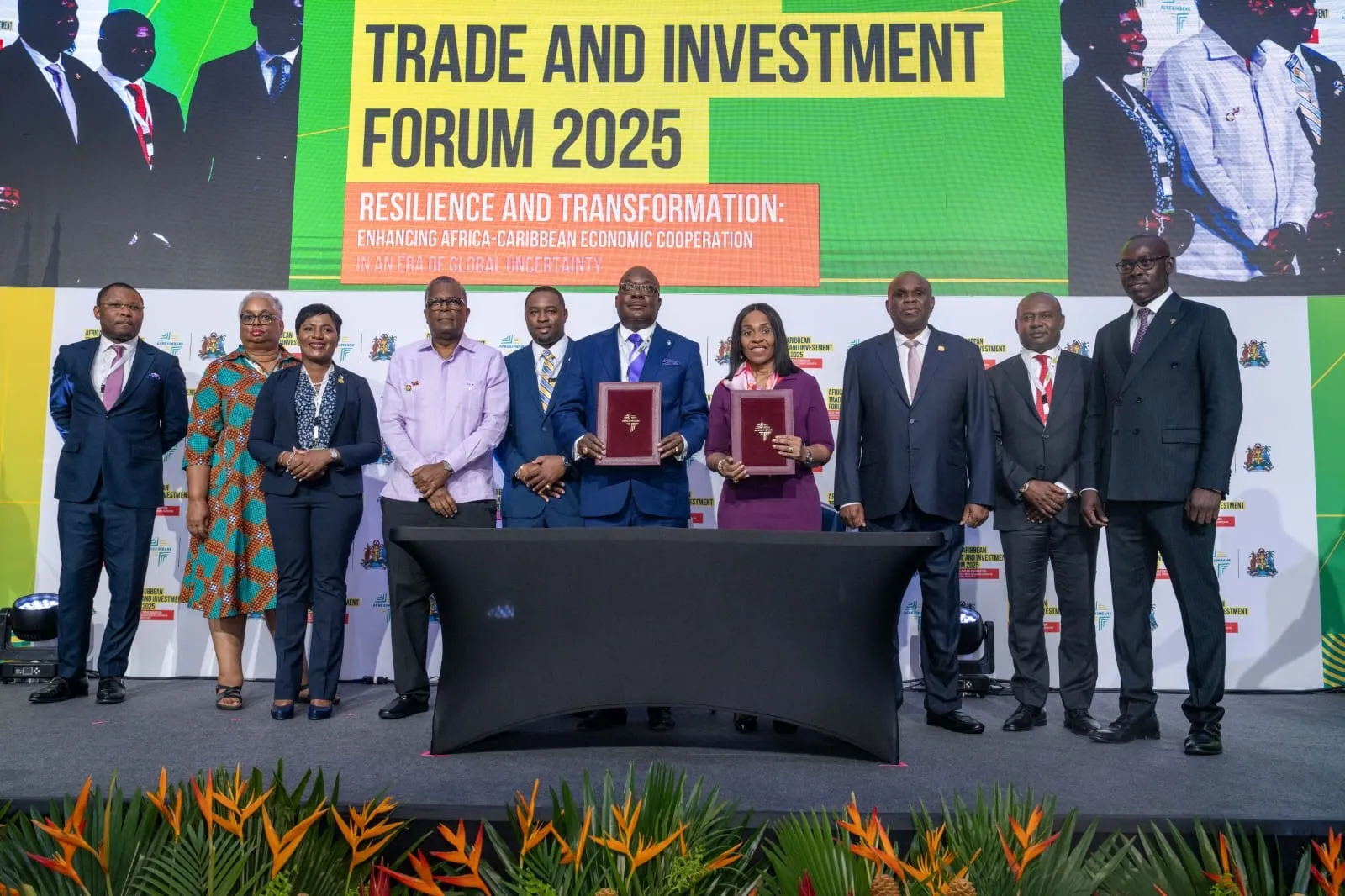
The newly formalized South Africa Afreximbank partnership marks a significant turning point in the country’s economic strategy, signaling a deeper commitment to industrial expansion, export competitiveness, and continental integration. By acceding to the Africa Export–Import Bank, South Africa is positioning itself to tap into structured trade finance and long-term capital aimed at reshaping its economic trajectory.
Signed in Johannesburg in the presence of government officials and business leaders, the South Africa Afreximbank partnership goes beyond symbolism. It represents a calculated effort to unlock funding for infrastructure, diversify exports, and strengthen regional value chains at a time when African economies are seeking greater resilience amid global volatility.
Why the South Africa Afreximbank Partnership Matters
At its core, the South Africa Afreximbank partnership is about access to capital tailored to African trade realities. Afreximbank specializes in financing intra-African commerce and supporting industrial projects that may struggle to attract conventional funding. For South Africa, this means structured financial backing for sectors critical to long-term growth.
The partnership arrives as the country navigates structural challenges, including sluggish growth, energy constraints, and high unemployment. By securing a country programme with Afreximbank, South Africa gains access to funding mechanisms that can accelerate strategic projects without overburdening domestic fiscal resources.
For businesses, the South Africa Afreximbank partnership enhances financing certainty. Exporters often face constraints in obtaining affordable credit across the trade lifecycle, from production to shipment and payment guarantees. Dedicated trade finance facilities can bridge these gaps, improving competitiveness in regional and global markets.
Industrialisation at the Center of the South Africa Afreximbank Partnership
A defining feature of the South Africa Afreximbank partnership is its alignment with an industrialisation agenda anchored on decarbonisation, diversification, and digitisation. Investments in renewable energy, green hydrogen, and climate-resilient infrastructure are expected to form a central pillar of collaboration.
This focus on green industrialisation positions South Africa to benefit from the global energy transition. By beneficiating critical minerals locally rather than exporting raw materials, the country could capture greater value within domestic supply chains. The South Africa Afreximbank partnership provides a financial platform to support such capital-intensive projects.
For households, industrial expansion has employment implications. Large-scale infrastructure and renewable energy investments can create jobs across engineering, construction, and manufacturing. Over time, this could ease unemployment pressures and stimulate local economies.
Inclusive Finance and SME Empowerment
The South Africa Afreximbank partnership also carries a strong inclusion component. A dedicated support programme is designed to channel funding toward small and medium enterprises, black industrialists, and women- and youth-led businesses.
Access to finance remains a persistent barrier for smaller enterprises. By leveraging Afreximbank’s financing structures, the initiative could enable entrepreneurs to expand production, enter export markets, and build assets. For communities historically excluded from industrial growth, the South Africa Afreximbank partnership offers a pathway to broader participation in trade.
Households stand to benefit if SME growth translates into job creation and income stability. When small businesses thrive, they often reinvest locally, strengthening community-level economic resilience.
Toward a National Export–Import Bank
Another strategic dimension of the South Africa Afreximbank partnership is the groundwork it lays for establishing a national export–import bank. Modeled on global best practices, such an institution would provide structured export credit, guarantees, and insurance tailored to South African firms.
A domestic export–import bank could reduce reliance on foreign financing institutions and align funding with national industrial priorities. For exporters, this means smoother access to working capital and risk mitigation tools. For the broader economy, it enhances competitiveness and integration into continental trade networks.
The creation of such an institution signals long-term commitment embedded within the South Africa Afreximbank partnership, reinforcing the country’s ambition to lead in regional economic integration.
Broader Economic Implications
The South Africa Afreximbank partnership arrives at a time when Africa is intensifying intra-continental trade under integration frameworks. Strengthening export finance mechanisms supports participation in regional supply chains, reducing dependence on extra-continental markets.
For businesses, this could mean expanded market access across Africa, supported by coordinated financing and trade facilitation. For households, stronger trade performance can translate into economic growth, employment, and improved public revenue streams.
However, successful implementation will depend on governance, project selection, and policy consistency. Access to capital alone does not guarantee transformation; effective deployment is critical.
A Strategic Bet on Africa’s Future
Ultimately, the South Africa Afreximbank partnership represents a strategic bet on Africa’s collective economic future. By aligning industrialisation with green and digital priorities, expanding trade finance, and empowering underserved entrepreneurs, South Africa is signaling intent to shape the continent’s next growth chapter.
For businesses, the partnership opens channels of structured financing and export support. For households, it holds the promise of job creation and inclusive development. As projects materialize and funding flows translate into tangible infrastructure and enterprise growth, the true impact of the South Africa Afreximbank partnership will become clearer.
What is evident now is that the agreement marks more than administrative accession, it signals a recalibration of South Africa’s economic strategy toward deeper integration, industrial resilience, and long-term competitiveness.
State-Owned Enterprise reform urgent, says Mahama