

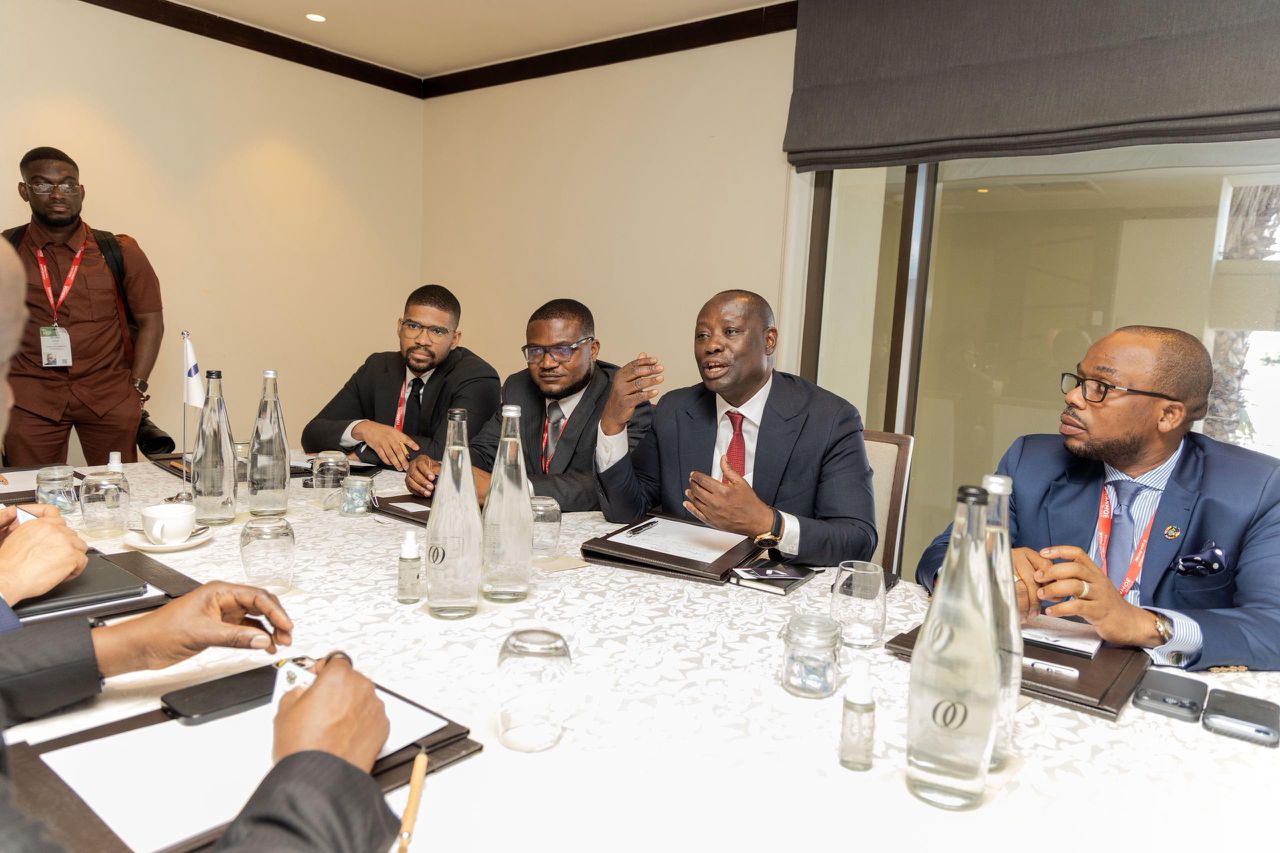
Ghana’s renewed drive for mineral value addition is gaining momentum as government officials court the Africa Finance Corporation (AFC) to mobilise capital for major mining projects. The discussions, held on the sidelines of Mining Indaba 2026, signal a strategic shift: moving beyond raw mineral exports toward processing, refining and industrial integration.
At the centre of the talks is how to finance large-scale projects in bauxite, gold and iron ore while reducing investment risk. The emphasis on mineral value addition reflects a broader continental ambition to capture greater economic benefits from Africa’s natural resources rather than exporting unprocessed commodities.
For businesses and households, this shift carries significant implications for jobs, prices, infrastructure development and long-term economic stability.
Why Mineral Value Addition Matters Now
The case for mineral value addition has grown stronger as global demand for critical minerals rises, driven by energy transition technologies and industrial growth. Yet Africa still captures only a small portion of downstream processing revenue. Much of the value chain, refining, smelting, manufacturing, happens outside the continent.
Without mineral value addition, Ghana remains exposed to commodity price swings. Raw mineral exports generate foreign exchange, but earnings fluctuate with global market cycles. Processing minerals locally could stabilise revenues, deepen industrial capacity and create higher-skilled employment.
For households, this translates into potential job opportunities beyond traditional mining roles. Refining plants, logistics hubs and manufacturing facilities create broader employment ecosystems, supporting engineers, technicians, transport operators and service providers.
Financing Constraints and the Mineral Value Addition Gap
A key obstacle to mineral value addition is financing. Large-scale processing plants require significant capital investment, reliable power supply and transport infrastructure. Investors often perceive such projects as high-risk due to regulatory uncertainty, currency volatility and infrastructure deficits.
By engaging the AFC, government aims to close this financing gap. Development finance institutions can provide long-term funding, risk mitigation instruments and project structuring expertise. If structured effectively, mineral value addition projects could attract blended financing models that combine public and private capital.
For businesses, improved access to financing could stimulate local supply chains. Construction firms, equipment suppliers and financial service providers would benefit from expanded industrial projects. However, without careful risk management, public borrowing to support mineral value addition could increase fiscal pressure.
Mineral Value Addition and Industrialisation Strategy
The push for mineral value addition aligns with Ghana’s broader industrialisation agenda. Linking mineral extraction to domestic processing can stimulate manufacturing growth, particularly in aluminium, steel and jewellery production.
For example, developing an integrated bauxite-to-aluminium value chain could reduce reliance on imported aluminium products. Similarly, iron ore processing could support local steel production, benefiting the construction sector.
In practical terms, successful mineral value addition could reduce import bills, strengthen the cedi through higher export earnings and improve trade balance stability. These macroeconomic gains directly affect households by influencing inflation, exchange rates and purchasing power.
The proposal for a ministerial forum to harmonise policies highlights another critical dimension: regional collaboration. Fragmented policies across African countries often weaken bargaining power and deter cross-border investment.
A coordinated approach to mineral value addition could create integrated regional supply chains, allowing countries to specialise in different stages of processing. This reduces duplication of infrastructure while maximising comparative advantages.
For businesses, regional integration lowers trade barriers and expands market access. For households, regional industrial growth can translate into more stable employment opportunities and potentially lower costs for locally produced goods.
Risks and Realities of Mineral Value Addition
Despite its promise, mineral value addition is not a guaranteed success. Processing plants demand reliable electricity and water supply. Ghana’s energy costs remain relatively high, which could reduce competitiveness unless infrastructure bottlenecks are addressed.
Environmental management is another concern. Downstream processing can generate waste and emissions if not properly regulated. Without strong oversight, mineral value addition projects could create environmental costs that offset economic gains.
Moreover, global competition is intense. Countries with established processing capacity may resist shifts in supply chains. Ghana must therefore ensure that policies supporting mineral value addition remain predictable and investor-friendly.
For ordinary households, the success of mineral value addition could mean more diversified employment and reduced dependence on volatile commodity exports. Stable export earnings strengthen government revenue, potentially increasing funding for healthcare, education and social infrastructure.
Small and medium-sized enterprises (SMEs) could benefit from procurement opportunities linked to expanded industrial operations. Transport services, catering, maintenance and technical support businesses stand to gain.
However, if projects are delayed or poorly managed, the expected benefits of mineral value addition may not materialise quickly. Households may continue to face inflationary pressures tied to currency volatility and external shocks.
Ghana’s engagement with the AFC represents more than routine investment discussions; it signals a structural shift toward mineral value addition as a development strategy. The success of this approach depends on aligning financing, infrastructure planning and regulatory stability.
If executed effectively, mineral value addition could reposition Ghana from a raw material exporter to a competitive industrial player. If not, the country risks remaining trapped in the lower end of global commodity value chains.
For businesses and households alike, the outcome will shape income stability, job creation and long-term economic resilience.