

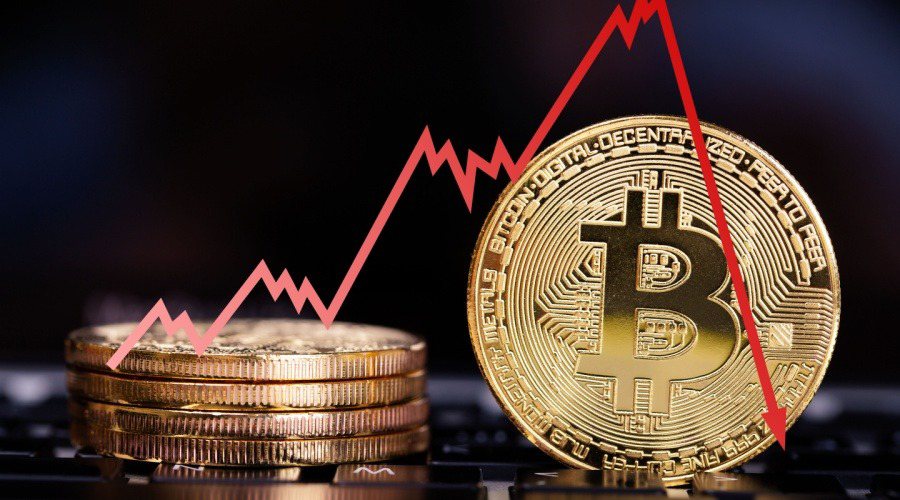
Bitcoin price correction dynamics are now dominating market discussions as bitcoin slides below the $100,000 threshold. While price swings are nothing new for crypto, the scale and speed of the latest decline have raised deeper questions about market structure, investor psychology, and risk exposure. At the centre of the debate is whether the ongoing bitcoin price correction represents a temporary adjustment or the early phase of a more prolonged downturn.
For households and businesses with direct or indirect exposure to crypto assets, this distinction matters. Bitcoin now influences consumer wealth, corporate treasury strategies, and investor sentiment well beyond the digital asset space. A disorderly correction can spill into broader financial behaviour, shaping spending, saving, and investment decisions.
Understanding the bitcoin price correction
Bitcoin has historically moved in cycles, with sharp rallies often followed by deep retracements. The current bitcoin price correction fits this pattern on the surface, but differs in its underlying drivers. Unlike earlier cycles dominated by retail speculation, today’s market is heavily shaped by institutional participation, derivatives trading, and exchange-traded products.
This structural shift means corrections may unfold more slowly, with volatility stretched over time rather than resolved in a single dramatic crash. As a result, investors face prolonged uncertainty instead of a clear market reset.
Price declines versus structural stress
Not every decline signals fundamental weakness. However, the present bitcoin price correction is occurring alongside signs of elevated leverage in derivatives markets. Futures, options, and synthetic exposure allow traders to amplify positions without holding the underlying asset, increasing instability during downturns.
For investors, this creates a risk that prices continue to drift lower as leveraged positions unwind gradually. For policymakers and financial institutions, it raises concerns about how losses in crypto-linked products could interact with traditional financial systems.
Bitcoin’s long-term appeal rests on its fixed supply of 21 million coins. Yet the financialization of crypto has complicated this narrative. Through ETFs and derivative contracts, Bitcoin exposure can be replicated multiple times without affecting actual supply.
This disconnect weakens scarcity’s short-term influence on pricing and helps explain why the bitcoin price correction has been stubborn rather than swift. When price discovery shifts from spot markets to leveraged instruments, sentiment, not fundamentals, tends to dominate.
Implications for business
For companies holding Bitcoin or operating in crypto-adjacent sectors, the ongoing bitcoin price correction presents operational challenges. Balance-sheet volatility complicates cash-flow planning, investor reporting, and capital allocation decisions.
Some firms may delay expansion or investment until price stability returns, while others may reassess whether holding Bitcoin aligns with their risk tolerance. In this context, a decisive end to the correction, whether higher or lower, would provide clarity that markets currently lack. Some firms may delay expansion or investment until price stability returns, while others may reassess whether holding Bitcoin aligns with their risk tolerance. In this context, a decisive end to the correction, whether higher or lower, would provide clarity that markets currently lack.
Households are increasingly exposed to Bitcoin through direct ownership, pension-linked products, and crypto-themed investment funds. During a prolonged bitcoin price correction, losses feel unresolved, often leading to reduced discretionary spending and heightened financial caution.
This can have knock-on effects for the broader economy, especially if declining crypto wealth coincides with inflationary pressures or tighter financial conditions. Unlike traditional market downturns, crypto losses can disproportionately affect younger investors and first-time market participants.
Is buying below $100,000 justified?
Supporters argue that Bitcoin’s long-term trajectory remains intact and that buying during a bitcoin price correction has historically rewarded patient investors. Past cycles show that accumulation during downturns often precedes strong recoveries.
However, timing remains uncertain. Without clear signals that selling pressure has fully eased, aggressive buying carries risk. A phased approach, spreading purchases over time, may reduce exposure to further downside while maintaining participation in any recovery.
The current bitcoin price correction reflects a maturing asset class grappling with its own complexity. Bitcoin is no longer isolated from global liquidity conditions, interest-rate expectations, or institutional risk management practices.
How this correction resolves will shape perceptions of Bitcoin as a store of value, a speculative asset, or something in between. For businesses, households, and policymakers alike, the outcome will influence how deeply crypto integrates into the financial mainstream.