


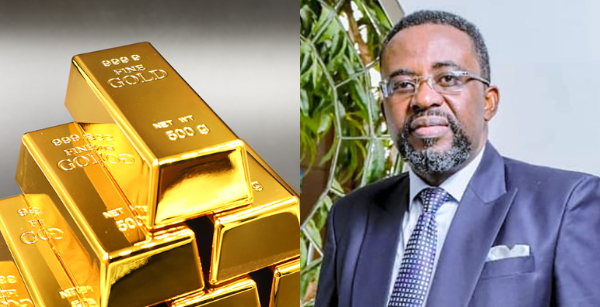
The Bank of Ghana (BoG) has stepped in to address public concerns over the recent gold reserves liquidation, reassuring Ghanaians that no national assets were lost in the process. The central bank clarified that the transaction involved converting part of Ghana’s gold holdings into high-quality foreign exchange (FX) assets, which remain fully integrated into the country’s international reserves. These FX assets are actively managed and invested in accordance with standard central-bank reserve management practices, aimed at generating returns while preserving the overall value of the reserves.
The BoG emphasised that the action was strategic rather than reactive, forming part of a deliberate policy to diversify the composition of Ghana’s reserves, reduce exposure to a single asset class, and enhance overall external stability. By reallocating resources in this way, the Bank seeks to align Ghana’s reserve management with international best practices, ensuring liquidity, safety, and balanced risk exposure in the face of fluctuating global commodity and currency markets.
Why the Gold Reserves Liquidation Happened
The BoG highlighted that the decision to execute the gold reserves liquidation arose from a need to rebalance Ghana’s reserve portfolio. By the end of 2025, gold had grown to over 40% of the country’s Gross International Reserves (GIR) due to sustained accumulation and rising global prices. This concentration posed potential risks, as high exposure to a single asset class can amplify the impact of price swings. By reducing gold’s share to approximately 20% of total reserves, Ghana aligns with international best practices observed by peer central banks, which typically maintain gold at 20–25% of reserves.

How Proceeds Were Used to Strengthen Stability
Following the gold reserves liquidation, proceeds were redeployed into high-quality, liquid FX assets and fixed-income instruments. A portion is managed by external professional fund managers to enhance returns while adhering to strict risk controls. The BoG emphasized that this approach ensures liquidity, reduces concentration risk, and maintains portfolio balance. For households and businesses, the broader implication is confidence that Ghana’s reserves can support currency stability, trade financing, and macroeconomic resilience even in periods of global financial uncertainty.
While the gold reserves liquidation might seem technical, it has direct consequences for the economy. By diversifying into FX assets, the BoG bolsters the country’s capacity to manage exchange-rate volatility and external shocks. This stability supports businesses dependent on imports or foreign trade by reducing sudden cost fluctuations caused by currency swings. Households, in turn, benefit from steadier prices for imported goods, more predictable inflation trends, and a safer environment for personal savings and investments.
The BoG stressed that the gold reserves liquidation was a strategic portfolio adjustment rather than a reaction to financial distress. The Bank acted following careful analysis and board approval, converting approximately 22.24 tonnes of gold into FX assets. The move reduced gold holdings from a peak of 38 tonnes to about 18.61 tonnes by December 2025. By adhering to professional reserve-management guidelines, the BoG demonstrates alignment with global central banking practices, including periodic rebalancing to optimize safety, liquidity, and returns.
Future Outlook for Reserve Management
The Bank of Ghana indicated that reserve portfolio adjustments could continue over time, guided by market conditions, asset prices, liquidity needs, and risk exposure. Any future gold reserves liquidation or reallocation of assets will be undertaken with the same principles of prudence and diversification. For businesses and households, this proactive management signals that Ghana’s external position is safeguarded against market shocks, supporting broader economic stability, trade reliability, and long-term investment confidence.
Central banks worldwide routinely adjust their reserve portfolios to balance risk and return. The BoG’s gold reserves liquidation mirrors such practices, ensuring that Ghana does not rely excessively on a single asset. By maintaining a diversified reserve structure, the country mitigates exposure to global commodity price swings and strengthens its ability to manage currency fluctuations. The Bank’s transparency and adherence to professional standards also serve to build trust among investors, businesses, and households, which is crucial for sustaining economic growth.
Ghana gold reserves drop raises urgent questions