

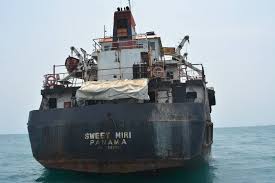
The United States has seized a Nigerian-owned supertanker in a major international security operation, following allegations that the vessel was involved in crude oil theft, piracy, drug trafficking, and other transnational criminal activities. The interception reflects increasing global cooperation to combat illicit maritime operations, especially those tied to the theft and smuggling of natural resources across international waters.
The tanker, a Very Large Crude Carrier known as the Skipper, was intercepted in early December 2025 by the United States Coast Guard with support from the U.S. Navy and other federal agencies. Intelligence reports had flagged the vessel for suspicious activity, prompting close monitoring before authorities moved in. Early investigations suggest the ship may have been carrying crude oil obtained illegally and was potentially linked to wider criminal networks that operate outside standard maritime regulatory structures.
Questions Over Ownership and Registration
The Skipper is associated with a Nigeria-based company, Thomarose Global Ventures Ltd., although official records list a Marshall Islands entity, Triton Navigation Corp., as the registered owner. Adding to the complexity, the vessel was operating under the flag of Guyana at the time of its detention. Maritime officials later confirmed that the tanker was not legitimately registered under that flag, raising concerns about the use of fraudulent or irregular registrations to evade international scrutiny.
This practice, often referred to as using a “flag of convenience,” is a method used by vessels seeking to avoid tougher regulatory regimes. The invalid registration immediately attracted attention from investigators and played a role in deepening suspicions surrounding the tanker’s activities.
Allegations of Criminal Activity
Preliminary findings indicate that the tanker may have been transporting millions of dollars’ worth of crude oil believed to be stolen or unlawfully diverted. Investigators are also examining evidence suggesting involvement in large-scale drug trafficking operations. Alongside this, the vessel is suspected of playing a role in financial schemes linked to global money-laundering networks, some of which may have connections to organised criminal groups.
The multifaceted nature of the allegations underscores the sophistication of the networks authorities believe may be involved. Oil theft, piracy, drug smuggling, and money laundering often intersect in maritime environments, creating a complex web of activities that span continents and require significant law enforcement coordination to address.
Legal and Operational Framework
Following its interception, the Skipper was placed under U.S. custody and is now the subject of a widening federal investigation. Authorities intend to scrutinise documentation, tracking data, and financial transactions associated with the vessel to build a clear picture of its operations over recent months. In addition to potential criminal charges, the case may also involve asset forfeiture proceedings, depending on the outcomes of the investigation.
Seizing a vessel of this magnitude is a substantial undertaking. As one of the largest classes of tankers in global shipping, a Very Large Crude Carrier requires advanced naval coordination to intercept safely. This operation highlights the U.S. government’s commitment to strengthening enforcement across international waters, especially in areas where illicit resource exploitation threatens global markets and national economies.
Regulatory and Security Concerns
The case has reignited debate over maritime regulation in West Africa, particularly in countries where oil theft and illegal bunkering have strained national budgets and undermined energy security for decades. If the tanker departed from a West African port before its seizure, it could signal significant oversight challenges within regional port monitoring systems. Critics have long argued that gaps in vessel tracking, port state inspections, and cargo verification create opportunities for unlawful operations to flourish.
There are also concerns regarding the Nigerian company listed as managing the ship. Recent corporate records show the firm to be inactive, raising further questions about who truly controlled the tanker’s operations and how such a vessel managed to operate across international waters without drawing earlier regulatory attention.
Global Implications
The seizure of the Skipper adds to a growing list of international actions aimed at dismantling criminal operations that exploit global shipping routes. Maritime crime, particularly oil theft, poses severe financial risks for countries dependent on petroleum exports. In Nigeria, losses associated with crude theft have been estimated at billions of dollars over the years, further compounding economic challenges.
International security analysts warn that sophisticated criminal networks often leverage shipping vessels to move not only stolen resources but also drugs, weapons, and illicit funds. These networks can destabilise regions, weaken legitimate industries, and fuel corruption in both public and private sectors.
What Happens Next
With the vessel now under American jurisdiction, U.S. federal prosecutors are expected to continue building a robust case, relying on international cooperation where necessary. The investigation may extend to individuals and organisations connected to the ship’s ownership, logistics, and financial management. Depending on the findings, the case could lead to broader reforms in maritime regulation, particularly in regions heavily affected by oil theft and piracy.
The seizure of the Skipper serves as a clear reminder of the evolving challenges in global maritime security. As criminal networks continue to innovate, international authorities face increasing pressure to strengthen oversight, enhance intelligence sharing, and reinforce legal frameworks to safeguard the integrity of global trade routes.