More Ghanaians Endorse Military Intervention Against Political Misconduct – Afrobarometer Reveals

0
180

A fresh Afrobarometer survey has revealed a sharp rise in the number of Ghanaians supporting military intervention when politicians engage in misconduct or abuse of office.

The 2024 survey, conducted across all regions of Ghana, shows that more citizens are increasingly frustrated with political leadership and are open to the idea of military action under extreme circumstances.

Key Highlights from the Afrobarometer Report

The Afrobarometer Round 10 report finds that about 32% of Ghanaians believe it would be justified for the military to intervene if elected leaders abuse their power or govern against the people’s interest.

This is a noticeable increase compared to previous surveys, signaling growing public dissatisfaction with the political class.

Other major findings include:

61% of Ghanaians still affirm that democracy remains the best form of government. Many citizens, especially the youth and urban residents, are more likely to support military intervention compared to older and rural populations. Concerns around corruption, economic hardship, and lack of accountability are driving the shift. 

What is Fueling This Sentiment?

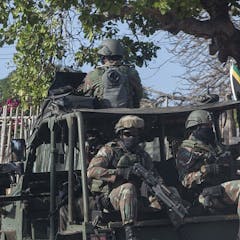
Military intervention against political misconduct
Military Intervention

Several factors appear to explain why more Ghanaians are considering military intervention as an option:

  • Persistent corruption and misuse of public funds by government officials.
  • Economic struggles like inflation and high unemployment, particularly among the youth.
  • Perceived government inaction on key national issues.
  • A growing sense of betrayal among citizens who feel democratic promises have not translated into real improvements.


While many still prefer civilian governance, the survey highlights that repeated failures in governance could continue to weaken public faith in democratic institutions.

Ghana’s Democracy at a Crossroads

Ghana has long been regarded as a beacon of democracy in Africa. However, the latest Afrobarometer results indicate a potential risk if leaders fail to tackle citizens’ grievances swiftly and effectively.

The Afrobarometer research team warns that while the majority still believe in democracy, neglecting the warning signs could open doors for political instability.

About Afrobarometer

Afrobarometer is a respected pan-African research network that conducts surveys on democracy, governance, and economic conditions across the continent. Since 1999, it has provided accurate insights into African public opinion.

Read Also: NDC has prepared petitioners for the removal of EC boss – Nana B alleges

Author

  • Daniel Ablordey

    Daniel Ablordey is a Business Analytics student at the University of Ghana Business School and an emerging strategist at the intersection of data, markets, and narrative. With a keen analytical mind and a passion for African business and economic trends, he is building a career focused on translating complex data-driven insights into accessible, decision-relevant stories that matter.As a writer and editor with Insight Ghana, African Business Insight, and The African Journal, Daniel delivers sharp, high-impact analysis on current affairs, business developments, and emerging trends across the continent. His work is defined by precision, clarity, and a deep commitment to responsible journalism — ensuring that every story he tells is not only accurate but meaningful to the audiences it serves.Beyond his editorial work, Daniel serves as an Ecobank Youth Ambassador, where he actively promotes financial inclusion, digital banking, and financial literacy among young Ghanaians. His leadership experience spans academic, professional, and faith-based institutions, where he has consistently driven initiatives centered on growth, structure, and long-term impact.Grounded in the principles of Pan-Africanism and service, Daniel brings a rare combination of analytical rigour and storytelling depth to his work. Whether unpacking market behavior, profiling emerging business leaders, or covering cultural shifts shaping the continent, he approaches every assignment with strategic intent and editorial integrity.His broader ambition is to contribute to Africa's transformation by shaping how data, business, and storytelling intersect — not just locally, but on a global stage.

Previous articleNamibia to Offer Free University Education Starting 2026: President Announces “Fees Have Fallen”
Next articleDubai-Based Ghanaian Marries Three Wives in Lavish 3-Day Wedding at Winneba
Daniel Amenyo Ablordey
Daniel Ablordey is a Business Analytics student at the University of Ghana Business School and an emerging strategist at the intersection of data, markets, and narrative. With a keen analytical mind and a passion for African business and economic trends, he is building a career focused on translating complex data-driven insights into accessible, decision-relevant stories that matter.As a writer and editor with Insight Ghana, African Business Insight, and The African Journal, Daniel delivers sharp, high-impact analysis on current affairs, business developments, and emerging trends across the continent. His work is defined by precision, clarity, and a deep commitment to responsible journalism — ensuring that every story he tells is not only accurate but meaningful to the audiences it serves.Beyond his editorial work, Daniel serves as an Ecobank Youth Ambassador, where he actively promotes financial inclusion, digital banking, and financial literacy among young Ghanaians. His leadership experience spans academic, professional, and faith-based institutions, where he has consistently driven initiatives centered on growth, structure, and long-term impact.Grounded in the principles of Pan-Africanism and service, Daniel brings a rare combination of analytical rigour and storytelling depth to his work. Whether unpacking market behavior, profiling emerging business leaders, or covering cultural shifts shaping the continent, he approaches every assignment with strategic intent and editorial integrity.His broader ambition is to contribute to Africa's transformation by shaping how data, business, and storytelling intersect — not just locally, but on a global stage.