

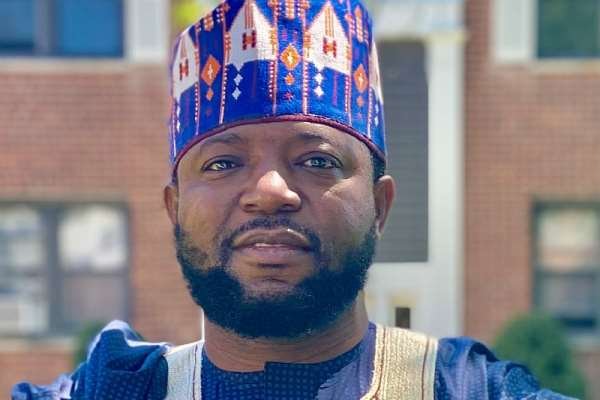
The tragic death of 15 year old Ghanaian teenager Javits Frimpong in New York has renewed conversations about bullying, school safety and the need to protect children from violence, with STEM advocate Alhaji Baba Suwari urging African immigrant communities to seek justice without allowing the incident to deepen divisions between Black Africans and African-Americans. Editorial Standards
In a report, Suwari argues that while concerns surrounding bullying and discrimination in American schools must be taken seriously, the circumstances of Javits’ death should not be used to blame an entire racial or ethnic community.
Javits was fatally shot while walking to school in the Bronx, New York, on Thursday, October 29, 2026.
The teenager had reportedly moved from Ghana to the United States about a year earlier to reunite with his father, Thomas Frimpong, and pursue better educational opportunities.
His death has left his family and the Ghanaian community deeply affected, particularly after his father disclosed that the teenager had experienced bullying at school before the shooting.
Thomas Frimpong reportedly said school authorities had informed him that two students accused of bullying his son had been suspended shortly before the fatal incident.
He has expressed concern that the shooting could be connected to the earlier incidents.
However, investigators have not established a connection between the reported bullying and the killing.
The motive remains under investigation, and authorities have been searching for individuals believed to be connected to the shooting.
Suwari cautions against racial generalisations
Against this background, Suwari has called for a balanced public conversation, warning that the tragedy should not become an African-versus-African-American debate.
He argues that bullying is a wider social problem that affects children from different racial, cultural and national backgrounds.
According to his position, portraying the incident as evidence of hostility between Black Americans and African immigrants risks creating unnecessary divisions without addressing the behaviour and circumstances that allow bullying to occur.
The advocate acknowledges that African immigrant children may face difficulties adjusting to American schools, including differences in accents, cultural practices, social expectations and educational environments. Editorial Standards
Such differences can sometimes expose children to ridicule, exclusion or intimidation.
He maintains, however, that these experiences should be addressed through appropriate school interventions rather than used to encourage hostility towards another community.
Suwari also stresses that African-American children experience bullying and discrimination, including in predominantly White educational environments.
Their experiences, he argues, deserve equal attention and compassion.
His central message is that every child, regardless of race, nationality or immigration background, deserves to learn in an environment where personal safety and dignity are protected.
Personal experience informs his position
Suwari also draws on his experience as a former high school teacher in New York to explain why he believes bullying should be examined beyond racial assumptions.

He recounts encountering situations in which students attempted to intimidate him while he taught mathematics subjects, including Algebra 2, Trigonometry and Pre-Calculus.
He says the experience gave him a better understanding of the challenges teachers face in American schools and the importance of understanding school culture, classroom management and parental involvement.
His experience, he argues, demonstrates that bullying can occur in different relationships. Students may intimidate other students or teachers, while teachers can also mistreat students. Editorial Ethics & Independence
Consequently, he believes the issue requires a broader examination of behaviour, institutional culture and the responsibilities of everyone within the educational system.
Schools and parents urged to take responsibility
The opinion article calls on schools to establish effective systems for reporting bullying and ensure complaints are investigated promptly.
Suwari also recommends protecting students who report intimidation from retaliation and involving parents when incidents occur.
He argues that disciplinary action should be supported by counselling, monitoring and interventions designed to prevent repeated misconduct. Newscard
Parents, meanwhile, are encouraged to teach children respect, tolerance, self-control and peaceful ways of resolving disagreements.
For African immigrant families, he says, helping children adjust to a new educational and cultural environment should include open communication about their experiences and the importance of seeking assistance when they encounter hostility.
The advocate further warns against using social media to spread unverified allegations or make sweeping claims about entire communities.
He believes the death of a child should encourage compassion and responsible discussion rather than become an opportunity to promote personal or political agendas.
Ghana calls for an impartial investigation
The concerns surrounding Javits’ death have also attracted attention from Ghanaian diplomatic authorities.
Ghana’s Ambassador to the United States, Victor Emmanuel Smith, has called for a thorough and impartial investigation, including an examination of reports that the teenager experienced racial bullying at school.

The Ambassador stressed that authorities must establish the facts, identify anyone responsible and ensure justice while protecting children from bullying, racial discrimination and violence.
The investigation remains important because the reported bullying and the fatal shooting must be examined carefully rather than treated as automatically connected.
A call for justice without division
Suwari ultimately argues that the most meaningful response to Javits’ death should be a stronger collective commitment to preventing bullying, discrimination and youth violence.
He believes African immigrants and African-Americans should not be encouraged to view one another as adversaries.
Instead, both communities should work towards safer schools and stronger support systems for children. Privacy Policy & Terms
The teenager’s death has raised difficult questions about school safety, parental involvement, youth violence and the responsibility of educational institutions to respond to complaints of intimidation.
While the circumstances of the shooting remain subject to investigation, the concerns about bullying deserve serious attention in their own right.
For Suwari, justice for Javits must go hand in hand with a commitment to protect every child, regardless of background.
His message is ultimately one of unity: condemn bullying wherever it occurs, demand accountability from those responsible for violence and avoid turning an individual tragedy into a source of racial hostility.