


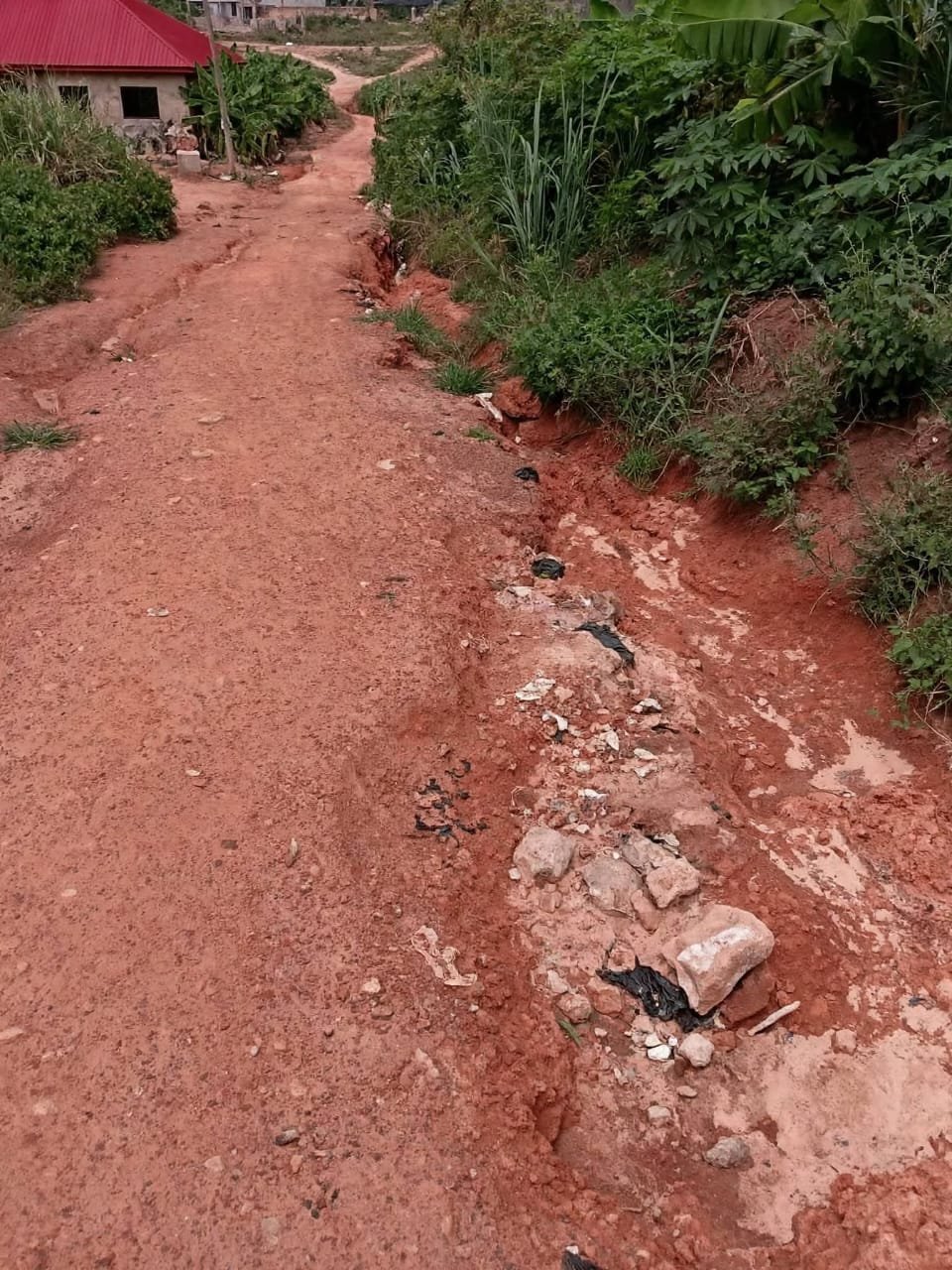
Residents of 11 border communities in the Jaman North District of the Bono Region have called on the government to urgently improve road infrastructure and telecommunications services in the area.
According to the residents, the poor state of roads and unreliable mobile networks are hindering socio-economic development, access to essential services and security operations along Ghana’s international boundary with Côte d’Ivoire.
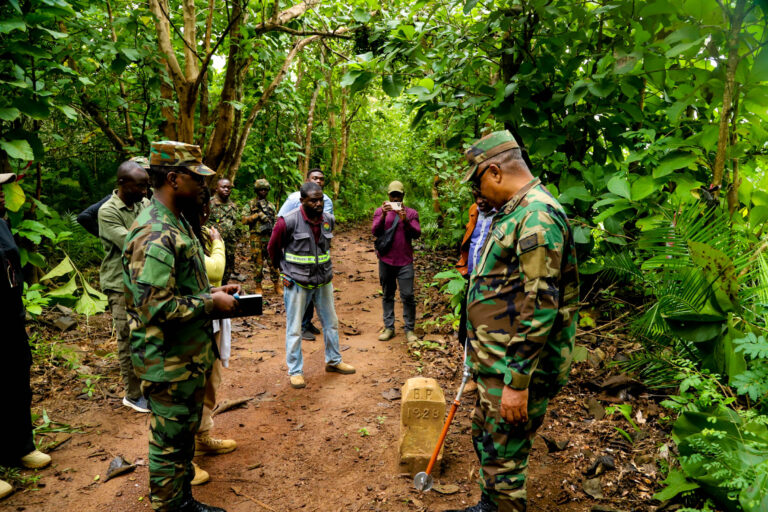
The concerns were raised during a five-day operational assessment and stakeholder engagement by the Ghana Boundary Commission (GhBC) in the district.
As part of the exercise, the Commissioner-General of the Ghana Boundary Commission, Major General Anthony Ntem, paid courtesy calls on traditional leaders and residents of the various border communities to assess their challenges and engage them on boundary-related issues.
Residents said the poor condition of the roads has made it difficult to travel to the district capital, Sampa, to access healthcare, education, markets and other essential services, particularly during the rainy season.
“When it rains, everything gets flooded. No cars come here. Our cashew rots on the farm,” a resident of Jenini, Agya Suma, lamented.
A resident of Buko also explained that the poor road network had forced farmers to sell their cashew produce to buyers across the border in Côte d’Ivoire.
“We mostly sell our harvested cashew to buyers in Côte d’Ivoire due to the poor condition of the roads to Sampa. We are only about 2km away from the community in Côte d’Ivoire, and access to the place is relatively easier and more convenient, compared to the bad road linking us to Sampa, which is about 3.5 km away,” the resident said.

Poor telecommunications raise security concerns
Residents also raised concerns about inadequate telecommunications services, saying the situation is affecting communication, access to information, emergency response and security coordination within the border communities.
Communities including Sampa, Kabree and Adadiem reported unstable mobile network services, while residents of Kokosua No. 2, Bonakire, Jenini, Febi, Buko, Nsosomea and Kuroase said they had no mobile network coverage at all.
The Chief of Kokosua No. 2, Nana Adu Kwaku Ababio, said the absence of mobile connectivity had left residents vulnerable, particularly during emergencies.

“We do not have any mobile telephone networks to make calls. We are cut off as though we are not Ghanaians. During emergencies, we have no way of reaching security services,” he said.
He added that the lack of network connectivity was also affecting education, as students in the communities had limited access to digital learning resources.
“On education, our students sit for the same exams as counterparts in Accra who have access to digital tools to aid in their studies. Yet, our children who do not have the same opportunity are expected to perform as well as their peers in the cities.”
“The network issue is a threat to our safety and development and it must be urgently attended to,” Nana Adu Kwaku Ababio added.
Other development concerns
The communities also highlighted several other pressing needs, including the absence of a police station, Junior High School (JHS) block and mechanised boreholes at Buko and Adadiem.

Residents of Jenini called for a CHPS compound, while the people of Kokosua No. 2 appealed for the posting of female teachers to the community.
Responding to the concerns, Major General Ntem assured residents that the Ghana Boundary Commission would draw the attention of the relevant ministries and government agencies to the challenges raised.
He explained that although human security needs assessments form part of the Commission’s mandate, the Commission does not have the financial capacity to directly address all the developmental challenges confronting border communities.
“Boundary management is not only about pillars. It is also about the people living along the international boundaries. The Commission is very concerned about the developmental needs of border residents. We do not have funds to directly address all your needs. However, everything discussed would be part of our report to Government for intervention through the relevant ministries,” the Commissioner-General said.
26 boundary pillars inspected

As part of the technical component of the assessment, the Ghana Boundary Commission identified, inspected and surveyed 26 International Boundary Pillars (IBPs) along Ghana’s international land boundary in the Jaman North District.
While some of the pillars were found to be intact, others had either been displaced or destroyed.
The Ghana Boundary Commission and the National Boundary Commission are currently undertaking a three-phase joint reaffirmation exercise to replace the International Boundary Pillars defining the common land boundary.
Phase One, covering 150 kilometres, has been completed, with a commissioning ceremony expected to take place in the coming days.
Phase Two, which will cover the Jaman North District, is expected to begin later this year.
The activities undertaken in Jaman North form part of the Ghana Boundary Commission’s broader efforts to define and protect the country’s international boundaries, strengthen border security and promote socio-economic development in communities along Ghana’s borders.
By: Prince Martey-Sogar