


The Ghana Private Road Transport Union (GPRTU) has indicated that commuters could face an increase in transport fares as negotiations with the Ministry of Transport continue over rising operational costs. Editorial Standards
The union, however, says it is awaiting the report of a committee reviewing transport-related cost inputs before taking a final decision on the extent of any fare adjustment.
Deputy Public Relations Officer (PRO) of the GPRTU, Samuel Amoah, disclosed that discussions between the union and the Ministry of Transport remain ongoing following a proposal submitted by the union ahead of the current transport fare pricing window.
Speaking on air on September 15, Mr Amoah explained that the two parties agreed at their most recent meeting on Tuesday that a committee should be established to assess the various cost components affecting commercial transport operations.
“Our last meeting was on last Tuesday and then we all agreed that a committee has to be formed for the committee to check on the price input for them to submit their report hopefully before the close of this week,” he said.
The committee is expected to examine key operational expenses, including fuel prices, vehicle maintenance, spare parts, lubricants, insurance, taxes and other costs incurred by transport operators. Its findings are expected to provide a basis for determining whether a fare adjustment is necessary and, if so, the percentage that can be justified.
Mr Amoah said the GPRTU would consider the committee’s report before making a final determination.“We are waiting for the committee to submit their report so that based on that we will also decide on the percentage increment,” he added.
Despite the ongoing review, the union has not withdrawn its proposed 30% increase in transport fares.
Mr Amoah stressed that the proposal remains the union’s position for now, pending the outcome of the committee’s assessment.“We are still on the 30% proposal, waiting for the committee to submit their report before a final decision will be taken,” he stated. Editorial Ethics & Independence

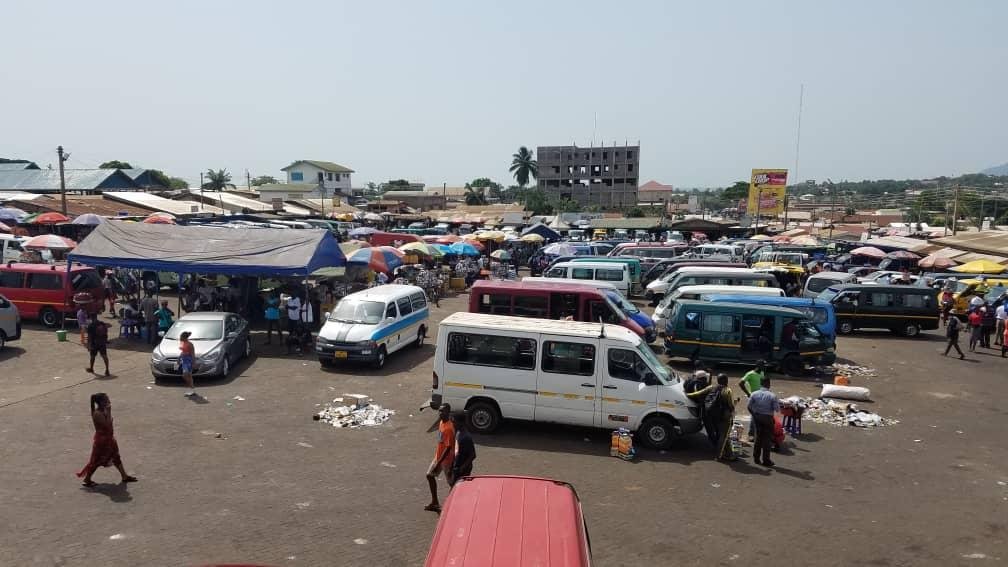
The proposed adjustment, if approved, could have a direct impact on commuters who rely on commercial vehicles such as trotros, taxis and intercity buses for their daily movement.
Transport fares are particularly important to workers, students, traders and other low- and middle-income earners who depend on public transport to access workplaces, schools, markets and essential services.
Although no final increase has been announced, Mr Amoah suggested that a fare adjustment was increasingly likely as the negotiations progressed.“From how things are going, the possibility of transport fare increment is very high,” he said.
The discussions come amid projections of higher petroleum product prices during the second pricing window of September. Fuel costs are a major component of transport operators’ expenses and often influence fare negotiations between transport unions, government representatives and other stakeholders.
According to the latest pricing outlook from the Chamber of Oil Marketing Companies (COMAC), petrol prices are projected to increase by approximately 9.63%, while diesel prices could rise by 6.97%.
Liquefied petroleum gas (LPG) prices are also expected to increase by about 3.22%.Based on COMAC’s projected cash-purchase ex-pump prices, petrol could sell at approximately GH¢17.23 per litre, while diesel could reach GH¢18.35 per litre.
The National Petroleum Authority’s (NPA) price floors for the second pricing window of September also indicate that petrol could sell at a minimum of GH¢16 per litre, with diesel expected to sell at no less than GH¢16.77 per litre. Newscard

Transport operators have consistently argued that increases in fuel prices and other operational expenses place pressure on their businesses, making periodic fare reviews necessary.
Commuters, on the other hand, often express concern that fare increases add to household expenses and raise the cost of goods and services, particularly when transport costs are passed on through market prices.
The ongoing committee review is therefore expected to balance the financial pressures facing transport operators with the economic difficulties experienced by passengers.
Until the committee submits its report and consultations are concluded, the GPRTU’s proposed 30% increase remains unapproved.
Any new fare structure would require the appropriate agreement and official communication before it becomes effective.
For now, commuters have been advised to await the outcome of the negotiations rather than assume that the proposed increase has already taken effect.
The final decision will depend on the committee’s findings and subsequent discussions between the GPRTU, the Ministry of Transport and other relevant stakeholders.