


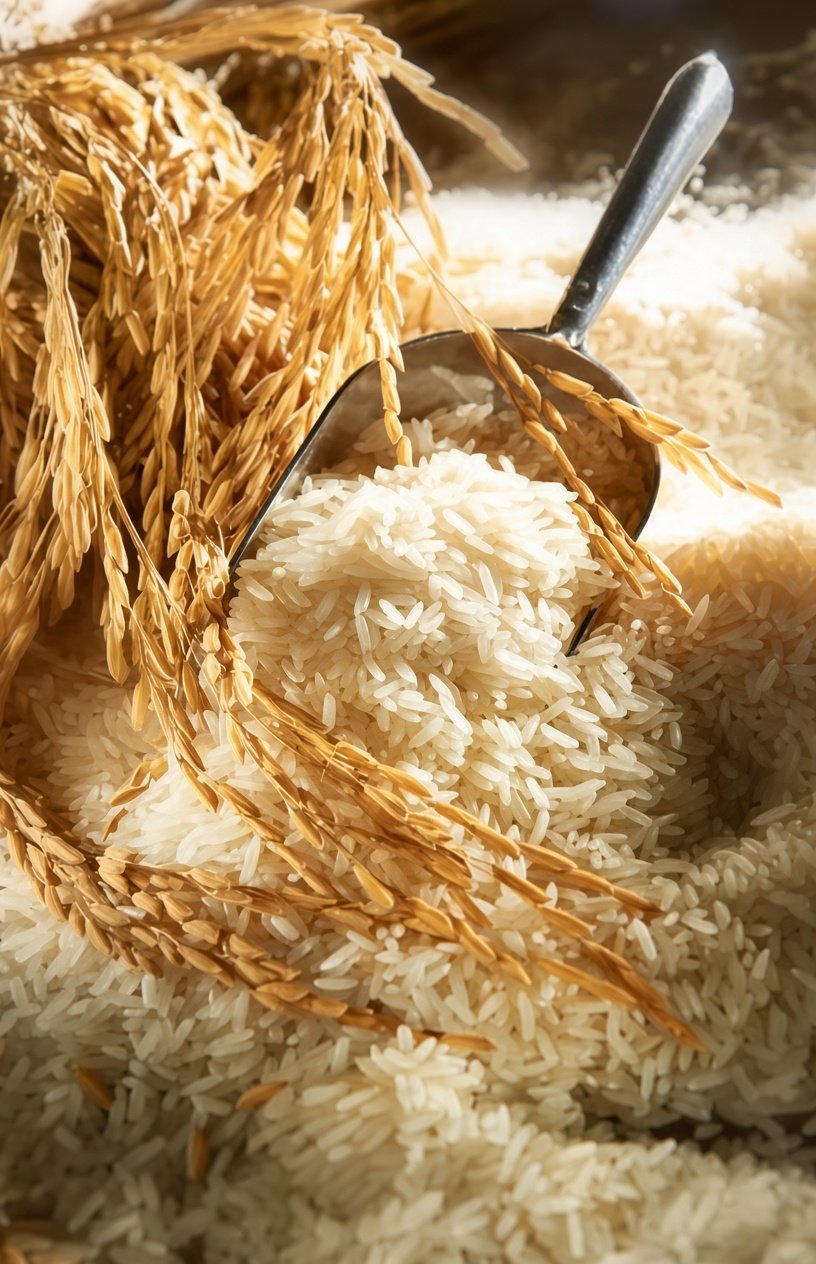
Rice prices recorded wide variations across African countries monitored by the Alliance for a Green Revolution in Africa (AGRA), with Zambia emerging as the country with the highest price in August 2026.
According to the latest AGRA Food Security Monitor, rice in Zambia was priced at $2,065 per metric tonne in August, followed closely by Zimbabwe at $2,060 and Malawi at $1,984 per metric tonne.
The August 2026 report assesses food prices and food security conditions in selected countries across East, Southern and West Africa, highlighting developments that could affect food trade, access to food and nutrition security.

Southern African countries dominated the upper end of the rice price rankings, while Kenya and Rwanda also recorded relatively high prices at $1,395 and $1,324 per metric tonne, respectively.
Nigeria recorded the lowest rice price among the countries listed, at $460 per metric tonne. This represented a 5% decrease from the $487 recorded in July.
Mozambique also experienced a notable reduction, with its rice price falling by 11% from $779 in July to $694 per metric tonne in August.
Rice prices show mixed trends

Rice prices moved in different directions across the markets monitored during the month.
Burkina Faso recorded the sharpest increase, with prices rising by 25% from $648 to $812 per metric tonne.
Although Zambia maintained the highest rice price, its figure declined by 6%, dropping from $2,198 in July to $2,065 in August.
Malawi recorded a 2% increase, while Ghana’s rice price rose by 4%, from $953 to $992 per metric tonne.
There was no change in the prices recorded in Zimbabwe and Tanzania during the period under review.

Ghana placed seventh among the 16 countries included in the rice price table. Its August price of $992 per metric tonne was higher than those recorded in Uganda, Burkina Faso and Mali, but lower than the figures for Côte d’Ivoire, Rwanda, Kenya, Malawi, Zimbabwe and Zambia.
The rice price data forms part of AGRA’s wider assessment of food security conditions across the region.
The report also examines the number of people experiencing “IPC/CH Phase 3+” or equivalent levels of food insecurity.
Nigeria recorded the largest affected population, with 36.3 million people facing “IPC/CH Phase 3+” food insecurity.

South Sudan recorded the highest proportion of its population affected, with 55% experiencing “Crisis or worse” food insecurity.
Ghana recorded the lowest proportional burden among the countries assessed, with 4% of its population experiencing “IPC/CH Phase 3+” food insecurity.
By: Prince Martey-Sogar