

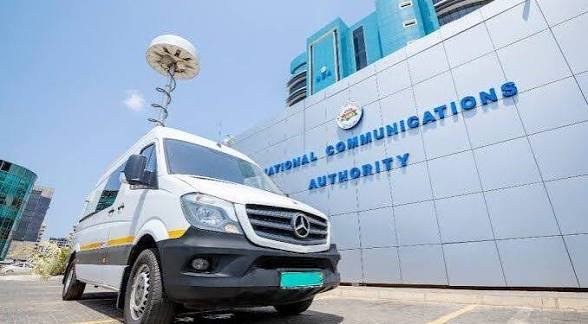
Ghana’s National Communications Authority has received four applications for spectrum licences in the 700MHz, 2.3GHz and 3GHz mid-bands following the close of applications for mobile broadband services, including 5G. The development marks another step in Ghana’s expansion of next-generation mobile connectivity.

The National Communications Authority (NCA) has announced that four applications have been received for spectrum licences to provide mobile broadband services, including fifth-generation, or 5G, connectivity in Ghana.
The deadline for applications closed at 5:00 p.m., with the regulatory authority confirming that four applications had been submitted for the available spectrum.
The spectrum bands involved are the 700MHz, 2.3GHz and 3GHz mid-bands.
Spectrum is a limited national resource that enables wireless communication services to operate. Telecommunications companies require access to appropriate spectrum to provide mobile services and expand network capacity.
The latest application process is therefore significant for Ghana’s telecommunications industry because the allocation of additional spectrum can support the expansion of high-speed mobile broadband services.
5G technology is designed to provide faster data speeds, lower latency and greater network capacity compared with previous generations of mobile technology.
The technology can support applications requiring high-speed connectivity, including advanced industrial systems, smart devices, digital services and other emerging technologies.
The NCA’s role is to regulate Ghana’s communications sector and ensure that spectrum resources are allocated in an efficient and transparent manner.
The four applications will now be subject to the relevant regulatory and licensing processes.
The close of applications does not automatically mean that all applicants will receive licences. The NCA will have to assess the submissions according to the requirements established for the spectrum allocation.
The process is important because spectrum allocation can influence competition within the telecommunications market.
More spectrum can allow operators to expand network capacity and potentially improve service quality for consumers.
For Ghanaian mobile-phone users, the development could eventually contribute to faster and more reliable mobile internet services.
Reliable connectivity has become increasingly important for education, business, banking, entertainment and communication.
Students rely on mobile internet to access educational resources and communicate with schools and colleagues.
Businesses also depend on connectivity for digital payments, online commerce, customer communication and other operations.
The expansion of 5G could create additional opportunities for companies developing digital services.
The technology can also support emerging applications involving connected devices and automation.

However, the benefits of improved connectivity depend not only on spectrum availability but also on investment in network infrastructure.
Telecommunications operators need to invest in base stations, fibre networks, transmission systems and other infrastructure to provide reliable services.
The cost of compatible devices is another consideration for consumers.
As 5G networks expand, consumers will increasingly need devices capable of using the technology to benefit fully from the available services.
The NCA’s spectrum allocation process therefore forms only one part of Ghana’s wider digital transformation.
Government has increasingly emphasized the importance of digital infrastructure in economic development.
Improved connectivity can support digital businesses and help communities access services that previously required physical travel.
For rural communities, however, the priority may remain basic network coverage and affordable internet access.
Authorities and telecommunications companies will therefore need to ensure that investments benefit communities beyond major urban centres.
The 700MHz band can be particularly useful for wider-area coverage because lower-frequency spectrum can travel longer distances and penetrate buildings more effectively than some higher-frequency bands.
The availability of multiple spectrum bands also allows operators to design networks according to different capacity and coverage requirements.
The application process is therefore being watched closely by industry stakeholders.
The four applicants will have to satisfy the conditions established by the regulator before licences can be issued.
The NCA is expected to communicate further details about the evaluation process and subsequent decisions.
The development comes at a time when demand for mobile data continues to grow.
Social media, streaming, online education, digital banking and other services have contributed to increasing demand for reliable mobile internet.
Telecommunications companies must therefore continue expanding network capacity to meet changing consumer needs.
The introduction of additional spectrum could help address some of those capacity requirements.
It could also support greater competition and innovation within Ghana’s telecommunications sector.
For businesses, faster connectivity could make it easier to develop services that depend on high-speed internet.
For consumers, the potential benefits include improved browsing, streaming and communication services.
However, the actual impact will depend on how quickly licensed operators deploy networks and the extent to which services remain affordable.
The NCA’s regulatory decisions will therefore be important in determining how the new spectrum resources are utilized.

The authority has responsibility for ensuring that Ghana’s spectrum resources are managed in the national interest.
The four applications represent the next stage in that process.
The regulator will now assess the submissions and determine which applicants meet the necessary requirements.
The development is expected to attract considerable attention from telecommunications companies, technology businesses and consumers.
As Ghana continues its digital transformation, the availability of reliable and affordable broadband will remain an important part of economic and social development.
The NCA’s receipt of four applications is therefore a significant development in the country’s efforts to expand next-generation mobile connectivity.
Further announcements are expected as the licensing process progresses.
By: Oppong Frimpong Richard