

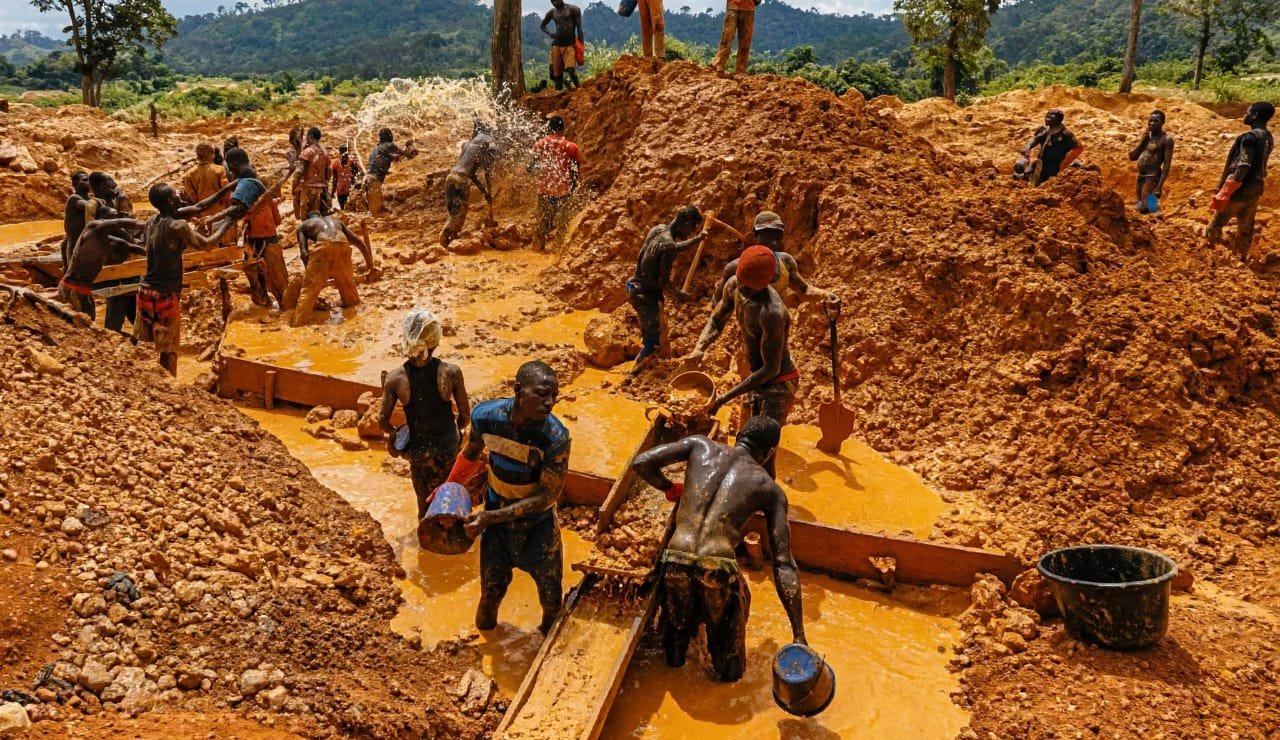
The National Anti-Illegal Mining Operations Secretariat (NAIMOS), working with the Northern Command of the Ghana Armed Forces and the Ghana Police Service, has arrested 10 suspected illegal miners at Kpali, near Gbinyiri in the Sawla-Tuna-Kalba District of the Savannah Region.
The operation, conducted between August 25 and 27, 2026, led to the seizure of two excavators, three excavator monitors, a Toyota Hilux vehicle, a fuel bowser and other mining equipment.
Security personnel also recovered three firearms and 25 rounds of live ammunition from the site.
According to NAIMOS, the operation followed a reconnaissance mission conducted on August 19, which confirmed reports of illegal mining activities in the area.

“The operation, conducted from 25 to 27 August 2026, followed a reconnaissance mission on 19 August, which confirmed reports of illegal mining activities in the area,” the Secretariat said in a statement.
The joint team reportedly found several individuals actively engaged in mining and discovered significant environmental damage at the site.
Ten suspects were arrested, including three Chinese nationals and seven Ghanaians.
“The operation resulted in the arrest of ten suspects, comprising three Chinese nationals and seven Ghanaians,” NAIMOS said.
The task force also dismantled 15 makeshift structures and destroyed a generator at the site to prevent the miners from immediately returning to their activities.
The suspects, along with the relevant exhibits, were handed over to the Savannah Regional Police Command in Damongo for further investigations and possible legal action.

The seized heavy-duty equipment was subsequently moved to designated holding areas for safekeeping.
NAIMOS said the operation forms part of its broader efforts, in partnership with security agencies, to tackle illegal mining and safeguard the environment and water bodies from further destruction.
“NAIMOS will continue to collaborate with the Ghana Armed Forces, Ghana Police Service and other relevant institutions to disrupt illegal mining activities and protect vulnerable areas within the Savannah Region,” it added.
By: Prince Martey-Sogar