

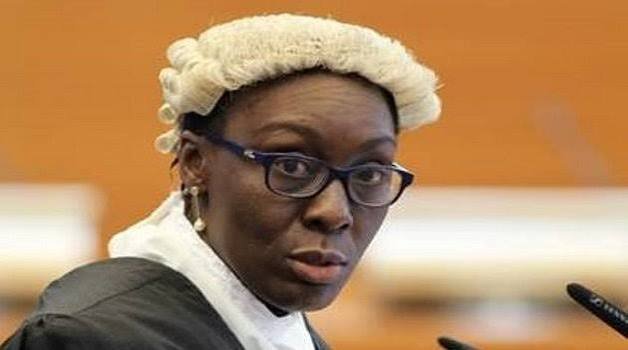
Attorney-General and Minister of Justice, Dr Dominic Akuritinga Ayine, has sworn in an 11-member Constitution Review Implementation Committee (CRIC) to translate government-approved recommendations from the constitutional review process into laws, policies and other practical measures.
The committee, chaired by legal practitioner Marietta Brew, was inaugurated at the Law House in Accra on Friday, August 28, 2026, with a mandate to begin the process of implementing accepted reforms to Ghana’s 1992 Constitution. The members took the official oath and the oath of the Constitution Review Implementation Committee during the ceremony, formally assuming responsibility for the implementation phase of the constitutional review process.
Other members of the committee are Deputy Attorney-General Dr Justice Srem-Sai, Deputy Finance Minister Thomas Ampem Darko, former Electoral Commission Chairperson Charlotte Osei, Dr Rainer Akumperigya, Emelia Ankomah, Samuel Passah, Oliver Barker-Vormawor, Salamatu Iliasu, Eric Owusu-Mensah and Kwame Anyimadu-Antwi.

Dr Ayine charged the committee to approach its assignment with urgency, stressing that its mandate was both time-bound and significant to Ghana’s constitutional development. He said the committee was expected to prepare the first set of constitutional amendment Bills, particularly those dealing with non-entrenched provisions, for presentation to Parliament by November 2026.
reform
According to him, the implementation process could eventually lead to some of the proposed constitutional amendments being subjected to a referendum alongside the 2027 District Assembly elections. “Your task is deliberately bipartisan and deliberately time-bound,” Dr Ayine told members of the committee.
He explained that the government had already issued its position paper on the recommendations of the Constitutional Review Committee and had accepted a substantial package of the proposed constitutional reforms. A “zero draft” has also been prepared to assist the new committee in carrying out its mandate.
The Attorney-General explained that the draft incorporates recommendations accepted by the government, as well as those accepted with modifications. He said the CRIC would therefore be required to carefully align the recommendations accepted by the government with the official position paper and previous draft Bills prepared by an earlier implementation committee.

Dr Ayine said the work of the committee represented a crucial stage in the constitutional reform process because the recommendations under consideration emerged from consultations with Ghanaians across the country. He stressed that the recommendations were not merely technical proposals prepared for legal experts but reflected the views and concerns expressed by citizens during the review process.
“What the committee gave us was not a technical document written for lawyers. It was the voice of the Ghanaian people on questions that touch every one of us,” he said.
He noted that the issues addressed by the recommendations included the length of presidential tenure, the size and composition of Parliament, the election and leadership of District Assemblies, and the protection of fundamental rights and freedoms. According to Dr Ayine, the government had completed its part of the process by considering the recommendations and setting out its position on the proposed reforms.
He said the next challenge was to ensure that those decisions were accurately translated into legally sound and workable provisions. “What is left is the most exacting part, getting the drafting right, and doing it in a way that keeps fit with the consultations that got us here,” he stated.

The Chairperson of the CRIC, Marietta Brew, said members of the committee were fully aware of the constitutional and historical significance of the assignment. She stressed that the committee was not being established to undertake another general review of the 1992 Constitution.
Rather, its primary responsibility was to translate recommendations that had been accepted by the government into practical measures capable of implementation. “Our responsibility is to translate the recommendations accepted by government into lawful, coherent and practical measures capable of implementation,” Mrs Brew said.
She said the committee would have to deal with different categories of reforms depending on the provisions of the Constitution affected. Some of the proposed reforms, she explained, would require amendments to entrenched provisions of the Constitution and would therefore have to go through the constitutionally prescribed referendum process.
Other recommendations could be implemented through Acts of Parliament, subsidiary legislation, institutional reforms or administrative action. This means the committee will have to determine the appropriate legal and institutional pathway for each accepted recommendation before implementation.

The planned constitutional amendments could represent one of the most significant stages in Ghana’s ongoing efforts to reform aspects of the 1992 Constitution. Under Ghana’s constitutional framework, amendments to entrenched provisions require approval through a national referendum after meeting other constitutional requirements. Non-entrenched provisions, on the other hand, follow a parliamentary amendment process.
The CRIC’s work will therefore involve translating the accepted recommendations into specific legislative and institutional proposals and ensuring that each reform follows the appropriate constitutional procedure. Dr Ayine’s November 2026 deadline for the first set of Bills is expected to provide an early indication of the pace at which the government intends to move from the review and consultation stage to actual implementation.
The possibility of holding a referendum alongside the 2027 District Assembly elections could also provide an opportunity for Ghanaians to directly decide on reforms affecting entrenched constitutional provisions. The committee’s mandate will consequently require extensive legal drafting, coordination with relevant state institutions and careful consideration of the recommendations accepted by government.
The Attorney-General emphasised the need for the committee to ensure that the final legal instruments remain faithful to the views expressed by Ghanaians during the nationwide consultation process. He said the implementation process should not distort the substance of the recommendations that emerged from those consultations.

For Mrs Brew and the other members of the committee, the task will therefore involve balancing legal precision with the broader objectives of the constitutional review exercise. The committee is expected to work closely with government institutions and other stakeholders as it prepares the necessary Bills and other measures.
Its work could ultimately result in changes to aspects of Ghana’s constitutional and governance arrangements, depending on the outcome of parliamentary consideration and, where required, a referendum. With its members now sworn into office, the CRIC is expected to begin work immediately on the accepted recommendations and meet the November 2026 deadline for the first batch of constitutional amendment Bills.
The establishment of the committee marks the transition from reviewing and debating constitutional reform proposals to the more technical phase of drafting and implementing the changes accepted by the government.
By: Philbert Amiba Ayuusah