

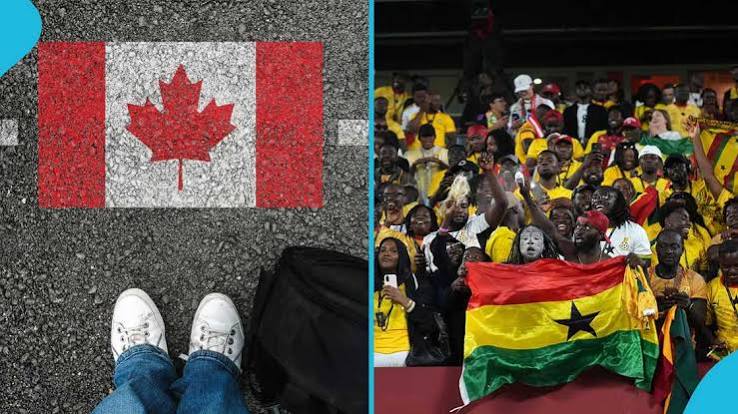
Twenty-five Ghanaians who travelled to Canada to watch the 2026 Fédération Internationale de Football Association (FIFA) World Cup have applied for asylum, according to figures released by Immigration, Refugees and Citizenship Canada.

The applications represent the highest number of asylum claims made by visitors who entered Canada on World Cup-related temporary visas, highlighting growing concerns over the use of major international sporting events as pathways to seek refugee protection.
The asylum applications were filed after Ghana’s Black Stars opened their World Cup campaign against Panama in Toronto on June 17, 2026. Canadian immigration authorities said the Ghanaian cases formed part of a broader trend involving visitors who entered the country during the tournament.

Data from Immigration, Refugees and Citizenship Canada indicate that 175 asylum claims had been submitted by July 20, 2026, from approximately 26,000 World Cup-related visas issued for matches hosted in Toronto and Vancouver.
Ghana was followed by Egypt, which recorded 15 asylum claims, while Senegal accounted for 10. The department also reported applications from visitors originating from countries that did not participate in the tournament, including Kenya, Nigeria, Burundi and Nepal.

Canadian immigration officials have indicated that the number of asylum applications could increase, as some visitors may choose to remain in the country beyond the validity of their temporary visas before seeking refugee protection.
Authorities have not disclosed whether any of the applicants are football players, members of technical teams or officials associated with the participating countries.
Ahead of the tournament, the Canadian government warned that visa applications could be rejected or entry denied if immigration officers believed applicants might not leave the country after the competition. Reports also indicated that some Ghanaian applicants were refused visas before the tournament over similar concerns.

Immigration experts say asylum claims linked to major international sporting events are not unprecedented. Similar cases were recorded during the 2010 Winter Olympics in Vancouver and the 2012 London Olympic Games, where athletes, officials and visitors sought refugee protection after entering their host countries.
The latest figures have renewed discussions on immigration screening processes and the challenges host nations face in balancing international travel with the integrity of their asylum systems.
BY GBEDEVI DORCAS SELORM