


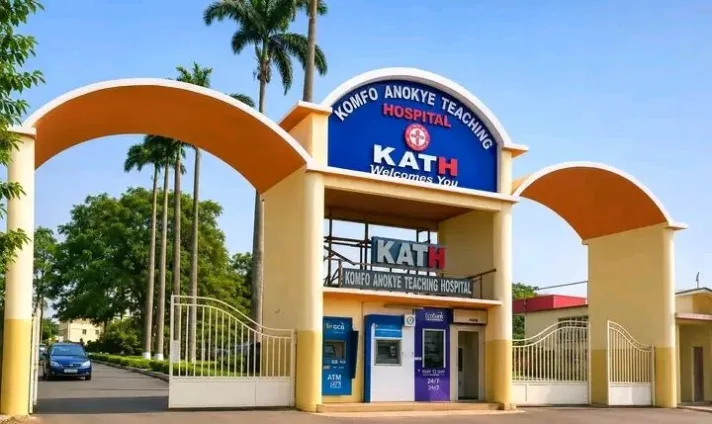
Medical doctors at the Komfo Anokye Teaching Hospital (KATH) have suspended their industrial action following the intervention of the Asantehene, Otumfuo Osei Tutu II, and engagements involving key stakeholders in Ghana’s health sector.
The decision brings relief to thousands of patients who rely on the Kumasi-based referral facility, which serves as the principal tertiary healthcare centre for the Ashanti Region and much of northern and middle Ghana. The strike had disrupted medical services after doctors protested the suspension of KATH Chief Executive Officer Dr. Paa Kwesi Baidoo by Health Minister Kwabena Mintah Akandoh.
The Komfo Anokye Doctors Association (KADA) had announced an indefinite withdrawal of services on June 6, arguing that the suspension of the CEO was unjustified and failed to address the deeper challenges confronting the hospital. The association maintained that management’s decision to temporarily halt new emergency admissions during severe congestion at the Accident and Emergency Centre was intended to protect patients and healthcare workers from potentially dangerous overcrowding.

The crisis began after KATH management announced a temporary suspension of emergency admissions due to unprecedented pressure on its emergency facilities. According to hospital officials, the emergency unit, which was designed to accommodate a far smaller number of patients, had become severely overcrowded, creating significant risks for patient safety and quality healthcare delivery.
The Health Minister subsequently directed the KATH Board to suspend Dr. Baidoo for two weeks pending investigations into the circumstances surrounding the announcement. The Ministry argued that the decision was inconsistent with directives from President John Dramani Mahama regarding the handling of emergency healthcare services.
The suspension triggered widespread opposition among healthcare professionals. KADA condemned the minister’s action and demanded its reversal. The Ghana Registered Nurses and Midwives Association’s KATH branch also threatened industrial action, while other healthcare groups expressed concern that the focus had shifted away from the longstanding infrastructural and logistical challenges facing the hospital.

As tensions escalated, the National Labour Commission intervened and directed the doctors to call off the strike, describing the industrial action as non-compliant with provisions of Ghana’s labour laws. The commission subsequently summoned both parties for discussions aimed at resolving the dispute.
However, a significant breakthrough emerged following the involvement of Otumfuo Osei Tutu II. The Asantehene, who has historically played a major role in mediating critical disputes in the Ashanti Region and beyond, engaged stakeholders to find a path toward restoring normalcy at the hospital. Sources close to the discussions indicated that appeals were made in the interest of public health and the welfare of patients whose access to specialist medical care had been affected by the strike. Reports also indicate that the suspended CEO himself appealed to healthcare workers to return to work while the issues surrounding his suspension are addressed through the appropriate channels.
Dr. Baidoo publicly thanked staff members for their solidarity but urged them to prioritise the needs of patients and resume work. He stated that the interests of Ghanaians and those seeking medical attention at the hospital should remain paramount while authorities continue deliberations on the matter.
KATH occupies a critical position within Ghana’s healthcare system. The hospital serves millions of people and functions as the primary referral centre for several regions. Healthcare professionals have repeatedly highlighted challenges including inadequate infrastructure, congestion, increasing patient referrals, limited logistics and delays in operationalising complementary facilities such as the Sewua Hospital and Afari Military Hospital. These issues formed part of the concerns raised by doctors during the dispute.

With the strike now suspended, medical services are expected to gradually return to normal. Patients who had experienced delays in consultations, surgeries and specialist care are anticipated to benefit from the restoration of services. Nonetheless, the controversy has drawn renewed attention to the systemic challenges confronting one of Ghana’s most important healthcare institutions.
Observers believe the resolution of the immediate labour dispute provides an opportunity for government, hospital management and healthcare workers to focus on long-term solutions, including infrastructure expansion, improved resource allocation and the completion of health facilities intended to ease the burden on KATH.
KATH nurses join strike as pressure mounts over CEO suspension