


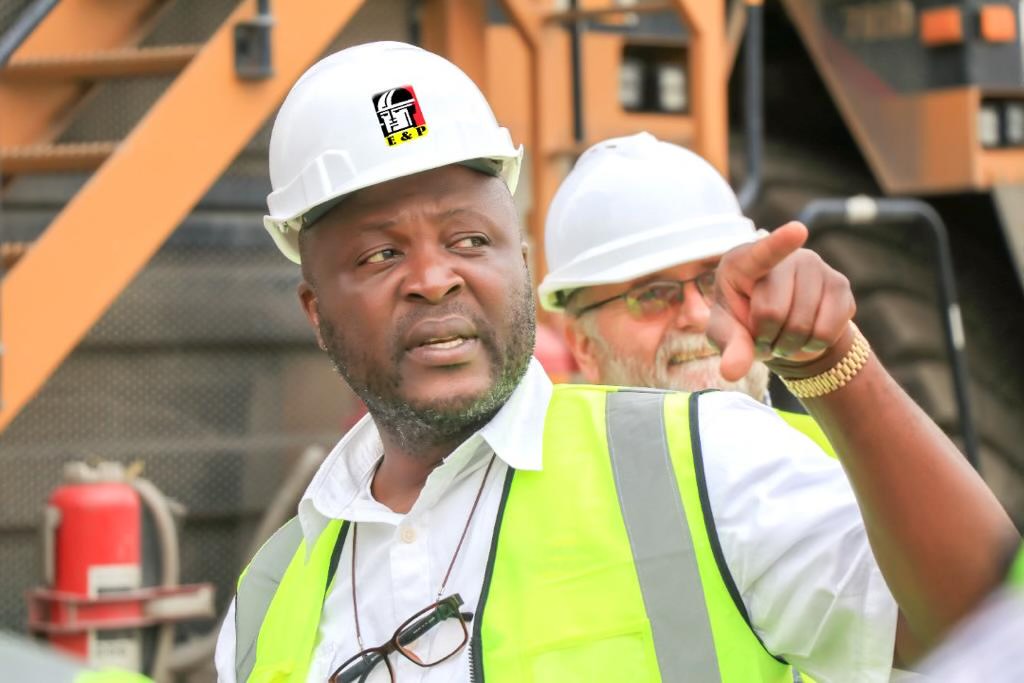
Businessman Ibrahim Mahama has stepped in with a major intervention by offering 100 job opportunities to Ghanaian nationals who were recently evacuated from South Africa following renewed xenophobic violence and anti-immigrant protests. The move comes as Ghana grapples with the reintegration of returnees who fled escalating hostility, looting, and targeted attacks against foreign nationals.
The announcement was confirmed by Samuel Okudzeto Ablakwa, who disclosed that the offer forms part of ongoing efforts to support affected citizens and provide them with immediate economic stability upon their return. The evacuated Ghanaians were among several foreign nationals forced to leave South Africa after violent protests flared in parts of the country, reigniting long-standing tensions over immigration and economic competition.
Xenophobic attacks in South Africa have remained a recurring issue for over a decade, often targeting migrants from other African countries including Ghana, Nigeria, Zimbabwe, and Mozambique. These incidents typically emerge during periods of economic strain, with foreign nationals accused of taking jobs and operating businesses in sectors dominated by locals. The recent wave of unrest saw shops owned by immigrants looted and individuals assaulted, prompting urgent diplomatic engagement and evacuation efforts by affected countries.

Ghana’s government, through its foreign ministry, coordinated the safe return of its citizens, many of whom had been engaged in small-scale trading, services, and informal sector jobs. However, returning home presented a new challenge, as many evacuees arrived without stable income or clear prospects, raising concerns about unemployment and social reintegration.
It is within this context that Ibrahim Mahama’s intervention has drawn widespread attention. By committing to absorb 100 of the returnees into his business operations, he has provided a direct and immediate pathway to employment for individuals who might otherwise struggle to rebuild their livelihoods. His companies, which operate across sectors including construction, mining, and logistics, are expected to integrate the returnees into various roles depending on their skills and experience.
Government officials have described the gesture as both timely and strategic. Beyond offering jobs, it sends a broader signal about the role of the private sector in addressing national crises. While state institutions often lead evacuation and diplomatic responses, long-term solutions frequently depend on economic reintegration, where private businesses can play a critical role.

The development also highlights a deeper issue within Africa’s economic landscape. Despite the establishment of the African Continental Free Trade Area, which promotes free movement of goods and services, the movement of people remains politically sensitive. Incidents like those in South Africa expose the gap between policy ambitions and on-the-ground realities, where economic pressures continue to fuel anti-immigrant sentiment.
Analysts argue that xenophobic violence is not just a social issue but an economic one. High unemployment rates, inequality, and slow economic growth create conditions where migrants are seen as competitors rather than contributors. Addressing these tensions requires structural reforms, job creation, and stronger regional cooperation, rather than reactive responses after violence occurs.
For Ghana, the immediate priority remains ensuring that returnees are not left behind. While the 100 job opportunities represent a significant intervention, they also underline the scale of the challenge. Not all evacuees will benefit directly from this initiative, and broader support systems will be needed to provide housing, skills development, and financial assistance.

Ibrahim Mahama’s move has nonetheless set a precedent. It demonstrates how influential business figures can act swiftly in moments of crisis, complementing government efforts and delivering tangible outcomes. It also raises expectations for other corporate leaders to contribute to national responses when emergencies arise.
Public reaction has been largely positive, with many praising the initiative as a practical solution rather than a symbolic gesture. However, some observers caution that reliance on individual interventions is not sustainable, emphasizing the need for institutional frameworks that can respond systematically to similar situations in the future.
As Ghana continues to manage the aftermath of the evacuations, the focus will shift toward long-term integration and economic inclusion. The success of this initiative will ultimately be measured not just by the number of jobs provided, but by how effectively returnees are able to rebuild their lives and contribute to the local economy.
The situation also serves as a reminder of the fragile nature of regional integration in Africa. While economic cooperation is advancing on paper, social and political tensions continue to test the continent’s unity. For now, Ibrahim Mahama’s intervention stands out as a decisive response in a moment of uncertainty, offering both relief and a blueprint for action when citizens are forced to return home under difficult circumstances.
South Africa orders arrests over attacks on Ghanaians amid rising xenophobia tensions