

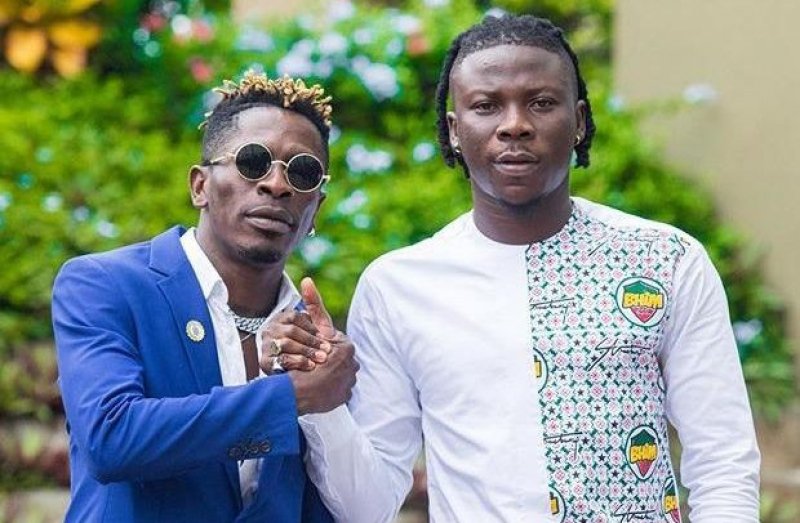
Shatta Wale has publicly extended an olive branch to fellow Ghanaian artiste Stonebwoy, calling for unity and collaboration in an industry long defined by rivalry and competition. In a statement that has quickly gained traction across social media and entertainment circles, Shatta Wale declared, “Stonebwoy should join me so we build together,” reigniting conversations about reconciliation and collective growth in Ghana’s music space.
The relationship between Shatta Wale and Stonebwoy has been one of the most closely watched rivalries in African music over the past decade. Both artistes emerged as dominant figures in Ghana’s dancehall and reggae scenes, achieving international recognition while competing fiercely for local supremacy. Their rivalry reached a peak during the 2019 Vodafone Ghana Music Awards, where a near-violent altercation on stage forced organizers to halt proceedings and later ban both artistes temporarily. That incident underscored the intensity of their feud and its impact on the broader industry.
In recent years, however, there have been intermittent signs of de-escalation. Both artistes have occasionally acknowledged each other’s influence and contributions to Ghanaian music, even as their fan bases continue to fuel comparisons and competition. Shatta Wale’s latest statement appears to go a step further, suggesting not just coexistence but active collaboration.

The call for unity comes at a time when Ghana’s music industry is facing increasing pressure to compete on the global stage. While Nigerian artistes such as Burna Boy, Wizkid, and Davido continue to dominate international charts and streaming platforms, Ghanaian musicians have struggled to maintain consistent global visibility despite their talent and cultural influence. Industry analysts have often pointed to fragmentation and lack of collaboration as key challenges limiting Ghana’s global reach.
Shatta Wale’s proposal, therefore, resonates beyond personal reconciliation. By inviting Stonebwoy to “build together,” he is effectively advocating for a strategic alliance that could amplify Ghanaian music’s global footprint. Both artistes command massive followings across Africa and the diaspora, and a collaboration between them would likely generate significant attention and commercial success.
Historically, collaborations between rival artistes have proven transformative in other markets. In the United States, high-profile partnerships between previously competing artists have often resulted in chart-topping hits and expanded audiences. Within Africa, collaborations among leading Nigerian artistes have contributed to the country’s dominance in global Afrobeats. For Ghana, a united front among top artistes could serve as a catalyst for renewed international momentum.
Beyond commercial considerations, the call for unity also carries symbolic weight. Shatta Wale and Stonebwoy represent two distinct but complementary strands of Ghanaian music culture. Shatta Wale’s style blends dancehall with local street influences, creating a raw, energetic sound that resonates with mass audiences. Stonebwoy, on the other hand, has built a reputation for blending reggae, dancehall, and Afrobeats with a more polished, global appeal. Together, they embody the diversity and potential of Ghanaian music.

Despite the optimism surrounding Shatta Wale’s statement, questions remain about whether such a collaboration is feasible. Past attempts at reconciliation have often been short-lived, with underlying tensions resurfacing over time. The competitive nature of the industry, combined with strong fan loyalties, can make sustained unity difficult to achieve.
However, there are indications that both artistes are increasingly aware of the broader stakes. In interviews and public appearances, Stonebwoy has emphasized the importance of professionalism and global positioning, while Shatta Wale has frequently spoken about the need for Ghanaian artistes to think bigger and support each other. Their evolving perspectives suggest that the conditions for meaningful collaboration may be more favorable now than in the past.
Fans and industry stakeholders have responded to the latest development with cautious optimism. Many see it as a potential turning point that could redefine relationships within the Ghanaian music industry. Others remain skeptical, viewing it as another momentary gesture that may not translate into concrete action.
Ultimately, whether Shatta Wale and Stonebwoy choose to collaborate will depend on their willingness to move beyond past conflicts and align their interests for the greater good of the industry. If they do, the impact could extend far beyond their individual careers, setting a precedent for unity and cooperation among Ghanaian artistes.

For now, Shatta Wale’s words have reopened a conversation that has long lingered beneath the surface of Ghana’s music scene. “Stonebwoy should join me so we build together” is more than just a statement. It is a challenge, an invitation, and perhaps a glimpse into what the future of Ghanaian music could look like if its biggest stars decide to stand together rather than apart.
Stonebwoy releases Torcher II album exclusively on EVEN platform