

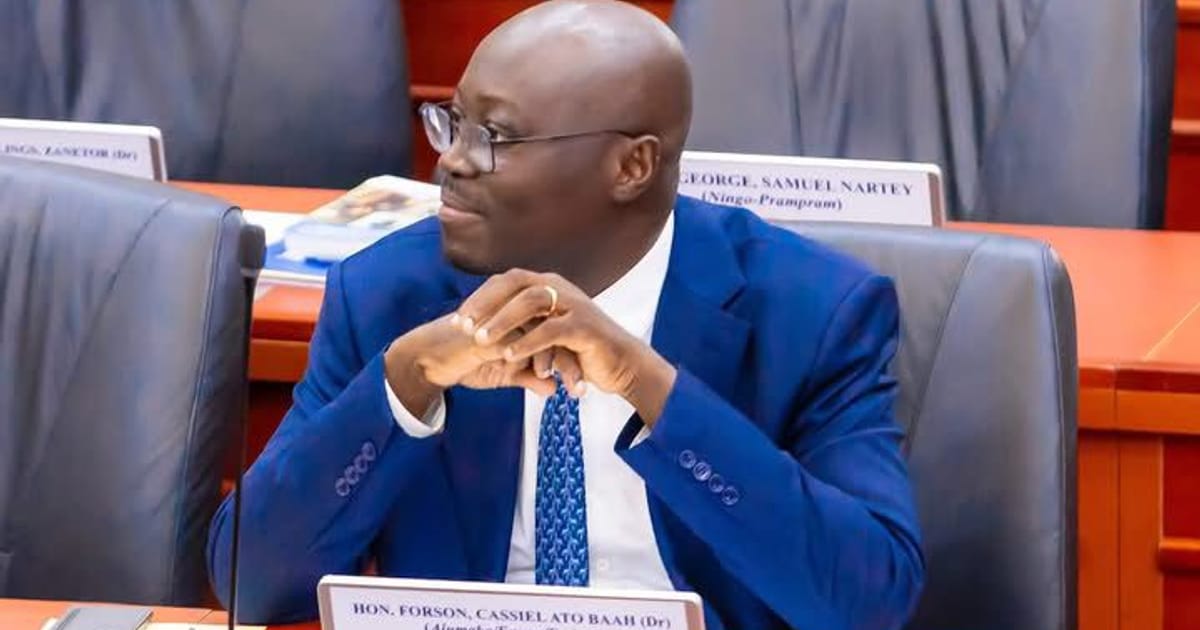
Finance Minister Cassiel Ato Forson has declared that the country will not require any further financial bailout from the International Monetary Fund in the foreseeable future, marking what government officials describe as a turning point in the nation’s economic recovery journey after years of fiscal distress.
Delivering a detailed statement before Parliament, the minister said, “No further IMF financial bailout will be required in the foreseeable future,” emphasizing that Ghana has moved beyond emergency financial support into a phase of stability and structured reform. The declaration comes as the country prepares to exit its current IMF-supported programme and transition into a non-financing policy framework.
The announcement follows the conclusion of Ghana’s Extended Credit Facility programme, which was initiated in 2022 at the height of a severe economic crisis. At the time, the country faced a collapsing currency, soaring inflation above 50 percent, declining foreign reserves and a complete loss of access to international capital markets. Credit rating agencies downgraded Ghana multiple times, pushing the economy into what many analysts described as one of its most difficult post-independence periods.

According to Forson, the current administration under President John Dramani Mahama has implemented sweeping fiscal and structural reforms that have significantly improved macroeconomic indicators. These include tighter public financial management controls, debt restructuring measures, elimination of certain taxes, and the creation of new oversight institutions aimed at ensuring discipline in government spending.
The results, the minister argued, are already visible. Ghana’s economy reportedly expanded by about 6 percent in 2025, with non-oil growth reaching its highest level in more than a decade. Inflation has dropped sharply to single digits, while interest rates on government securities have declined significantly. The country’s debt-to-GDP ratio has also fallen below 45 percent, meeting targets well ahead of schedule.
“These results affirm a simple but enduring truth: fiscal prudence and discipline always deliver results,” Forson told lawmakers, stressing that the government’s focus is now shifting from crisis management to long-term economic transformation.
Central to this new phase is Ghana’s planned transition to the IMF’s Policy Coordination Instrument, a non-financing arrangement designed for countries that no longer need bailout funds but still seek policy guidance and credibility in the eyes of investors. The minister explained that this move would allow Ghana to maintain fiscal discipline while signaling stability to global markets.
“We have evolved from a position of supplicant to one of partner,” he said, adding that the new engagement would strengthen investor confidence without adding to the country’s debt burden.

The shift also aligns with earlier remarks by President Mahama, who had expressed hope that Ghana’s latest IMF programme would be the last. “It must be the 17th and the last time that Ghana goes for a bailout,” the president had stated, reinforcing the government’s commitment to breaking the cycle of repeated financial rescues.
Despite the optimism, economists caution that sustaining this progress will require consistent policy discipline, particularly in managing public spending and maintaining revenue growth. Ghana’s recent recovery has been aided by global commodity trends and debt restructuring agreements, but vulnerabilities remain, especially in the face of external shocks.
Still, the government’s message is clear: Ghana is attempting to redefine its economic narrative. The administration has outlined plans for a new economic programme, dubbed “The New Economy,” which is expected to be unveiled in the 2027 budget. The initiative will focus on job creation, productivity growth and economic resilience, with the aim of moving the country beyond stabilization into sustained development.
Forson emphasized that the lessons of the 2022 crisis must not be forgotten. “Some painful experiences cannot be taught. They must be lived to be understood. But once experienced, never again should they be repeated,” he said.

For many observers, the real test will not be the announcement itself but whether Ghana can maintain fiscal discipline over the long term without slipping back into unsustainable borrowing patterns. If successful, the country could position itself as a model for post-crisis recovery in Africa, transitioning from dependence on bailout financing to a more stable, investor-driven growth path.
Ghana IMF programme performance highlights path to sustainable recovery