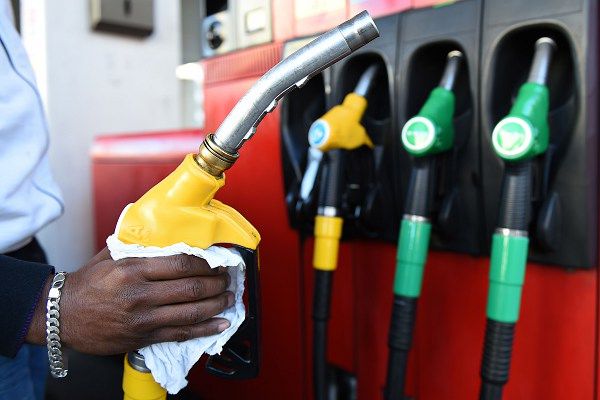
Fuel price floor adjusted as National Petroleum Authority revises petrol and diesel benchmarks

0
95

Ghana’s downstream petroleum regulator, the National Petroleum Authority (NPA), has announced a fresh adjustment to fuel price benchmarks, raising the price floor of petrol while slightly reducing that of diesel, in a move set to take effect from June 1.

Under the revised framework, the minimum price for petrol has been increased to GH¢15.20 per litre, while diesel’s price floor has been reduced to GH¢15.49 per litre. The decision reflects ongoing efforts by regulators to balance market stability with evolving global and domestic cost pressures in the petroleum sector.

The adjustment comes at a time when Ghana’s fuel pricing regime remains sensitive to fluctuations in international oil prices, exchange rate movements, and supply chain costs. By setting a price floor, the NPA aims to prevent destructive price undercutting among oil marketing companies, while ensuring that operators maintain sustainable margins.

fuel price,fuel

The increase in petrol’s price floor suggests upward pressure within that segment of the market, potentially linked to global crude price trends and refined product costs. Conversely, the marginal reduction in diesel’s floor may indicate easing cost pressures or strategic recalibration to support sectors heavily reliant on diesel, including transportation, agriculture, and industry.

For consumers, the immediate implication is mixed. While petrol users may face higher baseline pricing, diesel consumers could benefit from slight relief—though actual pump prices will still depend on individual oil marketing companies and prevailing market conditions.

Industry analysts often point out that Ghana’s fuel pricing structure operates within a deregulated framework, meaning the NPA does not directly fix pump prices but instead sets guiding parameters such as price floors. This allows market competition while maintaining safeguards against volatility that could destabilise the sector.

fuel price,fuel

The latest revision also reflects broader economic considerations. Fuel pricing remains a critical factor in inflation dynamics, transport costs, and overall cost of living. Any upward adjustment in petrol prices, in particular, tends to ripple through the economy, affecting goods and services pricing.

At the same time, regulators must consider the financial sustainability of fuel distributors and importers, especially in an environment where exchange rate movements can significantly impact landing costs. Ghana’s cedi performance and global oil benchmarks therefore remain key variables influencing future adjustments.

The NPA’s intervention underscores the delicate balancing act between protecting consumers and ensuring the viability of the petroleum downstream sector. While price floors help stabilise the market, they also raise ongoing questions about affordability and the long-term efficiency of the pricing regime.

Fuel price floor adjusted as National Petroleum Authority revises petrol and diesel benchmarks

Looking ahead, further adjustments are likely as global energy markets remain volatile. Geopolitical tensions, supply disruptions, and shifts in demand—particularly from major economies—continue to shape crude oil prices, which ultimately feed into domestic fuel pricing structures.

For policymakers, the challenge will be to maintain a pricing framework that is transparent, responsive, and aligned with broader economic goals, including inflation control and industrial growth.

Dangote Fuel Exports Surge: Africa Gains Stability

Author

  • Daniel Ablordey

    Daniel Ablordey is a Business Analytics student at the University of Ghana Business School and an emerging strategist at the intersection of data, markets, and narrative. With a keen analytical mind and a passion for African business and economic trends, he is building a career focused on translating complex data-driven insights into accessible, decision-relevant stories that matter.As a writer and editor with Insight Ghana, African Business Insight, and The African Journal, Daniel delivers sharp, high-impact analysis on current affairs, business developments, and emerging trends across the continent. His work is defined by precision, clarity, and a deep commitment to responsible journalism — ensuring that every story he tells is not only accurate but meaningful to the audiences it serves.Beyond his editorial work, Daniel serves as an Ecobank Youth Ambassador, where he actively promotes financial inclusion, digital banking, and financial literacy among young Ghanaians. His leadership experience spans academic, professional, and faith-based institutions, where he has consistently driven initiatives centered on growth, structure, and long-term impact.Grounded in the principles of Pan-Africanism and service, Daniel brings a rare combination of analytical rigour and storytelling depth to his work. Whether unpacking market behavior, profiling emerging business leaders, or covering cultural shifts shaping the continent, he approaches every assignment with strategic intent and editorial integrity.His broader ambition is to contribute to Africa's transformation by shaping how data, business, and storytelling intersect — not just locally, but on a global stage.

Previous articleGhana to evacuate 76 nationals from Cambodia as foreign affairs ministry clarifies deportation notice
Next articleIGP promotes five police officers over Kwafokrom GOIL robbery arrest
Daniel Amenyo Ablordey
Daniel Ablordey is a Business Analytics student at the University of Ghana Business School and an emerging strategist at the intersection of data, markets, and narrative. With a keen analytical mind and a passion for African business and economic trends, he is building a career focused on translating complex data-driven insights into accessible, decision-relevant stories that matter.As a writer and editor with Insight Ghana, African Business Insight, and The African Journal, Daniel delivers sharp, high-impact analysis on current affairs, business developments, and emerging trends across the continent. His work is defined by precision, clarity, and a deep commitment to responsible journalism — ensuring that every story he tells is not only accurate but meaningful to the audiences it serves.Beyond his editorial work, Daniel serves as an Ecobank Youth Ambassador, where he actively promotes financial inclusion, digital banking, and financial literacy among young Ghanaians. His leadership experience spans academic, professional, and faith-based institutions, where he has consistently driven initiatives centered on growth, structure, and long-term impact.Grounded in the principles of Pan-Africanism and service, Daniel brings a rare combination of analytical rigour and storytelling depth to his work. Whether unpacking market behavior, profiling emerging business leaders, or covering cultural shifts shaping the continent, he approaches every assignment with strategic intent and editorial integrity.His broader ambition is to contribute to Africa's transformation by shaping how data, business, and storytelling intersect — not just locally, but on a global stage.