

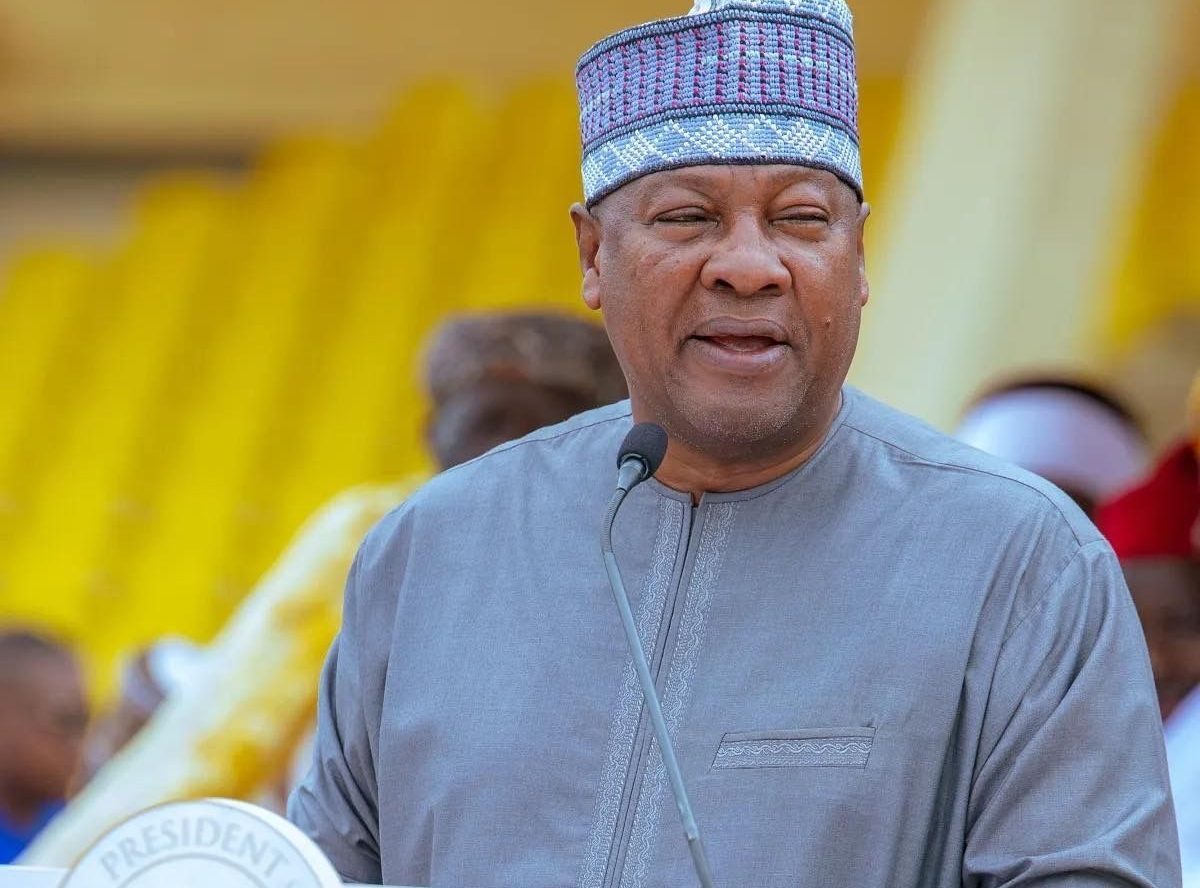
President John Dramani Mahama has announced that the government, through the Youth Employment Agency, has recruited 6,000 Arabic teachers across Ghana to strengthen Islamic education while creating employment opportunities for young people.
The announcement was made during the national Eid al Adha celebration held at the Black Star Square in Accra on May 27, 2026, where the President outlined several initiatives targeted at improving opportunities within Zongo communities and supporting youth development nationwide.
According to President Mahama, the recruitment programme forms part of the government’s broader strategy to address graduate unemployment while expanding access to quality Arabic and Islamic education in underserved communities. He disclosed that all the recruited teachers have already received their salaries in full and that the government does not owe them any arrears.

“I’m also pleased to announce that through the Youth Employment Agency the government has so far recruited 6,000 Arabic teachers to support Islamic education and create employment for young people,” President Mahama stated during his address at the Eid gathering.
The President further revealed that the initiative will continue to expand in the coming years as the government plans to recruit additional Arabic teachers to support Muslim communities and educational institutions across the country.
The latest recruitment drive represents one of the biggest Arabic education employment programmes introduced in Ghana in recent years. It builds on earlier initiatives by the Youth Employment Agency, which previously signed a memorandum of understanding with the Islamic Education Unit to recruit Arabic teachers nationwide.
The Youth Employment Agency has increasingly positioned itself as one of the government’s key employment intervention institutions, focusing on creating temporary and long term opportunities for young Ghanaians in education, sanitation, agriculture, healthcare and digital services.

President Mahama commended the Chief Executive Officer of the Youth Employment Agency, Malik Basintale, and his management team for successfully implementing the Arabic teachers programme and ensuring timely salary payments for beneficiaries.
The recruitment also comes at a time when the government is pursuing broader education and employment reforms aimed at reducing unemployment among trained teachers and graduates. In recent months, President Mahama announced plans to decentralise teacher recruitment to address the uneven distribution of educators across Ghana, particularly in rural areas where schools continue to face teacher shortages.
Government officials say the Arabic teachers initiative is expected to support many Islamic schools operating under the Ghana Education Service system, where shortages of trained Arabic instructors have remained a longstanding challenge.
Arabic education plays a major role in many Muslim communities across Ghana, particularly within Zongo areas where Arabic and Islamic studies often serve as the first point of formal education for many children before they transition into mainstream academic systems. Previous YEA programmes involving Arabic teachers were designed specifically to strengthen Islamic education and improve Arabic literacy nationwide.
Education analysts believe the latest expansion could improve access to structured Arabic instruction while also reducing unemployment pressures among trained Arabic educators who have struggled to secure stable employment opportunities.
The recruitment announcement formed part of a broader Eid message delivered by President Mahama, where he also pledged new infrastructure projects for Zongo communities, including roads, sanitation improvements and the construction of Community Day STEM senior high schools in densely populated urban areas.

The President stated that the government remains committed to ensuring that no community is left behind in its national development agenda, especially communities that have historically faced educational and economic disadvantages.
The national Eid prayer session was led by Ghana’s National Chief Imam, Sheikh Osman Nuhu Sharubutu, and attended by government officials, Muslim leaders and members of the diplomatic community.
The recruitment of 6,000 Arabic teachers also reflects the growing political and social importance of educational inclusion within Muslim communities in Ghana, where leaders have increasingly advocated greater investment in Islamic schools and Arabic education infrastructure.
Observers say the initiative could strengthen educational opportunities in many communities while helping government improve relations with Muslim constituencies ahead of future policy reforms focused on youth employment and educational access.
French overtakes Arabic to become fourth most spoken language globally