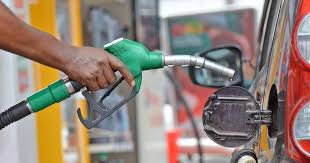
Fuel prices set to rise in Ghana despite continued government intervention as global pressures persist

0
139

Fuel prices in Ghana are expected to increase from May 16, 2026, even though the government has extended its temporary intervention aimed at cushioning consumers against rising international petroleum costs.

According to industry projections reported by Joy Business and the Chamber of Oil Marketing Companies, petrol prices are expected to rise by between 5.29% and 7.30%, while diesel could also increase by up to 7.30% in the next pricing window. The adjustments are expected to push petrol prices to around GH¢15.42 per litre, while diesel could reach approximately GH¢17.83 per litre under current market conditions.

The government had earlier introduced a relief package in April 2026 to soften the impact of global oil price volatility, absorbing GH¢2.00 per litre on diesel and GH¢0.36 per litre on petrol. That intervention was initially expected to end on May 15 but has now been partially extended, with continued support for diesel priced at GH¢1.07 per litre under a revised arrangement.

fuel

However, despite the extension, the cushioning effect has not been enough to fully offset rising import costs and global market pressures. Fuel marketers say the main drivers of the increase include rising crude oil prices on the international market and recent depreciation of the Ghana cedi against major trading currencies, particularly the US dollar.

The Chamber of Oil Marketing Companies explained that the pricing outlook reflects two possible scenarios depending on the scale of government support. Even in the best case, where intervention continues, consumers are still expected to see increases at the pump, although lower than they would be without state support. Without the intervention, petrol could climb as high as GH¢15.80 per litre, while diesel could reach GH¢18.05 per litre.

The latest adjustment comes at a time when global energy markets remain unstable, with geopolitical tensions in key oil producing regions continuing to influence supply chains and pricing. Analysts have pointed to disruptions in shipping routes and uncertainty in crude oil output as key factors feeding into higher refined fuel costs globally.

Fuel prices set to rise in Ghana despite continued government intervention as global pressures persist

In Ghana, the impact of fuel price movements is particularly significant because transport costs directly influence food prices, goods distribution and general inflation levels. Transport unions have previously warned that sustained increases in fuel prices often lead to fare adjustments, which eventually affect household budgets across the country.

The National Petroleum Authority, which regulates the downstream petroleum sector, continues to monitor pricing trends and approves periodic adjustments in line with market conditions. Industry players say the deregulated pricing system means fuel prices will continue to reflect global market realities, even when government interventions are in place.

Economists also note that while government interventions provide short term relief, they are costly and cannot permanently shield consumers from external shocks. As a result, policy makers often face a balancing act between protecting households and maintaining fiscal discipline.

fuel

For consumers, the latest developments mean higher transport and living costs are likely in the coming days, especially if global crude prices remain elevated and currency pressures persist.

Despite the increases, officials have assured that the intervention remains part of a broader strategy to stabilise prices and prevent sudden shocks to the economy while longer term energy reforms continue.

Gov’t adjusts fuel pump intervention as Ghana continues measures to cushion rising fuel prices

Author

  • Daniel Ablordey

    Daniel Ablordey is a Business Analytics student at the University of Ghana Business School and an emerging strategist at the intersection of data, markets, and narrative. With a keen analytical mind and a passion for African business and economic trends, he is building a career focused on translating complex data-driven insights into accessible, decision-relevant stories that matter.

    As a writer and editor with Insight Ghana, African Business Insight, and The African Journal, Daniel delivers sharp, high-impact analysis on current affairs, business developments, and emerging trends across the continent. His work is defined by precision, clarity, and a deep commitment to responsible journalism — ensuring that every story he tells is not only accurate but meaningful to the audiences it serves.

    Beyond his editorial work, Daniel serves as an Ecobank Youth Ambassador, where he actively promotes financial inclusion, digital banking, and financial literacy among young Ghanaians. His leadership experience spans academic, professional, and faith-based institutions, where he has consistently driven initiatives centered on growth, structure, and long-term impact.

    Grounded in the principles of Pan-Africanism and service, Daniel brings a rare combination of analytical rigour and storytelling depth to his work. Whether unpacking market behavior, profiling emerging business leaders, or covering cultural shifts shaping the continent, he approaches every assignment with strategic intent and editorial integrity.

    His broader ambition is to contribute to Africa's transformation by shaping how data, business, and storytelling intersect — not just locally, but on a global stage.

Previous articleChurch, culture, and dating: Navigating relationships as a young Christian
Next articleEbola surge spreads across Congo Uganda borders
Daniel Amenyo Ablordey
Daniel Ablordey is a Business Analytics student at the University of Ghana Business School and an emerging strategist at the intersection of data, markets, and narrative. With a keen analytical mind and a passion for African business and economic trends, he is building a career focused on translating complex data-driven insights into accessible, decision-relevant stories that matter.

As a writer and editor with Insight Ghana, African Business Insight, and The African Journal, Daniel delivers sharp, high-impact analysis on current affairs, business developments, and emerging trends across the continent. His work is defined by precision, clarity, and a deep commitment to responsible journalism — ensuring that every story he tells is not only accurate but meaningful to the audiences it serves.

Beyond his editorial work, Daniel serves as an Ecobank Youth Ambassador, where he actively promotes financial inclusion, digital banking, and financial literacy among young Ghanaians. His leadership experience spans academic, professional, and faith-based institutions, where he has consistently driven initiatives centered on growth, structure, and long-term impact.

Grounded in the principles of Pan-Africanism and service, Daniel brings a rare combination of analytical rigour and storytelling depth to his work. Whether unpacking market behavior, profiling emerging business leaders, or covering cultural shifts shaping the continent, he approaches every assignment with strategic intent and editorial integrity.

His broader ambition is to contribute to Africa's transformation by shaping how data, business, and storytelling intersect — not just locally, but on a global stage.