

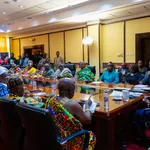
The National House of Chiefs has firmly rejected a proposal to merge the Office of the Administrator of Stool Lands with the Lands Commission, insisting that the current structure protecting stool land revenue management should remain unchanged.
The proposal, which formed part of recommendations by a constitutional review process, sought to consolidate land administration institutions in Ghana in order to improve efficiency, reduce duplication and streamline management of public and customary lands. However, traditional leaders argue that the plan could undermine accountability and weaken the systems that protect the financial interests of stools and skins across the country.
According to the House of Chiefs, the Office of the Administrator of Stool Lands was created as a distinct constitutional body to specifically manage revenues generated from stool lands, including royalties, rent, and other land related incomes. The chiefs maintain that the institution was established to ensure that traditional authorities benefit directly from land resources under their custodianship, while also promoting transparency in how such revenues are collected and distributed.

The rejection highlights long standing sensitivities around land ownership and management in Ghana, where customary land systems coexist with statutory land administration frameworks. Stool lands, which are held in trust by chiefs on behalf of their communities, form a significant portion of land in the country, making their governance a critical national issue.
In their arguments, the House of Chiefs warned that merging the two institutions could create administrative bottlenecks, slow down revenue disbursement, and expose stool land funds to risks associated with broader state land management challenges. They also expressed concern that such a merger could dilute the independence of stool land administration and reduce the direct oversight role traditionally exercised by chiefs.
The National House of Chiefs further maintained that the existing arrangement already provides for collaboration between the Office of the Administrator of Stool Lands and the Lands Commission under Ghana’s land laws. They argue that inefficiencies should be addressed through improved coordination and reforms within the current system rather than through institutional consolidation.
Land governance in Ghana has often been a subject of debate due to overlapping responsibilities between traditional authorities and state agencies. Issues such as land disputes, documentation delays, and revenue accountability have frequently been cited as challenges affecting the sector. Reform proposals have therefore aimed at improving efficiency, but they often face resistance when they touch on customary authority structures.
Supporters of the merger proposal argue that a unified land administration system could reduce fragmentation, improve land title processing, and strengthen national planning. However, traditional leaders counter that land in Ghana is deeply rooted in custom and must be managed in a way that respects historical and cultural authority systems.

The Office of the Administrator of Stool Lands was originally created under Ghana’s constitutional framework to safeguard the interests of traditional authorities while ensuring proper financial management of stool lands. Its mandate includes collecting land revenues and distributing them according to constitutional guidelines, including allocations to stools, traditional councils, and local assemblies.
The debate over the merger reflects broader tensions in Ghana’s land administration reform agenda, where policymakers must balance efficiency, transparency, and respect for customary authority. While reform efforts continue, the position of the House of Chiefs signals that any major structural changes will require broad consultation and consensus with traditional leaders.
For now, the rejection means the current dual structure of land administration involving both the Lands Commission and the Office of the Administrator of Stool Lands remains intact, at least until further dialogue or legislative review is undertaken.
Ewoyaa chiefs and residents reject lithium royalty cut demand reversal