

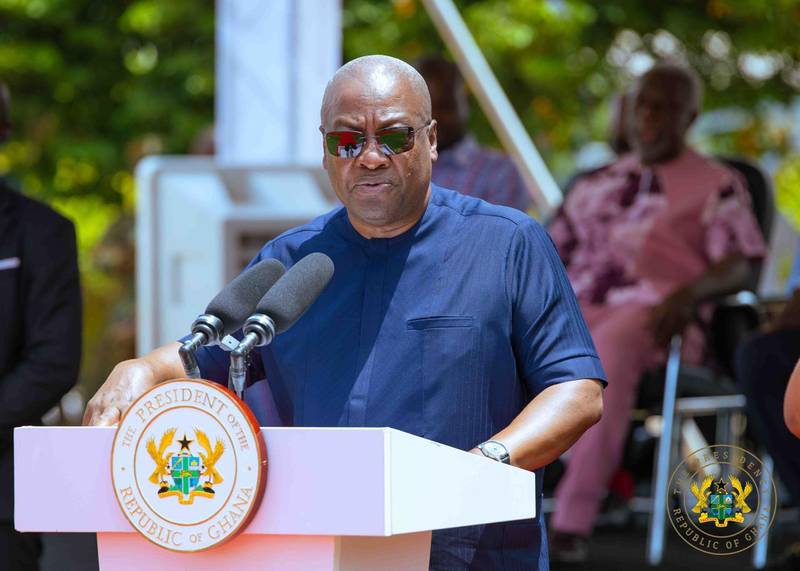
President John Dramani Mahama has announced that Ghana will completely phase out the double track system in all senior high schools by 2027, marking a major policy shift in the country’s secondary education structure.
The President’s assurance comes amid ongoing national discussions about the future of the double track system, which was introduced as a temporary measure to accommodate the surge in student enrolment following the implementation of the Free Senior High School policy. While the system helped expand access, it has faced sustained criticism over its impact on academic calendars, teaching consistency, and student experience.
According to John Dramani Mahama, the government is implementing a structured transition plan that will gradually eliminate the system without disrupting access to education. He emphasised that the goal is not only to remove the double track arrangement but also to improve the overall quality of teaching and learning across all senior high schools.

The double track system, which splits students into two groups attending school at different times, was initially designed to address infrastructure deficits and overcrowding. However, stakeholders including parents, teachers, and education experts have raised concerns about reduced contact hours, pressure on teachers, and the complexity of managing alternating academic schedules.
The government’s plan to end the system by 2027 is expected to rely heavily on expanding educational infrastructure. This includes the construction of new classroom blocks, dormitories, and learning facilities, as well as the upgrading of existing schools to accommodate larger student populations under a single track system.
In addition to infrastructure expansion, authorities are also expected to recruit more teachers and improve resource allocation to ensure that schools can effectively handle increased student numbers without compromising educational standards.

The announcement aligns with broader reforms within Ghana’s education sector, where policymakers are increasingly focused on balancing access with quality. While the Free SHS programme has significantly increased enrolment rates, attention is now shifting toward improving outcomes, student engagement, and overall system efficiency.
John Dramani Mahama noted that the transition will be carefully managed to avoid disruptions for students currently within the system. He reassured parents and stakeholders that no qualified student will be denied access to secondary education during the phase out period.
Education analysts view the move as a critical step toward stabilising Ghana’s secondary education system. Ending the double track arrangement could lead to more consistent academic calendars, improved teacher student interaction, and better curriculum delivery.
However, they also caution that the success of the policy will depend on sustained investment and effective implementation. Without adequate infrastructure and resources, there is a risk that overcrowding could return, undermining the gains made under the Free SHS programme.

The timeline set for 2027 provides a clear target for policymakers and education authorities, but it also places pressure on the government to accelerate ongoing projects and ensure that funding commitments are met.
For students and parents, the announcement offers a sense of direction and hope for a more stable and predictable education system in the coming years. For educators, it signals a potential shift toward improved working conditions and more structured teaching schedules.
As Ghana continues to reform its education sector, the planned end of the double track system represents one of the most significant policy changes in recent years, with far reaching implications for access, quality, and long term educational outcomes.