

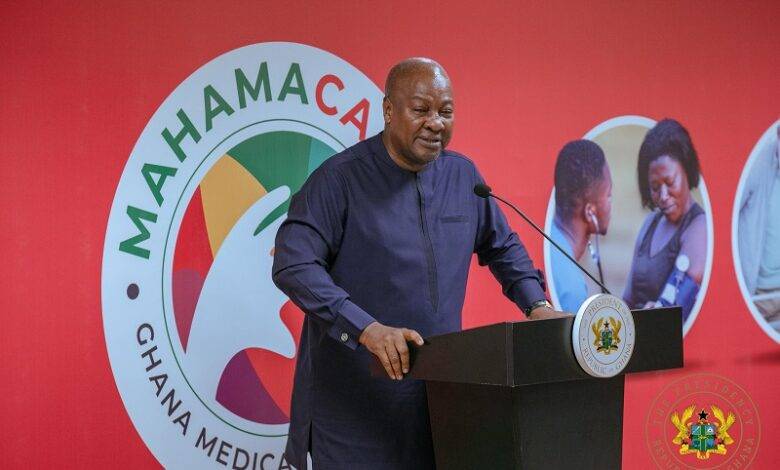
The Controller and Accountant General’s Department has transferred GH¢6.1 million to the Ghana Medical Trust Fund, marking a significant financial boost to the country’s efforts to strengthen healthcare delivery and support treatment for critical illnesses.
The funds were mobilised through a combination of sources, including salary donations by John Dramani Mahama, voluntary contributions from political appointees, and penalties imposed on public officials who defaulted on asset declaration requirements.
The development highlights a growing emphasis on accountability and resource mobilisation within government, particularly as Ghana seeks innovative ways to fund healthcare interventions beyond traditional budgetary allocations.

Officials familiar with the process indicate that the deductions from defaulters were tied to enforcement measures surrounding asset declaration laws, a key transparency requirement for public office holders. The penalties are intended not only to ensure compliance but also to redirect funds into critical national priorities.
The Ghana Medical Trust Fund, which forms part of broader healthcare reform efforts, is designed to address gaps in the country’s health system, particularly in the management of non communicable diseases and specialised care not fully covered under the National Health Insurance Scheme.
The injection of GH¢6.1 million is expected to support ongoing programmes under the initiative, including investments in medical infrastructure, procurement of specialised equipment, and expansion of access to treatment for vulnerable populations.
Government sources say the fund is being implemented in phases, with initial focus areas including cancer care and other high burden diseases. Partnerships with private healthcare providers and the integration of digital systems across major hospitals are also key components of the strategy.

The contribution from President Mahama’s salary aligns with a broader political message centred on leadership by example and shared responsibility in addressing national challenges. By committing a portion of executive earnings to the fund, the administration aims to encourage similar contributions and build public trust in the initiative.
At the same time, the inclusion of penalties from asset declaration defaulters introduces a layer of enforcement backed funding, linking governance compliance directly to social impact. Analysts say this approach could serve as a model for leveraging regulatory frameworks to support development goals.
The move comes amid increasing pressure on Ghana’s healthcare system, where funding constraints, infrastructure gaps, and rising disease burdens continue to challenge service delivery. Non communicable diseases, in particular, have become a growing concern, requiring sustained investment in prevention, diagnosis, and treatment.
By channeling funds into the Ghana Medical Trust Fund, authorities are seeking to create a more resilient and responsive healthcare system capable of addressing both immediate needs and long term challenges.

Observers note that while the amount transferred represents a meaningful step, sustained funding will be critical to achieving lasting impact. The success of the initiative will depend on consistent inflows, efficient management, and measurable outcomes in healthcare delivery.
The involvement of multiple funding streams including voluntary contributions and regulatory penalties also reflects a shift toward diversified financing models in public sector programmes. Such approaches are increasingly seen as necessary in environments where fiscal space is limited.
For the government, the transfer underscores its commitment to strengthening healthcare systems while reinforcing accountability mechanisms within public administration. It also sends a signal that compliance failures carry tangible consequences that can be redirected toward national development priorities.
As implementation continues, attention will likely turn to how effectively the funds are deployed and whether the initiative can deliver visible improvements in healthcare access and outcomes across the country.
MahamaCares builds modern cardiology centres at Korle Bu, Komfo Anokye and Tamale Teaching Hospitals