


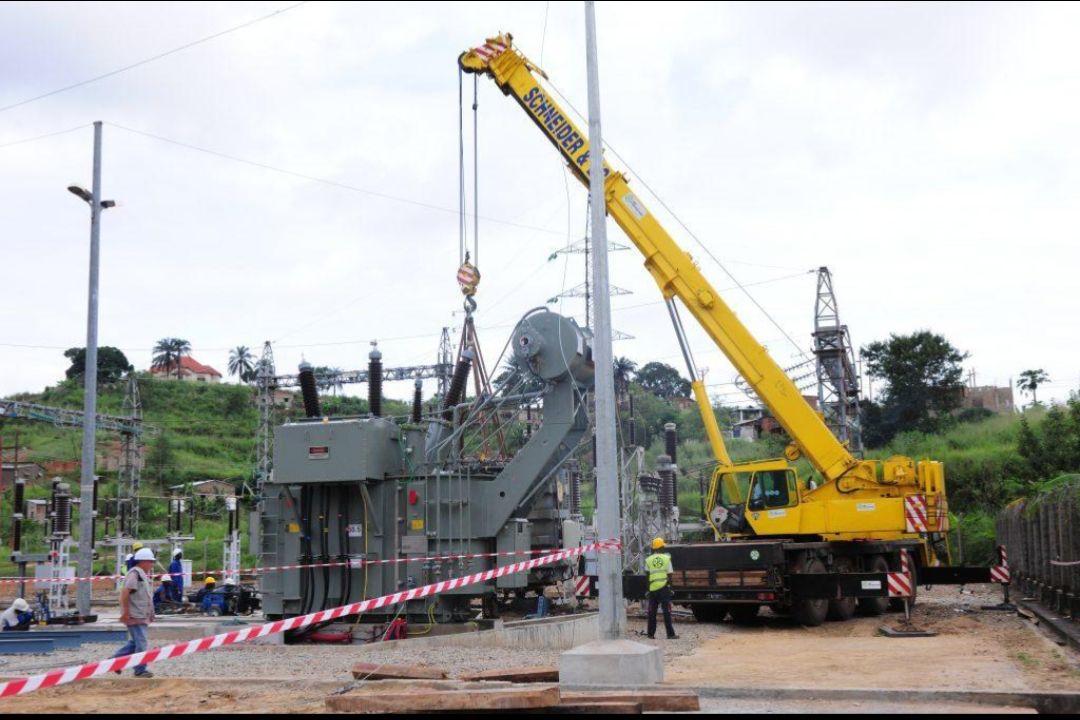
The Electricity Company of Ghana (ECG) has installed high-capacity transformers at the Ridge Bulk Supply Point in Kumasi in a renewed effort to address persistent power outages and voltage instability across the Ashanti Regional capital. The intervention is part of a broader infrastructure upgrade aimed at improving electricity reliability in one of Ghana’s most economically active urban centres.
The development comes amid growing concerns from residents and businesses over erratic power supply in Kumasi, which has disrupted commercial activity and strained household energy use. ECG has maintained that recent fluctuations are linked to ongoing system upgrades rather than a return to widespread load shedding, commonly referred to as “dumsor.”
The newly installed transformers are expected to significantly increase capacity at the Ridge Bulk Supply Point, a critical node in the region’s power distribution network. By enhancing load handling and stabilizing voltage levels, the upgrade is designed to reduce system overloads and improve overall network efficiency.
This intervention aligns with ECG’s broader strategy to modernise its infrastructure in response to rising electricity demand in Kumasi and surrounding areas. The Ashanti Region, a major commercial hub, has experienced sustained growth in energy consumption driven by urban expansion, industrial activity, and population increase.

Key aspects of the upgrade include:
- Installation of high-capacity transformers to improve load distribution
- Strengthening of the Ridge Bulk Supply Point to reduce outages and voltage fluctuations
The significance of this project extends beyond technical improvements. Reliable electricity supply remains a central pillar of Ghana’s economic stability, particularly in regions where commerce, manufacturing, and services depend heavily on uninterrupted power. Frequent outages not only disrupt productivity but also increase operational costs for businesses forced to rely on alternative power sources.
For Kumasi, the stakes are particularly high. As Ghana’s second-largest city and a key trading hub, consistent power supply is essential for sustaining economic activity. Market centres, small and medium enterprises, and industrial operations all rely on stable electricity to function efficiently. Any disruption has a cascading effect on productivity, employment, and revenue generation.
Despite the installation of new transformers, the broader challenge lies in execution and system-wide coordination. Infrastructure upgrades at key substations are necessary but not sufficient if bottlenecks persist across the wider distribution network. Power reliability depends on the integrity of the entire system,from generation through transmission to final distribution.
ECG’s recent move also fits into a wider programme to overhaul aging infrastructure across the Ashanti Region. The company has indicated plans to replace hundreds of transformers as part of efforts to strengthen the network and reduce technical losses. This signals recognition within the power sector that incremental fixes must be complemented by sustained investment in core assets.

However, implementation remains a critical test. Ghana’s energy sector has historically faced challenges in translating infrastructure plans into consistent service delivery. Delays in project completion, funding constraints, and maintenance gaps have often undermined the impact of such interventions. Without strict timelines and performance monitoring, even well-intentioned upgrades risk falling short of expectations.
There is also the question of demand management. As electricity consumption continues to rise, infrastructure expansion must be matched with efficient usage and system planning. Failure to align these elements could result in recurring pressure on the grid, even after capacity upgrades.
From a governance perspective, the Ridge Bulk Supply Point upgrade places renewed focus on accountability within the energy sector. ECG and relevant authorities will be expected to demonstrate measurable improvements in service delivery following the installation. Public confidence in the sector increasingly depends on visible outcomes rather than assurances.
At the national level, the project reflects ongoing efforts to stabilise Ghana’s power supply and support economic recovery. Reliable electricity is not only a utility issue, it is a foundational requirement for growth, investment, and competitiveness. As Ghana positions itself for industrial expansion and digital transformation, energy infrastructure will remain a decisive factor.
The installation of high-capacity transformers in Kumasi is therefore a necessary step, but not a final solution. Its success will ultimately be judged by whether it delivers sustained relief from outages and voltage fluctuations. For businesses and households in the Ashanti Region, the expectation is straightforward: consistent, dependable power.
Anything less will reinforce a familiar pattern, where infrastructure upgrades are announced, but the underlying challenges persist.
Ghana hits record US$31.25bn export revenue in 2025, highest since independence