

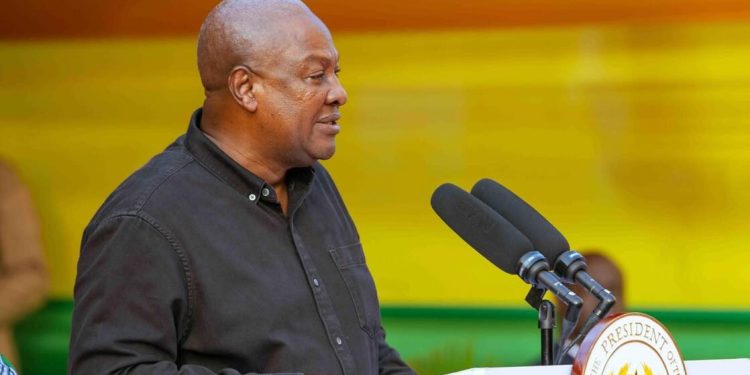
President John Dramani Mahama has revealed plans to establish new High Courts dedicated specifically to handling cases arising from the work of the Auditor-General of Ghana, a move aimed at strengthening accountability and accelerating the prosecution of financial irregularities within the public sector.
Speaking on the initiative, Mahama indicated that the creation of specialised courts would address longstanding delays in adjudicating cases involving audit findings, particularly those linked to disallowed expenditures and financial infractions flagged in annual audit reports. Over the years, concerns have mounted over the slow pace at which such cases are prosecuted, often weakening the enforcement of recommendations made by the Auditor-General.
The proposed courts are expected to focus exclusively on matters arising from audit reports, including surcharge and disallowance cases, procurement breaches, and misuse of public funds. By narrowing the scope of these courts, authorities aim to ensure faster resolution of cases and more effective recovery of misappropriated state resources.

Mahama stressed that strengthening the enforcement arm of the Auditor-General’s work is critical to improving public financial management in Ghana. He argued that while the Auditor-General has made significant strides in identifying financial irregularities across ministries, departments, and agencies, the lack of swift judicial follow-through has undermined the overall impact of these findings.
The initiative builds on constitutional provisions that empower the Auditor-General to disallow unlawful expenditures and surcharge public officials responsible for financial losses to the state. In recent years, the Auditor-General has exercised these powers more assertively, recovering millions of cedis through surcharges and disallowances. However, enforcement challenges and legal bottlenecks have limited the full realization of these efforts.
Legal analysts say the introduction of dedicated High Courts could mark a turning point in Ghana’s fight against financial mismanagement. By reducing the backlog of cases and prioritising audit-related matters, the courts could enhance deterrence and promote greater compliance with financial regulations across public institutions.
The proposal also aligns with broader governance reforms aimed at improving transparency and accountability. Ghana has consistently faced scrutiny over public sector financial management, with audit reports frequently highlighting issues such as procurement violations, unaccounted expenditures, and weak internal controls. These challenges have raised concerns among civil society organisations and international partners about the effectiveness of oversight mechanisms.

Experts argue that a specialised judicial approach could help bridge the gap between audit findings and enforcement. In many instances, cases identified by the Auditor-General either stall in the legal system or fail to result in meaningful sanctions, creating a perception of impunity. The establishment of new High Courts is therefore seen as an effort to restore confidence in the accountability process.
Mahama also emphasised the need for institutional collaboration to ensure the success of the initiative. This includes coordination between the judiciary, the Auditor-General’s office, the Attorney-General’s department, and other oversight bodies. Without such coordination, he noted, the effectiveness of the specialised courts could be limited.
The announcement comes at a time when Ghana continues to navigate economic challenges, making efficient use of public resources more critical than ever. Strengthening financial oversight and ensuring accountability for public spending are seen as key components of efforts to stabilise the economy and rebuild trust in public institutions.
While the proposal has been welcomed by some governance advocates, questions remain about implementation. Issues such as funding, judicial capacity, and the appointment of judges with expertise in financial and audit-related cases will be crucial to the success of the initiative. Additionally, stakeholders are calling for clear timelines and a detailed framework outlining how the courts will operate.

If successfully implemented, the new High Courts could significantly reshape Ghana’s accountability landscape. By ensuring that audit findings lead to timely and decisive legal action, the initiative has the potential to strengthen institutional integrity and reduce financial leakages within the public sector.
The move signals a renewed focus on enforcing financial discipline and underscores the growing recognition that identifying irregularities alone is not enough without effective mechanisms to address them. As Ghana continues to push for stronger governance systems, the establishment of specialised courts for Auditor-General cases could become a defining step in the country’s efforts to promote transparency and accountability.