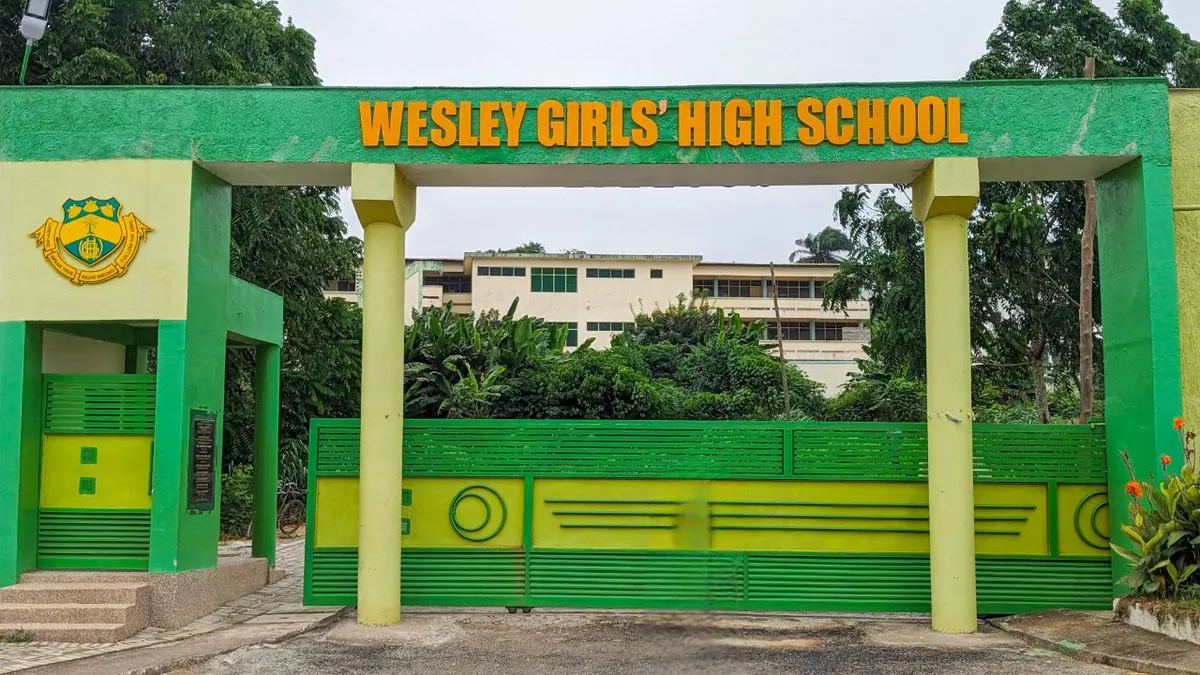
Ghana supreme court rejects Wesley Girls’ bid to halt religious discrimination case

0
127

The Supreme Court of Ghana has dismissed an application filed by Wesley Girls’ High School seeking to strike out a constitutional case centered on alleged religious discrimination.

The ruling means the substantive case will proceed, keeping the spotlight on longstanding tensions between institutional rules in some mission schools and students’ constitutional rights to religious freedom.

The case stems from policies at Wesley Girls’, one of Ghana’s most prestigious secondary schools, which have previously drawn national attention over restrictions affecting students of certain religious backgrounds. Critics argue that such policies may conflict with constitutional protections, while school authorities have often defended them as part of longstanding traditions and disciplinary frameworks.

supreme court,wesley girls

By rejecting the school’s attempt to terminate the case at this preliminary stage, the Supreme Court has effectively signalled that the issues raised deserve full judicial examination. Legal analysts say this does not determine the final outcome but ensures that arguments on both sides will be heard in detail.

At the heart of the dispute is the interpretation of constitutional rights, particularly around freedom of religion, and how they apply within educational institutions that operate under specific religious or cultural guidelines. The case is expected to test the limits of institutional autonomy against individual rights guaranteed under Ghana’s Constitution.

The decision could carry broader implications beyond Wesley Girls’, potentially setting a precedent for how similar disputes are handled across mission schools in Ghana. Many such institutions have historically maintained rules shaped by their founding religious bodies, sometimes leading to friction with increasingly diverse student populations.

Ghana supreme court rejects Wesley Girls’ bid to halt religious discrimination case

Public debate around the issue has intensified in recent years, especially as cases involving religious expression in schools have become more visible. Advocates for reform argue that policies must evolve to reflect constitutional standards and inclusivity, while others caution against undermining the identity and traditions of mission-based institutions.

As the case proceeds, attention will likely focus on how the court balances these competing interests. The outcome could influence future policy decisions in the education sector and shape the legal boundaries of religious expression in Ghanaian schools.

supreme court,wesley girls

Supreme Court Orders Wesley Girls SHS to Respond to Muslim Rights Allegations

Author

  • Daniel Ablordey

    Daniel Ablordey is a Business Analytics student at the University of Ghana Business School and an emerging strategist at the intersection of data, markets, and narrative. With a keen analytical mind and a passion for African business and economic trends, he is building a career focused on translating complex data-driven insights into accessible, decision-relevant stories that matter.

    As a writer and editor with Insight Ghana, African Business Insight, and The African Journal, Daniel delivers sharp, high-impact analysis on current affairs, business developments, and emerging trends across the continent. His work is defined by precision, clarity, and a deep commitment to responsible journalism — ensuring that every story he tells is not only accurate but meaningful to the audiences it serves.

    Beyond his editorial work, Daniel serves as an Ecobank Youth Ambassador, where he actively promotes financial inclusion, digital banking, and financial literacy among young Ghanaians. His leadership experience spans academic, professional, and faith-based institutions, where he has consistently driven initiatives centered on growth, structure, and long-term impact.

    Grounded in the principles of Pan-Africanism and service, Daniel brings a rare combination of analytical rigour and storytelling depth to his work. Whether unpacking market behavior, profiling emerging business leaders, or covering cultural shifts shaping the continent, he approaches every assignment with strategic intent and editorial integrity.

    His broader ambition is to contribute to Africa's transformation by shaping how data, business, and storytelling intersect — not just locally, but on a global stage.

Previous articleGhana rejects US health deal over data-sharing concerns
Next articleGFA confirms timeline for 2026/27 Ghana Premier League season
Daniel Amenyo Ablordey
Daniel Ablordey is a Business Analytics student at the University of Ghana Business School and an emerging strategist at the intersection of data, markets, and narrative. With a keen analytical mind and a passion for African business and economic trends, he is building a career focused on translating complex data-driven insights into accessible, decision-relevant stories that matter.

As a writer and editor with Insight Ghana, African Business Insight, and The African Journal, Daniel delivers sharp, high-impact analysis on current affairs, business developments, and emerging trends across the continent. His work is defined by precision, clarity, and a deep commitment to responsible journalism — ensuring that every story he tells is not only accurate but meaningful to the audiences it serves.

Beyond his editorial work, Daniel serves as an Ecobank Youth Ambassador, where he actively promotes financial inclusion, digital banking, and financial literacy among young Ghanaians. His leadership experience spans academic, professional, and faith-based institutions, where he has consistently driven initiatives centered on growth, structure, and long-term impact.

Grounded in the principles of Pan-Africanism and service, Daniel brings a rare combination of analytical rigour and storytelling depth to his work. Whether unpacking market behavior, profiling emerging business leaders, or covering cultural shifts shaping the continent, he approaches every assignment with strategic intent and editorial integrity.

His broader ambition is to contribute to Africa's transformation by shaping how data, business, and storytelling intersect — not just locally, but on a global stage.