

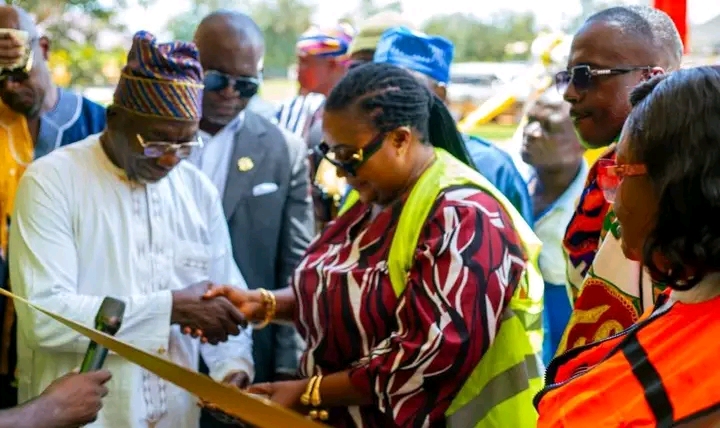
mceThe Municipal Chief Executive for Obuasi, Faustilove Appiah Kannin, has commissioned a series of development projects worth over GH¢1.18 million across four communities, marking a significant step in efforts to improve living conditions and infrastructure within the municipality.
The projects, which span key sectors including sanitation, water, and community infrastructure, are part of a broader local government agenda aimed at addressing pressing developmental gaps and enhancing the quality of life for residents. According to municipal authorities, the total cost of the projects stands at approximately GH¢1,182,309.68, reflecting targeted investments in communities that have long struggled with basic service delivery challenges.
Speaking during the commissioning ceremony, the MCE emphasized that the projects are not just symbolic but represent a practical response to the needs of the people. She reiterated the assembly’s commitment to ensuring that development is inclusive and reaches all corners of the municipality, particularly underserved communities that have historically been left behind.

“These projects are a reflection of our commitment to improving the lives of our people. Development must be felt at the grassroots, and that is exactly what we are working towards,” she noted during the event.
Residents in the beneficiary communities expressed relief and appreciation for the interventions, highlighting how the projects are expected to ease long-standing challenges. In many parts of Obuasi, access to clean water and proper sanitation has been a recurring issue, affecting both health and economic productivity. The newly commissioned facilities are therefore expected to play a crucial role in reducing waterborne diseases and improving overall hygiene standards.
Local leaders also pointed out that improved infrastructure could have a ripple effect on economic activities. Small businesses, particularly those dependent on water and stable community facilities, are likely to benefit from the improved environment. Better sanitation systems and access to clean water can enhance productivity while reducing costs associated with health-related disruptions.
The Obuasi Municipal Assembly has, in recent years, intensified its focus on infrastructure development as part of a wider strategy to reposition the area as a thriving economic hub. Once known primarily for its gold mining activities, Obuasi is increasingly looking to diversify its local economy, and infrastructure development is seen as a critical foundation for that transformation.
The commissioning of these projects comes at a time when local governments across Ghana are under pressure to deliver tangible development outcomes despite financial constraints. Many assemblies face challenges related to delayed disbursement of funds and rising costs of construction materials, making the completion of such projects a notable achievement.
Analysts say the success of such initiatives often depends not just on the construction phase but also on maintenance and sustainability. Without proper management and community ownership, infrastructure projects can quickly deteriorate, undermining their long-term impact. The MCE acknowledged this concern and called on residents to take responsibility for maintaining the facilities.

She urged community members to protect the projects from vandalism and misuse, stressing that “development is a shared responsibility” that requires collaboration between authorities and citizens.
The projects also align with national development priorities, particularly in areas such as sanitation and water access, which remain key indicators of progress. Ghana has made strides in improving access to basic services over the years, but disparities persist between urban and rural communities, as well as within municipalities.
By focusing on targeted interventions at the local level, authorities hope to bridge these gaps and ensure more equitable development outcomes. The Obuasi initiative is therefore seen as part of a larger effort to strengthen local governance and improve service delivery across the country.
As the municipality continues to expand and evolve, the importance of sustained investment in infrastructure cannot be overstated. Projects such as these not only address immediate needs but also lay the groundwork for future growth and development.
For the people of Obuasi, the commissioning of these projects represents more than just new facilities. It is a signal that their concerns are being heard and that efforts are being made to translate policy into real, visible change on the ground.