

Ghana has recorded a significant surge in export earnings, with more than $3 billion generated from non-traditional exports in 2025, as the country’s push toward industrialisation and value-added production continues to reshape its economic landscape.
New figures released by the Ghana Export Promotion Authority (GEPA) show that the top ten non-traditional export products alone generated about $3.28 billion in value, translating to approximately $2.42 billion in export receipts. This represents a sharp 53% increase compared to the $1.59 billion recorded in 2024, highlighting a strong acceleration in Ghana’s export diversification strategy.
The data underscores a clear shift away from raw commodity exports toward processed and semi-processed goods, with more than 83% of earnings now coming from value-added products. This transformation is widely seen as a cornerstone of Ghana’s long-term economic strategy, aimed at strengthening resilience, boosting industrial output, and enhancing competitiveness in both regional and global markets.

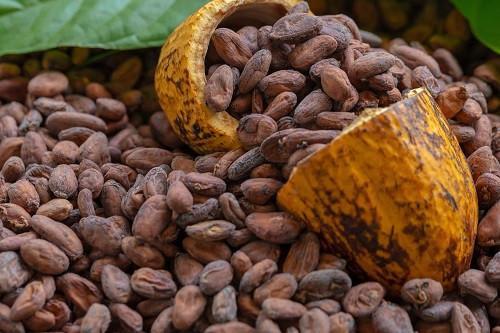
At the centre of this shift is the cocoa sector, which continues to dominate Ghana’s export profile while undergoing a structural evolution. Rather than relying heavily on raw bean exports, the country has significantly expanded its domestic processing capacity, allowing it to capture more value across the supply chain.
Cocoa paste emerged as the single largest export product, generating approximately $789.3 million in 2025, reflecting a nearly 71% increase year-on-year. Secondary cocoa products recorded even more dramatic growth. Cocoa butter exports surged by over 120% to around $469 million, while cocoa powder rose by nearly 113% to about $173 million. Overall, the cocoa sector delivered an estimated $3.69 billion in earnings, marking one of its strongest performances on record.
GEPA described this trend as evidence of “a broader structural shift in Ghana’s export strategy, from raw commodity dependence to processed and semi-processed goods,” reinforcing the country’s ambition to move up the global value chain.
Beyond cocoa, agricultural diversification is also playing a growing role in export performance. Cashew nuts generated about $219 million, while the shea industry continued to expand, with shea nuts and shea oil contributing roughly $131 million and $129 million respectively. These sectors are benefiting from rising demand in international markets, particularly in Europe, where they are used in food processing, cosmetics, and pharmaceuticals.
Industrial exports are also gaining momentum. Products such as plastics, aluminium, and processed fish are increasingly contributing to Ghana’s export mix. Articles of plastics generated approximately $203 million, aluminium products reached around $121 million, and canned tuna exports rose to about $157 million. Together, these sectors highlight the growing importance of manufacturing in Ghana’s export economy.
However, the data also points to uneven performance across industries. Iron and steel exports declined slightly to around $233 million, reflecting challenges linked to volatile global prices and increasing competition. Despite this, the overall export outlook remains strong, driven by consistent growth in value-added sectors.
In terms of trade destinations, Europe continues to dominate Ghana’s export markets, with countries such as the Netherlands, the United Kingdom, and France leading demand for processed cocoa and other goods. At the same time, intra-African trade is expanding steadily, accounting for over 30% of non-traditional export earnings. This growth is being supported by regional integration efforts under the Economic Community of West African States and the African Continental Free Trade Area framework.

GEPA Chief Executive Francis Kojo Kwarteng Arthur noted that the latest figures reflect Ghana’s “growing competitiveness in regional markets,” adding that ongoing initiatives such as the Accelerated Export Development Programme are helping to improve production standards and expand capacity.
The results were formally unveiled during the launch of the 2025 Non-Traditional Export Statistics Report on April 17, 2026, reinforcing the narrative of an economy gradually transitioning from resource dependency to industrial-led growth.
While Ghana’s trade balance continues to fluctuate due to external pressures such as global commodity prices and currency dynamics, the strong performance in non-traditional exports signals a positive trajectory. The increasing dominance of processed goods suggests that the country is beginning to capture greater value from its natural resources, a key objective of its industrialisation agenda.
Ultimately, Ghana’s export growth story reflects more than just rising numbers. It points to a deeper economic transformation, one that is positioning the country as a manufacturing and processing hub in West Africa, with the potential to play a larger role in global value chains in the years ahead.