

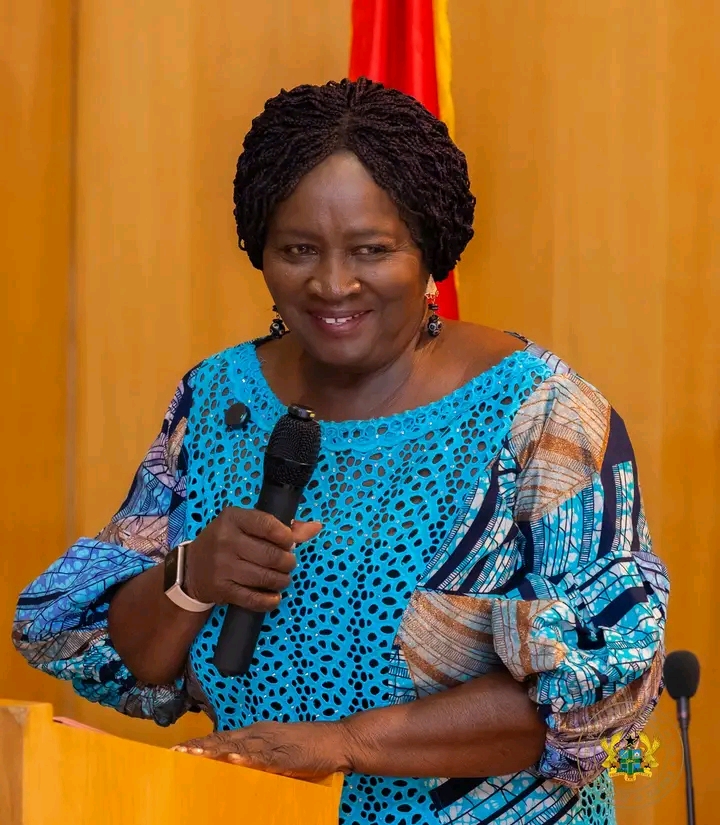
Vice President Professor Jane Naana Opoku-Agyemang has met with members of the Ghanaian diaspora community in Barcelona, Spain, conveying warm greetings from President John Dramani Mahama and briefing them on key developments back home. The engagement, which took place on April 19, 2026, brought the Vice President’s official visit to Spain to a close, following her participation in the 4th High-Level Meeting of the Initiative in Defence of Democracy.
The visit concluded with a scheduled interaction with members of the Ghanaian community in Spain on April 19, providing an opportunity for direct engagement with nationals abroad and reinforcing diplomatic and community ties. The Vice President was accompanied by Foreign Affairs Minister Samuel Okudzeto Ablakwa and Ghana’s Ambassador to Spain, Kalsoume Sinare Baffoe. The meeting brought together traditional leaders, the Ghana Union, and various Ghanaian associations spread across different provinces of Spain.

On behalf of President Mahama, Professor Opoku-Agyemang commended Ghanaians in Spain for maintaining a positive national image abroad and reaffirmed the government’s commitment to strengthening its engagement with the diaspora. She used the occasion to provide a comprehensive briefing on the economic and social direction the Mahama administration is pursuing.
A central theme of her address was economic stabilisation. Ghana has made notable progress on that front in recent months. Inflation has returned to single digits, the cedi has strengthened on improved external buffers, and public debt has fallen to about 45% of gross domestic product. These gains reflect disciplined fiscal management and decisive debt operations, with the 2026 budget themed “Resetting for Growth, Jobs, and Economic Transformation” outlining a clear path to consolidate macroeconomic stability, accelerate job creation, and protect social progress.

The Vice President also highlighted the government’s flagship economic transformation programme. The Big Push Agenda, a $10 billion national infrastructure programme, aims to stimulate massive investments in roads, railways, energy, and other critical infrastructure to support industrialisation and trade. The World Bank has noted that with ambitious reforms, Ghana could more than triple per capita income by 2050, moving decisively toward upper-middle-income status.
Closely linked to the Big Push is the 24-hour economy initiative. Parliament has passed the 24-Hour Economy Authority Bill, and President Mahama has outlined a raft of incentives for businesses under the programme, with the next phase involving the registration of companies willing to operate under the 24-hour framework. The initiative is anchored on the broader vision of transforming Ghana into an import substitution and export-led economy, with a focus on modernising agriculture, promoting agro-processing, and supporting the private sector.

The Vice President also touched on the Goldbod programme, which has emerged as a significant pillar of Ghana’s economic reset. The Ghana Gold Board initiative has generated over $10 billion in less than a year, illustrating how effective international collaboration can yield significant economic benefits. From January 2026, the central bank exited small-scale gold trading under the Domestic Gold Purchase Programme, handing operational control to the Ghana Gold Board, with the aim of stripping fiscal risk from gold buying and embedding gold into Ghana’s reserves framework as a permanent policy tool.
On inclusive development, Professor Opoku-Agyemang drew attention to the Women’s Development Bank, an initiative she has personally championed. She has stressed that the bank is designed to support women-led businesses with access to finance and essential resources, noting that women’s economic development directly benefits families and communities. She indicated that the process has been complex but that the government remains committed to delivering a robust and effective institution, saying: “It is something very important, and we must take our time to get it right.” The 2026 budget has allocated GH¢401 million (approximately $27 million) to the Women’s Development Bank to finance women-led micro, small, and medium enterprises.

The community briefing also covered key social interventions the government has introduced. The No-Fees Stress Policy for first-year tertiary students addresses the financial barrier that has historically prevented many young Ghanaians from accessing university education. The distribution of free sanitary pads for schoolgirls targets one of the less-discussed but impactful drivers of school absenteeism among female students. On healthcare, the 2026 budget has allocated GH¢2.3 billion to the Ghana Medical Care Trust, known as MahamaCares, alongside GH¢600 million for three new regional hospitals, as part of expanded primary healthcare access.
On agriculture, the Vice President highlighted government efforts to boost local food production and reduce import dependence, a message consistent with her earlier engagements in Barcelona where she met with Spanish food company GB Foods to explore investment opportunities in Ghana’s tomato value chain. She has consistently stressed the importance of moving beyond the export of raw materials to value addition, calling for women-led small and medium enterprises to be given access to markets while the youth are empowered to use their creativity and innovation to drive prosperity.

Professor Opoku-Agyemang expressed appreciation for the warm reception extended by the Ghanaian community and encouraged them to remain united and actively engaged in the country’s development. She reaffirmed the government’s commitment to supporting the welfare of Ghanaians abroad and to strengthening ties with the diaspora, who remain a vital source of remittances, skills, and goodwill for the country.
Veep hails private medical schools’ role in strengthening Ghana’s healthcare