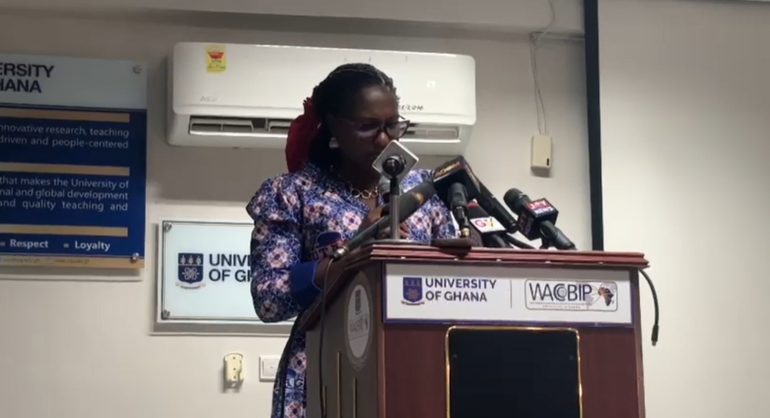
UTAG gives government 14 days to sack GTEC leadership

0
264

The University Teachers Association of Ghana (UTAG) has issued a firm 14 day ultimatum to the government demanding the removal of the Director General of the Ghana Tertiary Education Commission (GTEC), Prof Ahmed Jinapor Abdulai, and his deputy, Prof Augustine Ocloo, escalating tensions between the academic union and education authorities.

UTAG’s directive signals deepening dissatisfaction within Ghana’s public university teaching community over what it describes as leadership and governance concerns at the regulator responsible for overseeing tertiary education standards in the country.

The association argues that the current leadership of GTEC has failed to effectively manage key stakeholder relations and address persistent structural challenges affecting tertiary institutions, including staffing concerns, institutional autonomy, and regulatory clarity. While UTAG has not publicly detailed all grievances in the latest ultimatum, the tone of its communication suggests long standing friction between the association and the commission’s top management.

utag
Professor Ahmed Jinapor Abdulai, the Director-General of the Ghana Tertiary Education Commission (GTEC)

GTEC, established to regulate and coordinate tertiary education in Ghana, plays a central role in accreditation, quality assurance, and policy oversight across public and private universities. Its decisions directly affect staff conditions, institutional operations, and academic governance frameworks, making its leadership a critical point of engagement for university lecturers nationwide.

UTAG’s ultimatum adds pressure on the government at a time when relations between public sector unions and state institutions have been increasingly strained over working conditions, compensation structures, and institutional reforms in higher education. The association has historically taken strong positions on matters it considers threats to academic independence or university welfare.

Although UTAG has not specified what actions it will take if its demands are not met within the 14 day window, past disputes involving the association have included strikes, withdrawal of teaching services, and public demonstrations. This raises the possibility of renewed industrial unrest if negotiations do not progress.

The government now faces a delicate balancing act. On one hand, it must manage institutional continuity within GTEC and ensure stability in tertiary education governance. On the other, it must engage UTAG, whose members form the backbone of Ghana’s public university system, and whose cooperation is essential for uninterrupted academic operations.

Education sector observers note that leadership disputes of this nature often reflect broader structural tensions rather than isolated personality conflicts. Issues such as funding constraints, policy implementation gaps, and evolving demands from universities frequently place regulators and academic unions on opposing sides of reform debates.

UTAG gives government 14 days to sack GTEC leadership

The current standoff also comes at a time when Ghana’s tertiary education sector is under pressure to expand access, improve quality assurance systems, and align with global academic standards. Any prolonged disruption between UTAG and GTEC risks slowing policy implementation and affecting academic calendars across public universities.

Stakeholders are now watching closely for the government’s response. A decision to remove or retain the GTEC leadership could set a precedent for how similar disputes are handled in the future, particularly in sectors where professional associations wield significant influence.

For now, UTAG’s message is clear and time bound. The next two weeks will determine whether the situation escalates into industrial action or moves toward negotiated resolution.

GTEC Identifies Dozens of Unaccredited Institutions as Ghana Tightens Oversight

Author

  • Daniel Ablordey

    Daniel Ablordey is a Business Analytics student at the University of Ghana Business School and an emerging strategist at the intersection of data, markets, and narrative. With a keen analytical mind and a passion for African business and economic trends, he is building a career focused on translating complex data-driven insights into accessible, decision-relevant stories that matter.As a writer and editor with Insight Ghana, African Business Insight, and The African Journal, Daniel delivers sharp, high-impact analysis on current affairs, business developments, and emerging trends across the continent. His work is defined by precision, clarity, and a deep commitment to responsible journalism — ensuring that every story he tells is not only accurate but meaningful to the audiences it serves.Beyond his editorial work, Daniel serves as an Ecobank Youth Ambassador, where he actively promotes financial inclusion, digital banking, and financial literacy among young Ghanaians. His leadership experience spans academic, professional, and faith-based institutions, where he has consistently driven initiatives centered on growth, structure, and long-term impact.Grounded in the principles of Pan-Africanism and service, Daniel brings a rare combination of analytical rigour and storytelling depth to his work. Whether unpacking market behavior, profiling emerging business leaders, or covering cultural shifts shaping the continent, he approaches every assignment with strategic intent and editorial integrity.His broader ambition is to contribute to Africa's transformation by shaping how data, business, and storytelling intersect — not just locally, but on a global stage.

Previous articleGFA appoints Carlos Queiroz as new Black Stars head coach ahead of 2026 World Cup
Next article85% of Ghanaians reject government LGBTQ stance
Daniel Amenyo Ablordey
Daniel Ablordey is a Business Analytics student at the University of Ghana Business School and an emerging strategist at the intersection of data, markets, and narrative. With a keen analytical mind and a passion for African business and economic trends, he is building a career focused on translating complex data-driven insights into accessible, decision-relevant stories that matter.As a writer and editor with Insight Ghana, African Business Insight, and The African Journal, Daniel delivers sharp, high-impact analysis on current affairs, business developments, and emerging trends across the continent. His work is defined by precision, clarity, and a deep commitment to responsible journalism — ensuring that every story he tells is not only accurate but meaningful to the audiences it serves.Beyond his editorial work, Daniel serves as an Ecobank Youth Ambassador, where he actively promotes financial inclusion, digital banking, and financial literacy among young Ghanaians. His leadership experience spans academic, professional, and faith-based institutions, where he has consistently driven initiatives centered on growth, structure, and long-term impact.Grounded in the principles of Pan-Africanism and service, Daniel brings a rare combination of analytical rigour and storytelling depth to his work. Whether unpacking market behavior, profiling emerging business leaders, or covering cultural shifts shaping the continent, he approaches every assignment with strategic intent and editorial integrity.His broader ambition is to contribute to Africa's transformation by shaping how data, business, and storytelling intersect — not just locally, but on a global stage.