

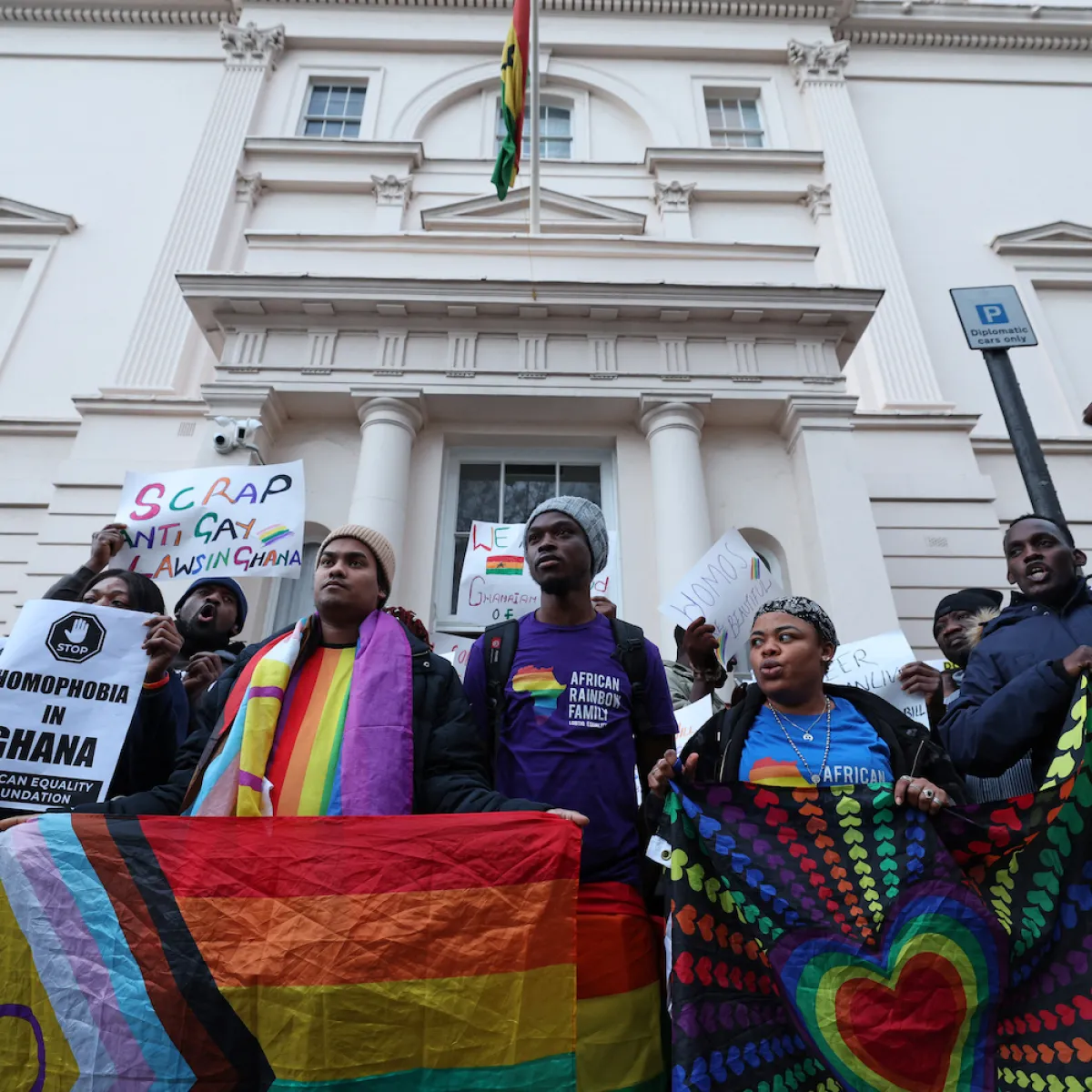
A new nationwide survey by Africa Policy Lens (APL) has found that an overwhelming majority of Ghanaians are dissatisfied with the government’s handling of LGBTQ+ issues, intensifying an already heated national debate over the country’s social and political direction.
According to the poll, 85 percent of respondents said they are unhappy with the government’s current stance, while only a small minority expressed approval. The findings were drawn from nearly 7,000 SMS-based responses collected across all 16 regions over a three-day period, suggesting broad national engagement with the issue.
The results reflect a consistent trend in Ghanaian public opinion, where attitudes toward LGBTQ+ rights have remained largely conservative, shaped by strong religious, cultural and legal traditions. Ghana continues to criminalise same-sex relations under colonial-era laws, and successive governments have maintained restrictive positions on LGBTQ+ advocacy and recognition.

The APL poll arrives at a politically sensitive moment. Ghana has seen renewed debate over LGBTQ+ legislation in recent years, including parliamentary efforts to strengthen penalties against same-sex relationships and related advocacy. These efforts have drawn both domestic support and international criticism, placing the government in a difficult balancing act between local sentiment and global human rights pressure.
Government officials have previously argued that LGBTQ+ policy is not a central priority compared to pressing economic and social challenges such as unemployment, inflation, and infrastructure development. Some senior communication figures within the administration have maintained that national focus should remain on what they describe as broader development concerns rather than identity-based policy debates.
However, critics say that framing the issue as secondary does not resolve the underlying tensions, especially as legislative proposals continue to resurface and attract both strong support and resistance. Civil society groups and human rights advocates argue that the debate is no longer just moral or cultural, but increasingly political, with implications for Ghana’s democratic image and international partnerships.
The poll results are likely to further strengthen calls from conservative groups who have consistently pushed for stricter legal measures. At the same time, rights organisations warn that public opinion should not be used to justify policies that may conflict with constitutional protections and international human rights standards. They argue that minority rights cannot be determined solely by majority sentiment.
Beyond politics, the broader social context remains complex. Ghana is widely considered one of the most socially conservative countries on LGBTQ+ issues in Africa, with studies showing high levels of disapproval toward same-sex relationships and limited public tolerance in many communities.
The issue has also become increasingly entangled in global geopolitics. International organisations, including the United Nations, have repeatedly raised concerns about the impact of restrictive LGBTQ+ legislation in Ghana, warning that such laws could affect civic freedoms and social inclusion.

At the same time, domestic political actors continue to treat the subject as a sensitive electoral issue, often aligning their positions with perceived majority sentiment. This dynamic has contributed to a cycle where policy debate is heavily influenced by public opinion polling, religious leadership, and parliamentary pressure.
The APL findings therefore do not introduce a new controversy but rather quantify an existing national divide that has been building for years. What they make clear is that government messaging on the issue remains politically consequential, and any perceived shift in stance is likely to generate immediate reaction across multiple segments of society.
As Ghana moves toward future electoral cycles, the LGBTQ+ debate is expected to remain a recurring flashpoint, testing how the state balances public sentiment, constitutional rights, and international expectations.
LGBTQ debate sidelined as Felix Kwakye Ofosu reframes Ghana’s policy priorities