

How Ghana is turning celebrations into development engines
Easter in Ghana has never been just a religious pause. It has always carried a social and economic rhythm of its own. But what is unfolding now goes beyond tradition. It is a deliberate reshaping of Easter into a structured development and tourism economy.
For years, Kwahu defined the national Easter imagination. The hills of the Eastern Region would transform into a seasonal magnet of traffic, music, paragliding, nightlife, and commerce. Kwahu Easter became Ghana’s unofficial tourism capital during the holiday period, pulling in thousands of visitors and turning the area into a temporary economic hotspot. Hotels filled up, roadside vendors thrived, and entertainment became a full-blown industry for a few days. The Ghana Tourism Authority reinforced this identity through flagship attractions such as paragliding, giving Kwahu global visibility as an Easter destination.
But that dominance is no longer absolute.
What is emerging now is decentralization—Easter as a distributed economic system rather than a single-location spectacle. Kwahu itself is shifting. Alongside the entertainment and tourism energy, the Kwahu Business Forum has introduced a more structured economic dimension to the celebration. Instead of only leisure-driven crowds, the region now attracts policymakers, entrepreneurs, and investors engaging in conversations about enterprise, finance, and development direction. Kwahu is gradually splitting into two identities: one of celebration, and another of economic strategy.
That shift is not cosmetic. It reflects a broader national rethinking of festivals as economic instruments rather than seasonal entertainment.

Across the country, other regions are stepping into the space Kwahu once dominated alone.
In the Central Region, Member of Parliament Kwame Asare Obeng, popularly known as A-Plus, has helped push the Gomoa Easter Carnival into national visibility. The event is structured as more than a cultural gathering. It is designed as a tourism and local economic activation platform, bringing together music, exhibitions, food trade, and community engagement in a way that positions Gomoa as a competing Easter destination.
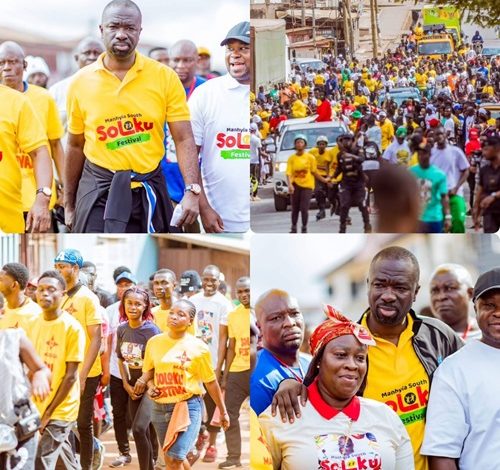
In the Ashanti Region, similar experiments are taking shape. Regional initiatives such as Gumo Fest and Ashanti Fest reflect a growing strategy where political and traditional leadership actively package Easter as a tourism product. These events are not random celebrations. They are curated programmes aimed at pulling visitors, stimulating local hospitality industries, and activating micro and small businesses within the region.
The pattern is becoming difficult to ignore. Members of Parliament and regional leaders are increasingly using Easter as a development tool, blending culture, politics, and economic planning into one seasonal platform. What used to be spontaneous migration to Kwahu is now becoming a competitive national festival landscape.
Even the language has changed. “Fest,” “carnival,” “forum”, these are not just branding choices. They signal intent. They suggest scale. They reflect a shift from informal gatherings to structured economic calendars designed to attract national attention and spending power.

The implications are significant.
Ghana is effectively building a multi-regional Easter economy where different locations compete for tourism, business activity, and cultural relevance. This competition is driving innovation in event planning, hospitality services, transport logistics, and creative industries. It is also creating more entry points for small businesses that rely on seasonal crowds to survive and grow.
However, the transformation comes with a strategic challenge. Kwahu’s historical advantage was clarity, one dominant destination that concentrated attention and resources. The current expansion risks fragmentation if not properly coordinated. Without national branding coherence, the Easter tourism identity could become diluted across too many competing hubs.
Still, the upside is hard to ignore. A decentralized model spreads economic benefit more widely. It allows multiple regions to generate income, build infrastructure, and develop tourism ecosystems tailored to their unique cultural identities. It also reduces overdependence on a single destination and encourages year-on-year innovation.
What Ghana is witnessing is not just a change in how Easter is celebrated. It is a shift in how national festivals are being used—as instruments of development policy, regional branding, and economic activation.

If sustained and strategically managed, this evolution could redefine domestic tourism in Ghana entirely. Easter would no longer be a single destination event. It would become a national economic season.
And that is the real story unfolding beyond the music, the crowds, and the hills.