

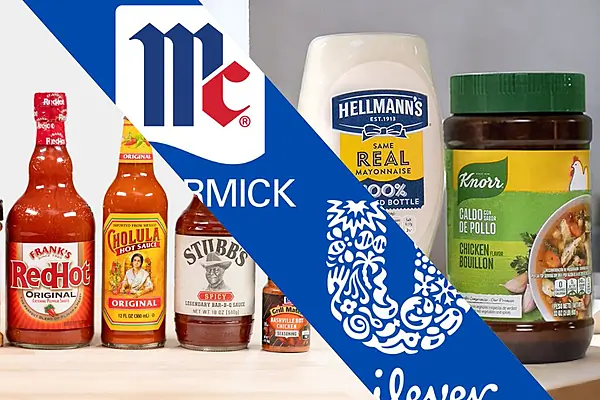
Unilever and US based spices and flavouring company McCormick & Company are reportedly advancing towards a major strategic agreement that could significantly reshape the global packaged food industry, following confirmation that Unilever has agreed to spin off a large portion of its food business in a deal valued at around 44.8 billion dollars.
The proposed transaction, described as a multi billion dollar restructuring move, would see Unilever separating most of its food division and aligning it with McCormick’s global spices and flavouring operations. If completed, the deal would create a significantly expanded food and seasoning powerhouse with a wide international footprint across retail, food service and industrial supply chains.
Unilever, a British multinational known for household brands in food, personal care and home products, has been under pressure in recent years to streamline its operations and focus on higher growth segments. The company has increasingly shifted attention toward beauty, personal care and health oriented products, while reassessing the long term performance of its traditional food portfolio.
McCormick & Company, headquartered in the United States, is one of the world’s largest producers of spices, seasonings and flavour solutions. The company supplies both consumer markets and large scale food manufacturers, giving it a strong position within global supply chains. A potential merger or integration with Unilever’s food assets would substantially expand its product reach and market influence.

The reported valuation of 44.8 billion dollars for the food business highlights the scale of the assets involved, which include a range of well known packaged food brands distributed across multiple continents. Analysts say the spin off reflects a broader trend among global consumer goods companies to simplify portfolios and focus on core categories with stronger profit margins and faster growth potential.
In recent years, major multinational corporations have increasingly restructured their food divisions in response to changing consumer behaviour. Demand has shifted toward healthier products, plant based alternatives and premium offerings, while traditional packaged foods have faced slower growth in some mature markets. Companies like Unilever have responded by divesting or reorganising slower growing segments to unlock shareholder value and reinvest in innovation driven categories.
If finalised, the deal between Unilever and McCormick would represent one of the largest structural shifts in the global food sector in recent years. It would also signal growing consolidation within the flavouring and seasoning industry, where companies are seeking scale advantages in sourcing, distribution and product development.
Industry observers note that McCormick has historically pursued targeted acquisitions to strengthen its global presence, while Unilever has focused on portfolio optimisation and brand repositioning. The combination of the two strategies could result in a more integrated supply chain spanning spices, seasonings and packaged food products across both developed and emerging markets.
However, large scale corporate transactions of this nature typically face regulatory scrutiny, particularly in markets where competition authorities assess the potential impact on pricing, consumer choice and market concentration. Depending on the final structure of the deal, regulators in the United States, United Kingdom and European Union may all play a role in approving or modifying the agreement.

Financial analysts also point to execution risk, noting that integrating large multinational food operations can be complex due to differences in brand strategy, regional market dynamics and supply chain structures. Successful completion would require careful coordination to ensure operational stability during transition.
Despite these challenges, the potential deal is being viewed as a bold strategic move that could redefine competitive dynamics in the global food and flavouring industry. It reflects a broader wave of restructuring among consumer goods giants seeking to adapt to shifting demand patterns and investor expectations.
As negotiations progress, markets are expected to closely watch further announcements from both companies, particularly regarding the final structure of the spin off, asset allocation and leadership arrangements for the newly formed business entity.