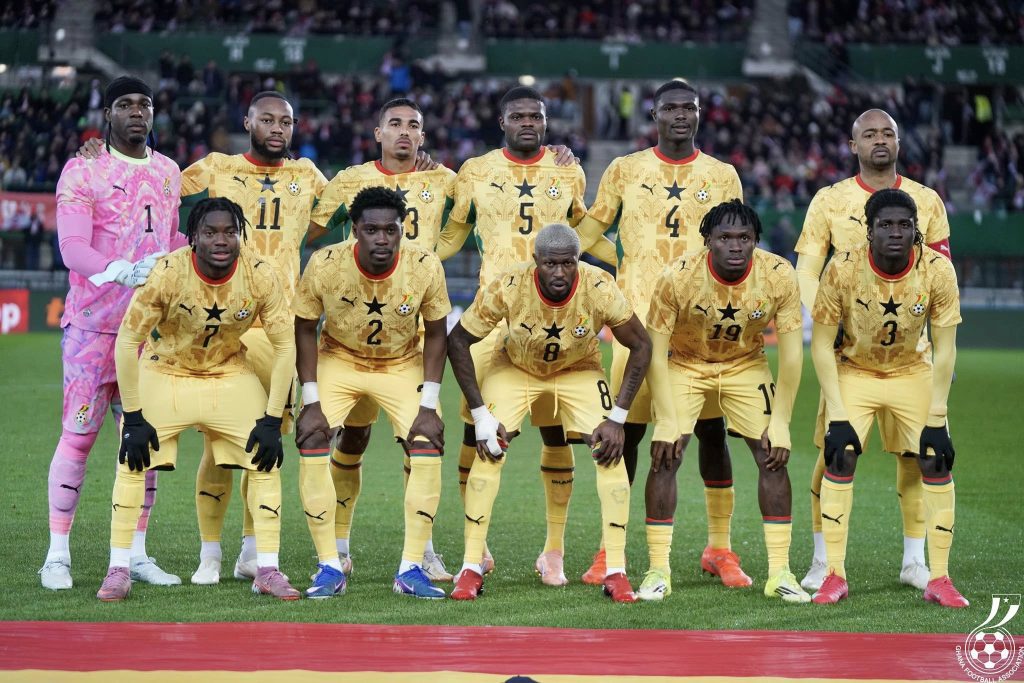
Black Stars remain 14th in Africa but drop to 74th globally in latest FIFA rankings

0
263

Ghana national football team have dropped two places in the latest FIFA Men’s World Rankings, slipping to 74th globally while maintaining their 14th position on the African continent.

The latest ranking reflects a slight decline in Ghana’s global standing, continuing a trend of inconsistency despite holding steady within Africa’s competitive hierarchy. Earlier in 2026, the Black Stars were ranked around 72nd in the world while still occupying the same 14th spot in Africa, highlighting how recent results have impacted their global points tally.

The unchanged continental position suggests that Ghana’s direct rivals across Africa have experienced similar fluctuations, preventing any major shift in the team’s standing within the region. However, the drop on the global stage indicates that teams from other confederations have gained more ranking points during the latest international window.

The FIFA ranking system is based on match results, with greater weight given to competitive fixtures such as qualifiers and tournaments compared to friendlies. This means that even a few underwhelming performances or inactivity can lead to a drop, especially when other nations are actively accumulating points through wins in high-stakes matches.

14,black stars

For Ghana, recent performances in international friendlies and the absence from major tournaments like the most recent Africa Cup of Nations have contributed to limited opportunities to gain significant ranking points. Meanwhile, countries that advanced deep into continental competitions or recorded strong qualifying campaigns have seen noticeable improvements.

Despite the drop, remaining 14th in Africa keeps Ghana within the competitive middle tier of the continent’s football hierarchy. The top positions are currently dominated by nations such as Morocco, Senegal and Nigeria, who have benefited from strong tournament performances and consistent results at the international level.

The ranking also has practical implications beyond prestige. FIFA rankings influence tournament seedings, qualification pathways and perceptions among sponsors and stakeholders. Ghana’s current position places them at a disadvantage in major draws, often leading to tougher groups against higher-ranked opponents.

However, the situation is far from irreversible. With the 2026 World Cup approaching and more qualifiers and international fixtures ahead, the Black Stars still have opportunities to climb back up the rankings. Consistent wins, particularly in competitive matches, could quickly improve their standing.

The recent friendly against Germany, where Ghana showed resilience despite a narrow 2-1 defeat, could serve as a foundation for rebuilding momentum. Performances like that indicate potential, but rankings ultimately depend on results, not effort.

Black Stars remain 14th in Africa but drop to 74th globally in latest FIFA rankings

For the Ghana Football Association, the focus will now be on stabilising performance, securing wins and rebuilding confidence within the squad following recent transitions, including changes in the technical team.

The latest rankings serve as a reminder of where Ghana currently stands in global football: still relevant on the continent, but needing stronger, consistent performances to reclaim a more competitive position on the world stage.

President Mahama to Walk the Runway at Ghana Fashion Week 2025

Author

  • Daniel Ablordey

    Daniel Ablordey is a Business Analytics student at the University of Ghana Business School and an emerging strategist at the intersection of data, markets, and narrative. With a keen analytical mind and a passion for African business and economic trends, he is building a career focused on translating complex data-driven insights into accessible, decision-relevant stories that matter.

    As a writer and editor with Insight Ghana, African Business Insight, and The African Journal, Daniel delivers sharp, high-impact analysis on current affairs, business developments, and emerging trends across the continent. His work is defined by precision, clarity, and a deep commitment to responsible journalism — ensuring that every story he tells is not only accurate but meaningful to the audiences it serves.

    Beyond his editorial work, Daniel serves as an Ecobank Youth Ambassador, where he actively promotes financial inclusion, digital banking, and financial literacy among young Ghanaians. His leadership experience spans academic, professional, and faith-based institutions, where he has consistently driven initiatives centered on growth, structure, and long-term impact.

    Grounded in the principles of Pan-Africanism and service, Daniel brings a rare combination of analytical rigour and storytelling depth to his work. Whether unpacking market behavior, profiling emerging business leaders, or covering cultural shifts shaping the continent, he approaches every assignment with strategic intent and editorial integrity.

    His broader ambition is to contribute to Africa's transformation by shaping how data, business, and storytelling intersect — not just locally, but on a global stage.

Previous articleRejecting pesewa coins is illegal – BoG warns, of inflation risks in Ghana
Next articleGhana inflation drops to 3.2% in March as stability strengthens despite global fuel pressures
Daniel Amenyo Ablordey
Daniel Ablordey is a Business Analytics student at the University of Ghana Business School and an emerging strategist at the intersection of data, markets, and narrative. With a keen analytical mind and a passion for African business and economic trends, he is building a career focused on translating complex data-driven insights into accessible, decision-relevant stories that matter.

As a writer and editor with Insight Ghana, African Business Insight, and The African Journal, Daniel delivers sharp, high-impact analysis on current affairs, business developments, and emerging trends across the continent. His work is defined by precision, clarity, and a deep commitment to responsible journalism — ensuring that every story he tells is not only accurate but meaningful to the audiences it serves.

Beyond his editorial work, Daniel serves as an Ecobank Youth Ambassador, where he actively promotes financial inclusion, digital banking, and financial literacy among young Ghanaians. His leadership experience spans academic, professional, and faith-based institutions, where he has consistently driven initiatives centered on growth, structure, and long-term impact.

Grounded in the principles of Pan-Africanism and service, Daniel brings a rare combination of analytical rigour and storytelling depth to his work. Whether unpacking market behavior, profiling emerging business leaders, or covering cultural shifts shaping the continent, he approaches every assignment with strategic intent and editorial integrity.

His broader ambition is to contribute to Africa's transformation by shaping how data, business, and storytelling intersect — not just locally, but on a global stage.