

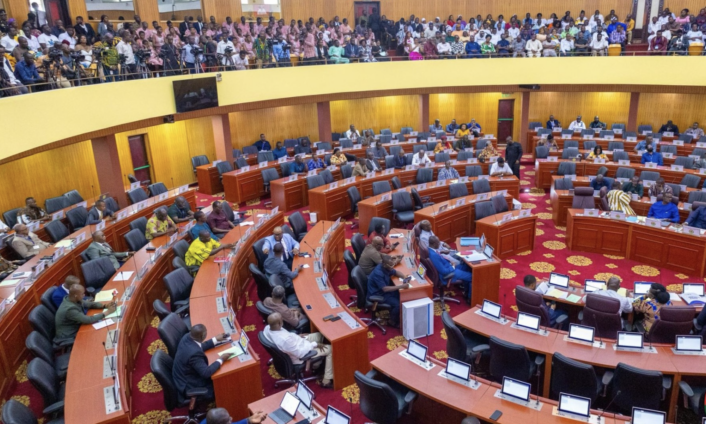
Parliament has passed the Governance Advisory Council Bill, paving the way for the establishment of an independent body aimed at strengthening accountability, combating corruption and safeguarding human rights across the country.
The new legislation delivers on a key governance pledge by John Dramani Mahama, who has consistently advocated for institutional reforms to improve transparency and rebuild public trust in state institutions.
The proposed Governance Advisory Council is expected to function as an independent oversight body, providing strategic guidance on governance issues while monitoring compliance with anti corruption frameworks and human rights standards. Its mandate is also anticipated to include advising government on policy direction, identifying systemic weaknesses in public administration and recommending reforms to improve efficiency and accountability.

The passage of the bill comes at a time when Ghana continues to face growing public demand for stronger institutions capable of tackling corruption and ensuring responsible leadership. Analysts say the establishment of such a council could serve as an additional layer of oversight, complementing existing bodies like the Commission on Human Rights and Administrative Justice and the Office of the Special Prosecutor.
Supporters of the bill argue that the council will help close institutional gaps by offering independent, non partisan advice on governance matters, while also enhancing coordination among state agencies responsible for accountability and transparency. By focusing on long term structural reforms rather than short term political interventions, the council is expected to play a stabilising role in Ghana’s governance architecture.
Critics, however, have raised concerns about potential overlaps with existing institutions and the risk of duplication of functions. Questions have also been raised about how truly independent the council will be in practice, particularly in terms of appointments, funding and operational autonomy. Without clear safeguards, some observers warn that the effectiveness of the council could be limited.
Despite these concerns, the bill’s passage signals a broader shift toward institutional reform and governance strengthening in Ghana. It reflects a growing recognition that sustainable economic development is closely tied to transparency, rule of law and public sector accountability.
If effectively implemented, the Governance Advisory Council could become a key pillar in Ghana’s efforts to combat corruption, protect citizens’ rights and improve public sector performance. The focus will now shift to the operationalisation phase, including the appointment of members, development of regulatory frameworks and integration with existing governance systems.
The success of the initiative will ultimately depend on execution. Strong legal backing alone will not be enough. The council’s credibility will rest on its independence, consistency and willingness to hold institutions accountable without fear or favour.

Parliament Approves Bill Regulating Commercial Motorbike Operations