

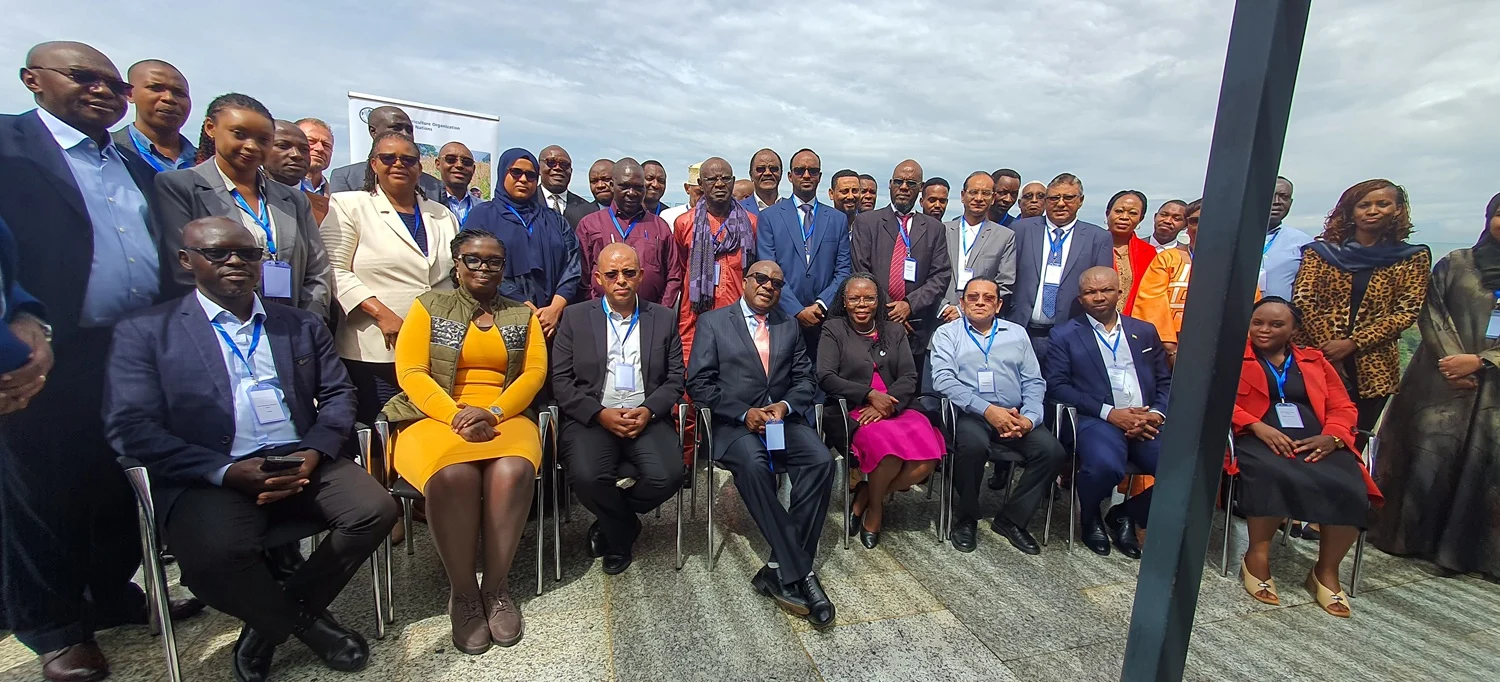
A major AfDB-backed regional project is delivering tangible progress in strengthening early warning systems and improving seed production across Burundi, Comoros, Somalia, and South Sudan. The Strengthening Emergency Preparedness and Response to Food Crisis (SEPAREF) initiative, implemented by the Food and Agriculture Organization (FAO) with funding from the African Development Bank Group, has already produced over 956 tonnes of early generation seeds and provided technical support to more than 160,000 farmers while establishing digital early warning platforms.
The recent validation workshop in Nairobi highlighted these achievements and called for scaling the initiative to ensure long-term food and nutrition security in a region frequently threatened by climate shocks, conflict, and supply disruptions.
Why Early Warning Systems Matter for East Africa
Early warning systems are critical tools for mitigating the impact of climate variability, pests, diseases, and geopolitical shocks on agriculture. In East Africa, where millions of smallholder farmers depend on rain-fed farming, timely and accurate information about impending droughts, floods, or pest outbreaks can mean the difference between a manageable season and widespread hunger.
The SEPAREF project addresses this by digitising early warning systems and registering over 160,000 farmers, giving them access to timely agricultural advisories. This reduces uncertainty and allows farmers to make better decisions on planting, input use, and harvesting. Combined with the production of climate- and drought-tolerant seeds, these early warning systems help build resilience against recurring food crises triggered by global events such as supply chain disruptions or regional conflicts.
Without robust early warning systems, vulnerable countries like Somalia and South Sudan remain trapped in cycles of emergency response rather than proactive prevention. The project’s focus on national seed councils, improved seed certification, and coordination mechanisms aims to shift this paradigm toward sustainable preparedness.
Early Warning Systems Impact on Businesses
Agricultural businesses, seed companies, and agribusinesses across East Africa stand to benefit significantly from enhanced early warning systems. Seed out-growers (over 250 supported so far) and local seed enterprises gain from rehabilitated storage and irrigation facilities, plus technical support from institutions like the International Institute of Tropical Agriculture. This strengthens local production capacity and reduces dependence on expensive imports.
For input suppliers, processors, and traders, reliable early warning systems mean better demand forecasting and reduced post-harvest losses. When farmers receive timely advisories and access quality, climate-resilient seeds, overall crop yields improve, increasing the volume of produce available for markets and value addition. This creates more stable supply chains and business opportunities in processing, packaging, and distribution.
Public-private partnerships emphasised at the workshop are particularly important. Stronger collaboration can attract private investment into seed enterprises and digital advisory services, fostering innovation and scaling solutions that benefit both large agribusinesses and smallholders.
How Early Warning Systems Affect Households
For rural households that form the backbone of East African agriculture, improved early warning systems offer direct protection against hunger and economic shocks. Farmers equipped with timely information and better seeds can avoid total crop failure during dry spells or pest attacks, leading to more stable harvests and household food availability.
Over 160,000 registered farmers are already benefiting from agricultural advisories, which can help them optimise planting times, choose appropriate varieties, and apply inputs more effectively. This translates into higher incomes, better nutrition, and greater ability to invest in education and healthcare. In countries like Somalia and South Sudan, where food insecurity is acute, even modest yield improvements can significantly reduce reliance on food aid.
Women, who often manage small plots and household food security, stand to gain particularly from accessible digital advisories and quality seeds. Reduced vulnerability to climate shocks also means fewer distress sales of assets and less migration driven by hunger, helping to stabilise communities and household economies.
Scaling Success for Long-Term Resilience
Workshop participants, including AfDB’s Pascal Sanginga and FAO’s Farayi Zimudzi, stressed the need to sustain and expand these gains. Key recommendations include embedding seed certification and digital early warning tools into national structures, securing sustainable financing beyond donor support, and strengthening public-private partnerships to scale seed enterprises.
While the project has made impressive progress, producing hundreds of tonnes of improved seeds and supporting thousands of farmers — challenges remain, including limited government budgets and restricted access to capital for seed businesses. Turning three years of lessons into a structured multi-country roadmap will be essential for long-term impact.
The AfDB-FAO partnership demonstrates that investing in early warning systems and resilient seed systems is one of the most cost-effective ways to safeguard food security in East Africa. By reducing the frequency and severity of crises, these interventions lower the enormous economic and humanitarian costs of emergency responses.
In conclusion, the SEPAREF project’s focus on early warning systems and seed production is a forward-looking investment in East Africa’s future. It strengthens the ability of governments, businesses, and households to anticipate and withstand shocks, paving the way for more stable food systems, economic growth, and improved livelihoods across the region. Continued commitment and scaling will determine how effectively these tools can shield vulnerable populations from future food crises.
Lordina Mahama calls for stronger child protection in digital space at global summit in Washington