

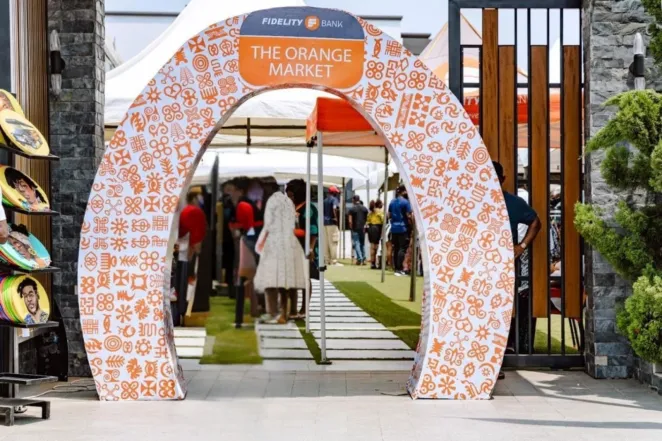
Fidelity Bank Ghana recently hosted the third edition of its Orange Market, partnering with the established Accra Goods Market to create a dynamic sales platform at Enclave Gardens. This event brought together a record 40 youth-led ventures, allowing them to display innovative local products and services, validate their concepts in real time, and earn immediate income from eager buyers.
The Orange Market stands as a key component of the Fidelity Young Entrepreneurship Initiative (FYEI), targeting graduates of the Orange Corners Innovation Fund (OCIF), a collaborative effort with the Embassy of the Kingdom of the Netherlands. By focusing on market exposure beyond just financing, training, and mentorship, Fidelity addresses a common hurdle for startups: turning ideas into viable, revenue-generating operations.
Since starting in 2024, the Orange Market has grown impressively, from 35 participants initially, to 20 in the second round, and now 40 in this latest gathering, delivering 95 total opportunities in under two years. This progression demonstrates increasing confidence in the program’s ability to connect promising young businesses with actual customers.
Why the Orange Market Matters for Ghana’s Economy
In Ghana’s competitive entrepreneurial landscape, many startups struggle not with ideas or initial funding but with consistent customer reach and sales momentum. The Orange Market tackles this directly by linking FYEI-supported ventures, already equipped with capital, guidance, and skills, with a proven, high-visibility marketplace run by Accra Goods Market experts.

This initiative matters because it fosters sustainable business growth rather than short-term survival. Young entrepreneurs gain hands-on experience in pricing, customer interaction, branding, and feedback loops, which are essential for long-term success. By partnering with a decade-old platform like Accra Goods Market, Fidelity ensures participants benefit from established foot traffic and consumer trust, accelerating their path to profitability and scalability.
The broader impact lies in job creation and economic diversification. Supporting sectors like agribusiness, sustainable fashion, tech services, and creative arts helps build a more resilient local economy less dependent on traditional sectors. As these businesses thrive, they contribute to reduced youth unemployment, a pressing issue, and stimulate community-level spending and innovation.
How the Orange Market Affects Young Entrepreneurs and Households
For participating entrepreneurs, the Orange Market delivers immediate tangible benefits. Direct sales generate cash flow critical for covering operational costs, reinvesting in inventory, or scaling production without waiting for distant investors. The exposure builds brand recognition, networks, and confidence, often leading to repeat customers, online orders, or invitations to other events.
Many of these youth-led ventures employ additional young people or source materials locally, creating ripple effects. Successful participants can expand operations, hire more staff, and mentor others, strengthening household incomes in communities where entrepreneurship offers one of the few viable paths out of economic hardship.
Households connected to these entrepreneurs, whether as family members, employees, or suppliers, see improved financial stability. Increased earnings from sales enable better nutrition, education, healthcare, and savings. In a context where many families rely on informal or gig work, the Orange Market helps convert entrepreneurial potential into reliable income streams, reducing vulnerability to economic fluctuations.
Business and Community Gains from the Orange Market
Established businesses and the wider economy also feel positive effects. The Orange Market introduces fresh, innovative products to consumers, enriching choices in fashion, food, tech, and arts while promoting local consumption over imports. This supports import substitution and keeps money circulating within Ghana.
For corporate partners like Fidelity Bank, the initiative reinforces a role as a comprehensive supporter of entrepreneurship, enhancing brand loyalty and positioning the bank as a catalyst for inclusive growth. The synergy with Accra Goods Market exemplifies successful public-private collaboration, where corporate resources meet grassroots expertise to amplify impact.
As quoted by Fidelity’s Head of Partnerships, the Orange Market solves the “market gap” that funding alone cannot fill, while the Accra Goods Market founder praises the quality and readiness of these structured startups. Together, they create a powerful launchpad for Ghana’s next business generation.
Future Potential of the Orange Market
Fidelity’s commitment to expanding the Orange Market signals ongoing investment in youth entrepreneurship. Future editions could incorporate more sectors, digital integration, or nationwide reach, further amplifying benefits. Sustained efforts like this are vital for nurturing an entrepreneurial ecosystem that drives innovation, employment, and shared prosperity.
In essence, the third Orange Market edition marks meaningful progress in empowering Ghana’s young talent. By prioritizing market access, it transforms funded ideas into thriving enterprises, benefiting entrepreneurs, their households, local communities, and the national economy at large.