

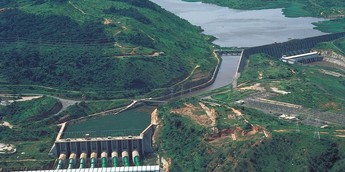
Inga 3 hydropower talks between the Democratic Republic of Congo and South Africa are set to resume in April 2026, reviving one of the continent’s most ambitious, and long-delayed, infrastructure projects. The discussions, confirmed by Congolese authorities, will revisit existing agreements to export 2,500MW and explore scaling up to as much as 5,000MW, reflecting South Africa’s escalating power shortages and the broader potential for Inga 3 to become a regional electricity hub generating between 4,800MW and 11,000MW at an estimated cost exceeding $10 billion.
Inga 3 Hydropower Project Faces Persistent Hurdles
The Inga 3 hydropower project, part of the larger Grand Inga scheme on the Congo River, has lingered in planning for decades due to financing gaps, technical complexities, environmental concerns, and political instability. Despite World Bank support, including up to $1 billion committed over ten years and an initial tranche approved in 2025, the project remains at the preparation stage with no final investment decision. Congolese authorities, through the Agency for the Development and Promotion of the Grand Inga Project (ADPI), continue working on financing structures backed by international partners such as France’s development agency.
Recent momentum stems from South Africa’s deepening energy crisis, frequent load-shedding, rising demand, and coal-plant retirements, making imported baseload power increasingly attractive. A scaled-up deal would position DR Congo as a major exporter, feeding electricity into southern, eastern, and central African grids and generating significant export revenue for Kinshasa while improving supply in the capital and industrial zones.
Why Inga 3 Hydropower Matters for Continental Development
Inga 3 hydropower could transform Africa’s energy landscape by unlocking one of the world’s largest untapped hydropower sites. The Congo River’s potential exceeds 100,000MW; even partial development would provide reliable, low-carbon baseload power far cheaper than diesel or coal in many markets. For energy-deficit countries, it offers a path to industrialisation, reduced reliance on expensive imports, and progress toward net-zero goals.
The project also advances regional integration under AfCFTA and power-pool frameworks, enabling cross-border trade that strengthens economic ties. However, success hinges on overcoming financing barriers, environmental and social safeguards, transparent procurement, and stable governance in DR Congo, challenges that have stalled progress for years.
Inga 3 Hydropower Boosts Businesses and Industrial Growth
Businesses stand to gain substantially if Inga 3 hydropower materializes. Reliable, affordable electricity would lower operating costs for energy-intensive industries, mining, manufacturing, cement, steel, and data centres, particularly in South Africa and neighbouring countries. Cheaper power enables expansion, competitiveness in regional markets, and attraction of FDI seeking low-carbon industrial sites.
In DR Congo, export revenues from power sales could fund infrastructure, while domestic supply improvements would support mining operations, small enterprises, and agro-processing. Regional grids fed by Inga would reduce diesel-generator dependence, cutting fuel costs and downtime for logistics, retail, and services. Overall, stable baseload power fosters industrial clusters, job creation, and value-chain development across borders.
Inga 3 Hydropower Delivers Household Benefits and Energy Access
Households across southern and central Africa would experience tangible gains from Inga 3 hydropower. In South Africa, reduced load-shedding means consistent lighting, refrigeration, cooking, and device charging, improving quality of life, education outcomes, and small-home enterprises. Lower electricity tariffs (if passed through) ease budget pressures on low- and middle-income families.
In DR Congo and connected countries, expanded grid access brings first-time electricity to millions currently off-grid or reliant on costly kerosene and generators, enhancing safety, health, and productivity. Reliable power supports home businesses, evening study, and better healthcare delivery. Long-term, regional energy stability curbs inflation from fuel-price shocks and strengthens food security through powered irrigation and cold chains.
Challenges and Realistic Timelines for Inga 3 Hydropower
Despite renewed momentum, Inga 3 hydropower remains years from commissioning. Financing a $10bn+ project requires blended public-private structures, multilateral guarantees, and investor confidence in governance and safeguards. Environmental and resettlement issues on the Congo River demand rigorous mitigation to avoid social backlash.
If talks progress and a final investment decision follows, construction could span a decade, with phased commissioning delivering initial MWs sooner. South Africa’s urgency may accelerate bilateral agreements, but full regional benefits depend on transmission infrastructure and power-pool integration.
Inga 3 hydropower represents Africa’s boldest bet on home-grown, clean energy to power industrialisation and improve living standards. For businesses, it promises cheaper inputs and growth opportunities; for households, reliable electricity and lower costs. Success would mark a milestone in continental cooperation, but only if long-standing execution barriers are finally overcome.