

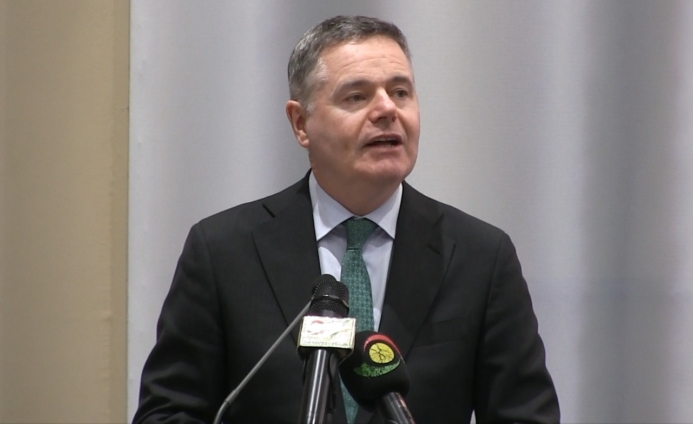
Skills revolution has become an urgent imperative for Africa, with World Bank Managing Director Paschal Donohoe warning that the continent’s rapidly growing youth population risks becoming a demographic liability rather than an economic asset unless education systems undergo fundamental redesign. Speaking at the University of Ghana, Donohoe stressed that technological change, automation, and the green transition are reshaping job markets so fast that current curricula leave many graduates unprepared, widening the gap between qualifications and employable skills.
Skills Revolution Targets Education-Employment Mismatch
Africa faces a stark paradox: it is home to the world’s youngest and fastest-growing population, with over half of global population growth projected to occur on the continent by 2050. Yet formal job creation lags far behind, only about three million new formal positions emerge annually against 10–12 million youth entering the labour force each year. Donohoe highlighted that many graduates enter a highly competitive market lacking practical experience, with university programmes still heavily theory-focused and disconnected from employer needs.
The skills revolution he advocates requires shifting priorities toward foundational literacy and numeracy, analytical thinking, quantitative skills, communication, and job-relevant competencies. Emerging sectors, agribusiness, digital services, renewable energy, and green infrastructure, offer real opportunities, but graduates must be equipped to seize them. Donohoe cited successful models from South Korea, Vietnam, Singapore, and Ireland, where close government-university-industry collaboration shaped curricula to match priority sectors, producing graduates ready for immediate impact rather than further retraining.
Why Skills Revolution Matters for Africa’s Future
A successful skills revolution is essential to convert Africa’s demographic bulge into a productive workforce that drives inclusive growth. Without it, high youth unemployment and underemployment fuel social instability, irregular migration, and lost economic potential. Strong foundational and technical skills enable young people to navigate automation-disrupted labour markets, transition into higher-productivity roles, and contribute to formal-sector expansion.
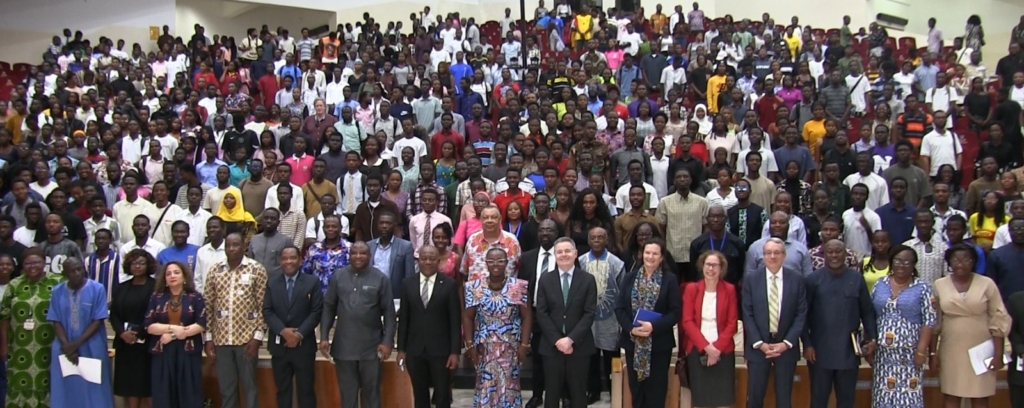
The World Bank is doubling down on this agenda through a new global strategy emphasizing early learning, school quality, job-relevant training, and entrepreneurship pathways. As the largest external education financier in developing countries, the institution sees skills alignment as central to sustainable development and poverty reduction.
Skills Revolution Drives Business Growth and Competitiveness
Businesses across Africa stand to gain enormously from a skills revolution. Employers in manufacturing, agribusiness, digital services, renewable energy, and construction face chronic shortages of technically proficient workers, leading to high training costs, productivity losses, and delayed expansion. A workforce better prepared with practical skills reduces onboarding time, lowers error rates, and improves output quality, directly boosting profitability.
Closer industry-university collaboration allows companies to influence curricula, offer apprenticeships, and access talent pipelines tailored to their needs. This is especially critical in emerging sectors like green energy and digital infrastructure, where demand for specialized skills outpaces supply. Enhanced labour productivity also strengthens firm competitiveness in regional and global markets, supporting AfCFTA goals and attracting foreign direct investment that seeks skilled workforces.
Skills Revolution Improves Household Opportunities and Stability
Households feel the most direct benefits, and consequences, of whether a skills revolution succeeds. Young graduates equipped with market-relevant skills secure better-paying formal jobs or launch viable businesses, lifting family incomes, improving nutrition, education access, and housing stability. Continuous learning mindsets, emphasized by Donohoe, help individuals adapt to changing job requirements, reducing vulnerability to automation and economic shocks.
For families in rural and peri-urban areas, stronger vocational pathways in agribusiness, renewable energy installation, and digital services create local employment opportunities, curbing urban migration pressures and supporting community development. Higher earnings from skilled work enable remittances, savings, and investments in children’s education, breaking intergenerational poverty cycles. Conversely, persistent skills mismatches perpetuate low-wage informal work, limiting household advancement and deepening inequality.
The Path Forward for Skills Revolution
Donohoe’s message is clear: Africa cannot wait. Universities must integrate industry input, governments should incentivize practical training, and the private sector needs to engage actively in curriculum design and apprenticeships. The World Bank stands ready to support through financing and policy advice.
A skills revolution is not just an education reform, it is an economic and social imperative. By aligning learning with labour-market realities, Africa can transform its youth bulge into a powerful engine of growth, delivering tangible gains for businesses through higher productivity and innovation, and for households through better jobs, higher incomes, and greater resilience in a rapidly changing world. The window to act is narrow; the rewards for decisive action are immense.