

Kenya is preparing for a major phase of economic negotiations as a mission from the International Monetary Fund arrives in Nairobi to begin formal discussions on securing a new financial support programme for the country’s economy. The visit marks a crucial step in Kenya’s efforts to reinforce macroeconomic stability, strengthen investor confidence and chart a sustainable fiscal path following the conclusion of its previous IMF arrangement in April 2025.
The anticipated IMF delegation’s engagement follows months of preparatory consultations between Kenyan authorities and IMF officials, both in Nairobi and Washington. The government has formally requested a new programme, underscoring that the discussions are aimed at establishing a fresh framework of cooperation aligned with Kenya’s evolving fiscal and economic priorities. Although IMF funding is not currently factored into the present or upcoming fiscal year budget, officials maintain that a new agreement would play a strategic role in anchoring economic policy and reassuring international markets.
Kenya’s renewed push for IMF support comes after the termination of its earlier 3.6 billion dollar Extended Fund Facility and Extended Credit Facility programme in April 2025. The previous arrangement ended before completion after the country struggled to meet several performance benchmarks related to revenue mobilisation, fiscal consolidation and structural reforms. As a result, Kenya forfeited access to the remaining disbursements under the programme, contributing to financing pressures and heightening scrutiny of its public finances. The expiration of that facility prompted authorities to seek a successor arrangement better suited to current economic realities.
The timing of the IMF mission is significant, as Kenya continues to manage mounting debt obligations and evolving global financial conditions. In recent weeks, the government has taken proactive steps to ease external repayment pressures, including plans to buy back a portion of outstanding international bonds and issue new longer dated Eurobonds. These measures form part of a broader debt management strategy designed to smooth repayment profiles, maintain access to international capital markets and avoid liquidity strains.
Officials have emphasised that the prospective IMF programme would not simply replicate the previous arrangement. Instead, it is expected to reflect lessons learned and incorporate policy adjustments tailored to present fiscal challenges. However, analysts note that any new agreement is likely to include reform commitments aimed at improving revenue performance, narrowing the fiscal deficit, enhancing public expenditure efficiency and strengthening governance frameworks. Such measures are often politically sensitive, as they can involve tax reforms, subsidy rationalisation and tighter controls on public spending.
Kenya’s macroeconomic environment has shown mixed signals in recent months. While public debt levels remain elevated and debt servicing continues to absorb a significant share of government revenue, there have been improvements in external liquidity indicators. Foreign exchange reserves have stabilised, and the current account deficit has narrowed compared with previous years. These developments provide a somewhat stronger platform for negotiations and may help position Kenya as a reforming economy committed to prudent financial management.
The government has also explored complementary fiscal strategies, including the potential privatisation of select state owned enterprises and efforts to broaden the domestic tax base. These initiatives are intended to reduce reliance on external borrowing over the medium term while supporting growth and employment. Nevertheless, structural challenges persist, particularly in revenue collection and expenditure control, which were among the issues that complicated earlier IMF reviews.
For Kenya, securing a new IMF arrangement would carry benefits beyond direct financial inflows. An agreement would serve as a policy anchor, signalling to investors, development partners and credit rating agencies that the country remains committed to reform and fiscal discipline. IMF endorsement often catalyses additional concessional financing from other multilateral and bilateral partners, thereby strengthening overall external financing prospects.
At the same time, the government must balance reform commitments with domestic economic and social considerations. Policymakers are likely to face pressure to ensure that any fiscal adjustments protect vulnerable populations and preserve essential public services. The structure of the new programme will therefore be closely watched by businesses, investors and civil society alike.
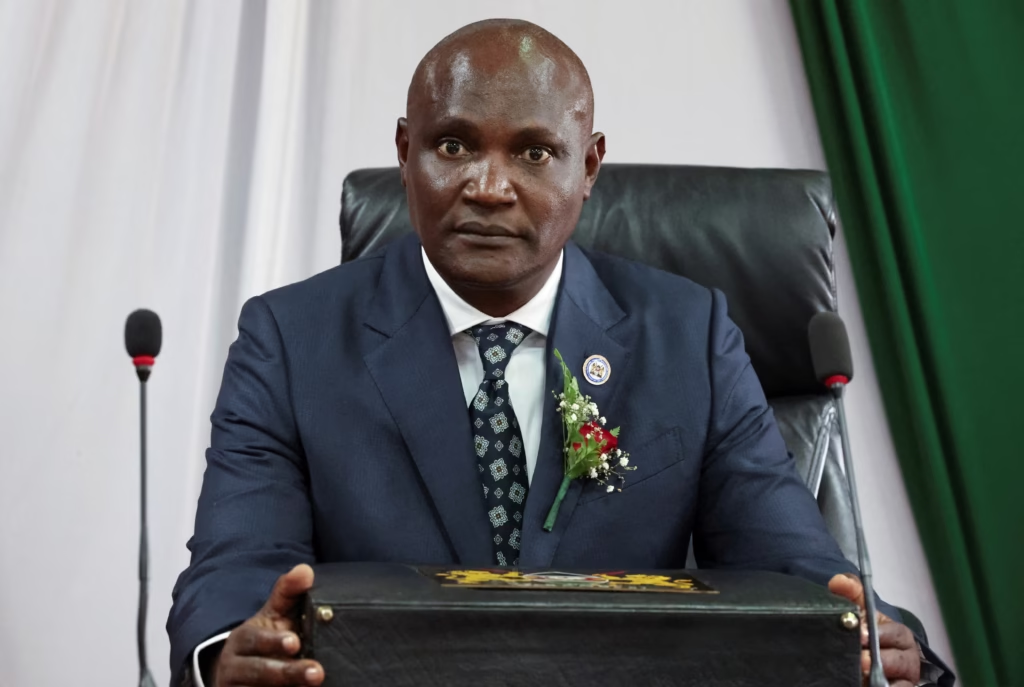
As negotiations unfold, the IMF mission’s discussions with Kenyan authorities are expected to cover fiscal targets, debt sustainability analysis, structural reform benchmarks and macroeconomic projections for the coming years. The outcome of these talks could shape Kenya’s fiscal landscape well beyond the current political cycle.
Ultimately, the arrival of the IMF team signals a new chapter in Kenya’s economic management strategy. While challenges remain, the government’s engagement with the Fund reflects an effort to stabilise public finances, manage debt risks and reinforce investor confidence. The success of the talks will depend on the ability of both sides to agree on a programme that supports growth, strengthens fiscal credibility and places the economy on a more sustainable trajectory.